Clear Sky Science · en
Gender role reversal in live commerce: how male anchors’ feminine and masculine traits influence female purchase intention
Why this new kind of shopping host matters
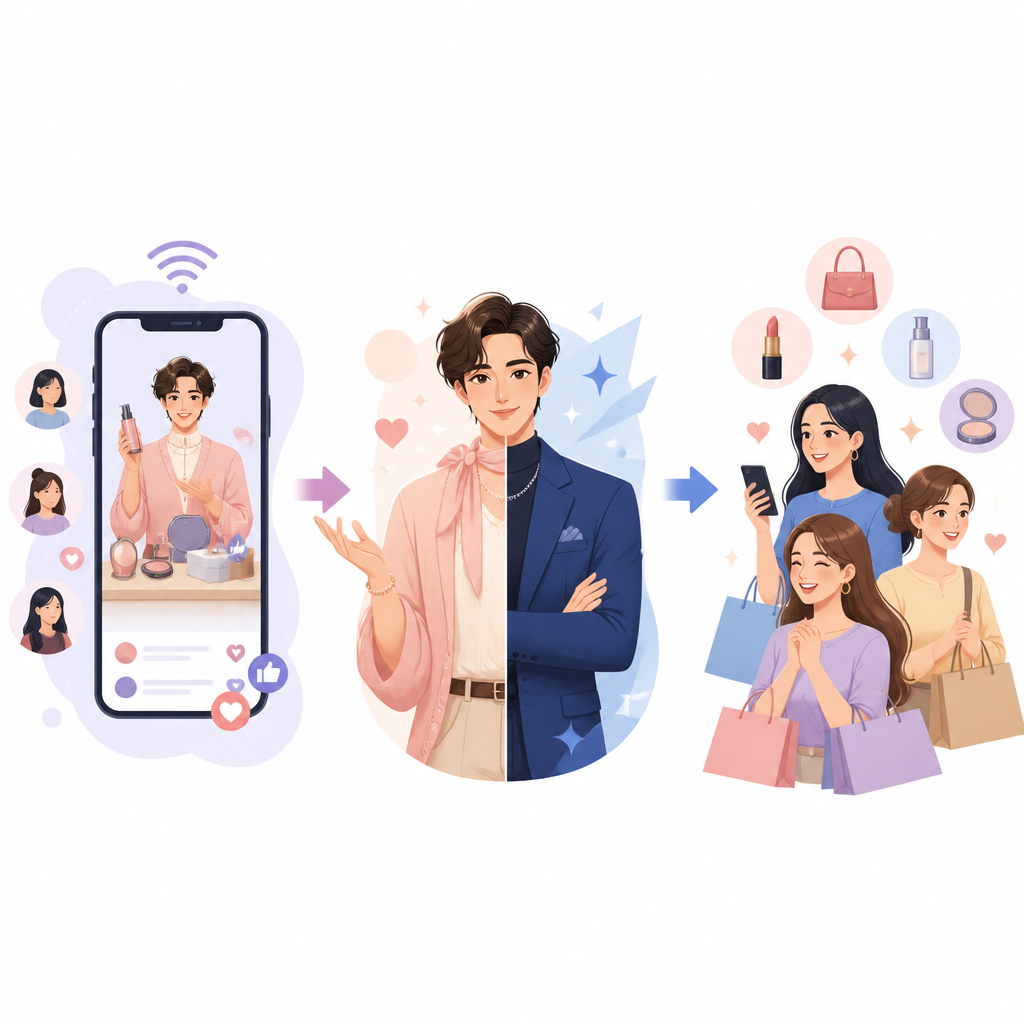
When you open a shopping livestream today, you may see a man enthusiastically testing lipstick or explaining skin cream to an audience of women. This mix of traditionally feminine and masculine traits challenges old ideas about who should sell beauty products. The study behind this article asks a simple question with big social and business implications: how do these gender-bending male hosts affect how women feel and whether they decide to buy?
From funny show to serious research topic
Livestream shopping has become part show, part chat room, and part store. In China and elsewhere, male hosts now promote cosmetics, perfume, and other items usually aimed at women. Some play up gentle, elegant qualities while still projecting confidence and competence. Earlier research showed that attractive spokespeople and emotional experiences matter for sales, but it was not clear why men selling women’s products often succeed, or how their blend of traits shapes women’s reactions. This study focuses on female viewers and looks closely at how a host’s appearance, way of speaking, and mix of feminine and masculine behavior combine to influence feelings and shopping plans.
How the study was set up
The researchers surveyed 443 women who had watched male hosts promoting products in livestreams. Instead of asking them to remember past shows, the team showed short real video clips from a popular platform to trigger fresh impressions. Viewers then rated how handsome they found the host, how engaging his speech was, and how strongly he showed traits such as gentleness and friendliness on one side, and calmness, capability, and good judgment on the other. They also reported three key feelings during the stream: pleasure (how happy and satisfied they felt), arousal (how awake and excited they felt), and dominance (how much they felt in control of what was happening). Finally, they indicated how likely they were to buy products recommended by the host.
Feelings as the bridge between host and purchase
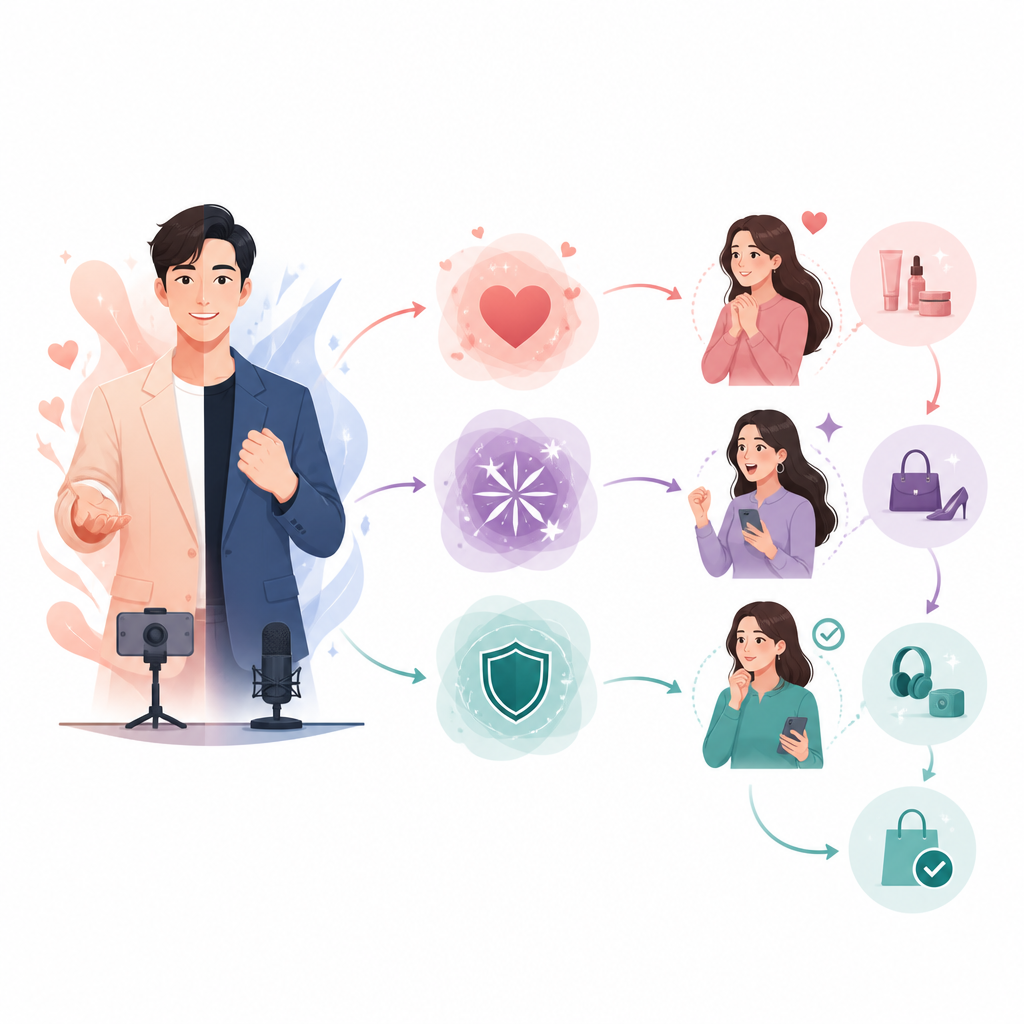
The results reveal that it is not just a pretty face that moves products. Surprisingly, simple physical attractiveness did not make women feel more pleased or more in control, and by itself it did not lead directly to stronger purchase plans. Instead, what mattered most was how the host talked and how he balanced feminine and masculine traits. Warm, vivid language strongly raised excitement and also supported feelings of pleasure and control. Feminine traits such as gentleness and elegance were especially powerful in boosting pleasure, while masculine traits like calm strength helped raise excitement and a sense of assurance. These emotions in turn were closely tied to women’s intention to buy, with pleasure being the single strongest predictor of whether they would act on the host’s suggestions.
The hidden role of feeling “there with others”
The team also studied social presence, meaning how much viewers felt they were sharing a real moment with the host and other shoppers. When this sense of connection was strong, the link between excitement and purchase intention became even tighter. In other words, if a viewer both felt stirred up by the host and felt surrounded by a lively crowd in the chat, she was more likely to put items in her cart. However, social presence did not noticeably change how pleasure or sense of control related to buying decisions, suggesting that the energy of the shared moment mainly amplifies excitement.
What this means for shopping and gender norms
For a general reader, the conclusion is clear: in livestream shopping, the magic lies less in a host’s looks and more in the way he blends softness and strength to create enjoyable, exciting, and empowering experiences for women. Male hosts who can be both friendly and capable, both playful and reliable, seem to encourage viewers to stay, engage, and eventually buy. At the same time, this trend gently loosens rigid ideas about what men and women should do. When women happily choose products guided by men who wear makeup or discuss skincare with care and expertise, they are also voting for a more flexible, inclusive view of gender in everyday life.
Citation: Shen, X., Yu, J., Huang, M. et al. Gender role reversal in live commerce: how male anchors’ feminine and masculine traits influence female purchase intention. Humanit Soc Sci Commun 13, 741 (2026). https://doi.org/10.1057/s41599-026-07109-y
Keywords: livestream shopping, gender roles, male influencers, consumer emotions, online commerce