Clear Sky Science · en
Conveying cultural content in literary translation: a comparative analysis of translation strategies in Yu Hua’s works for a Portuguese-speaking audience
Stories Crossing Borders
When a powerful novel is translated, readers gain a window into another culture’s daily life, humor, and heartbreak. But how much of that world survives the journey into a new language? This study looks at how the Chinese writer Yu Hua’s richly cultural stories reach Portuguese-speaking readers, and which kinds of translations help those readers truly feel and understand a distant society.

Why Culture Makes Translation Hard
Yu Hua’s novels are packed with references to village customs, political campaigns, family rituals, and beliefs about life and death in China. Many of these details have no simple match in Portuguese. A phrase that sounds ordinary in Chinese might feel strange or even meaningless in another language. The researchers argue that translation is not just swapping words, but a form of cultural bridge-building. Translators must decide when to keep the “foreign” flavor and when to smooth it out so that readers can follow the story without getting lost.
Three Ways To Rethink A Sentence
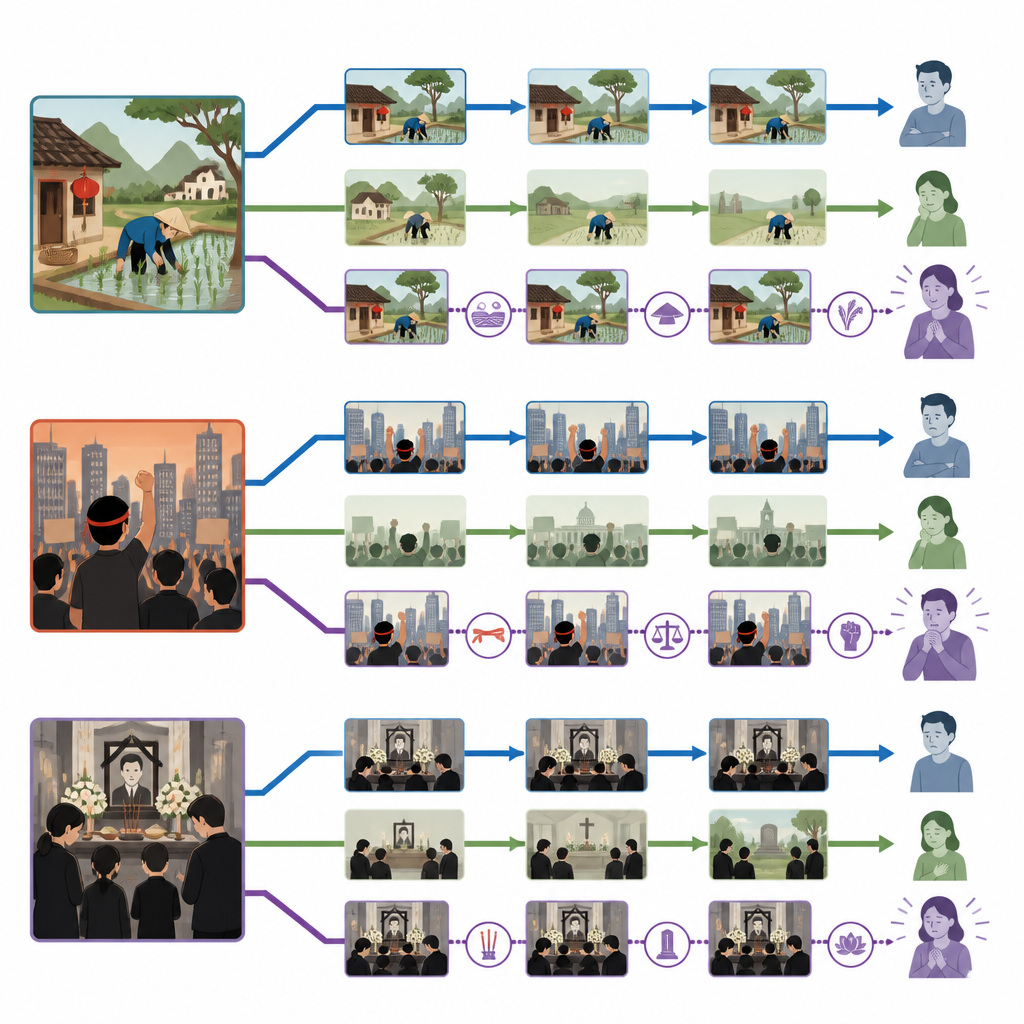
To explore these choices, the study focused on three excerpts from Yu Hua’s novels To Live, Brothers, and The Seventh Day. Expert translators produced three versions of each passage. The first was a literal version that followed the Chinese wording as closely as possible. The second was an adapted version that replaced some culture-bound phrases with familiar Portuguese equivalents. The third added short explanations, or annotations, that guided readers through unfamiliar customs and beliefs while keeping more of the original imagery.
What Ninety Readers Told The Researchers
Ninety native Portuguese speakers, with different ages and backgrounds, each read one type of translation and rated it using a standard quality checklist. They judged accuracy, fluency, style, cultural fit, word choices, and emotional impact. Literal translations scored lowest overall, especially on how natural the text felt and how well it fit the readers’ cultural context. Adapted translations and annotated versions both scored higher, with only small differences between them. Adapted versions were easiest to read and stirred the strongest emotions, while annotated versions were best at conveying specific cultural details like historical events, idioms, and literary references, though sometimes at the cost of smooth reading.
Examples Hidden In Everyday Phrases
The study highlights concrete cases where each strategy struggles. A Chinese idiom that literally means “red-eye disease” actually refers to jealousy. A literal version confuses readers, but an adapted version that simply says “jealous” loses the playful image. An annotated version can keep the image and add a short note explaining it. Similarly, beliefs about the soul on the seventh day after death, or metaphors about family ties described as “two gourds on the same vine,” need either careful adaptation or clear explanation to make sense to readers who do not share the same traditions.
Finding A Flexible Middle Path
The authors conclude that there is no single best recipe for translating culture-heavy literature. Literal translation preserves the original world most strictly, but risks leaving readers puzzled and emotionally distant. Adapted translation improves clarity and resonance, helping readers feel closer to the characters, yet can wash out unique flavors. Annotated translation offers the richest cultural insight, but may interrupt the flow of reading. The study suggests that the most effective approach is a flexible blend: translators should choose, case by case, when to stay close to the source, when to adapt, and when to explain, so that foreign stories can remain themselves while still touching new audiences.
Citation: Yang, Y., Wang, X. Conveying cultural content in literary translation: a comparative analysis of translation strategies in Yu Hua’s works for a Portuguese-speaking audience. Humanit Soc Sci Commun 13, 719 (2026). https://doi.org/10.1057/s41599-026-07073-7
Keywords: literary translation, Chinese literature, cultural adaptation, Portuguese readers, translation strategies