Clear Sky Science · en
The labor theory of value in the era of artificial intelligence and digital platforms: challenges, innovations, and new mechanisms
Why this matters for everyday digital life
Every time people hail a ride, scroll through social media, or train an online tool, they help create economic value. This article asks a simple but powerful question: who really benefits from all that activity in an age of artificial intelligence and digital platforms? Drawing on Karl Marx’s classic idea that human work is the source of new value, the author explores how AI systems and platform companies like app-based marketplaces, social networks, and gig-work apps reshape work, pay, and power in today’s economy.
Old ideas about work in a new digital world
The article starts by revisiting Marx’s labor theory of value, which says that the worth of goods and services ultimately depends on the amount of human work, under typical conditions, needed to produce them. It distinguishes between “living” labor, the efforts of people working today, and “dead” labor, the past work embodied in machines and tools. Only living labor can add new value; machines simply pass along the value already built into them. This lens is used to cut through the buzz surrounding AI, arguing that even the most advanced systems are better understood as very sophisticated tools rather than digital workers in their own right.
How platforms change what counts as work
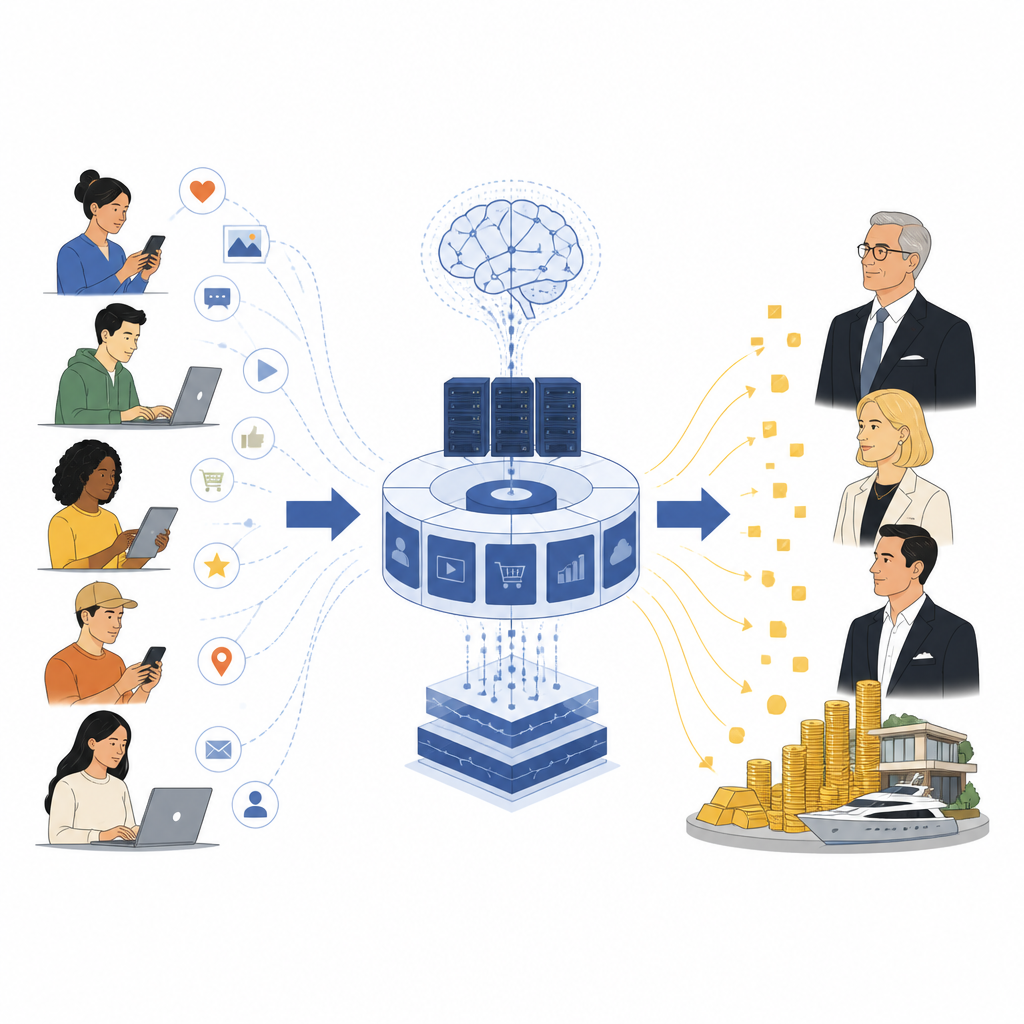
Digital platforms have created new kinds of jobs and blurred the lines between working and simply participating online. Ride-hail drivers, delivery couriers, crowdworkers labeling images, online freelancers, influencers, and unpaid users who post content and ratings all contribute to the income of platforms. Algorithms assign tasks, track performance, and set pay or prices, often making work more flexible but also more insecure. The article highlights how much of this activity, including emotional support, content moderation, and social interaction, builds real economic value without being treated or paid as proper work.
What AI really does inside the value chain
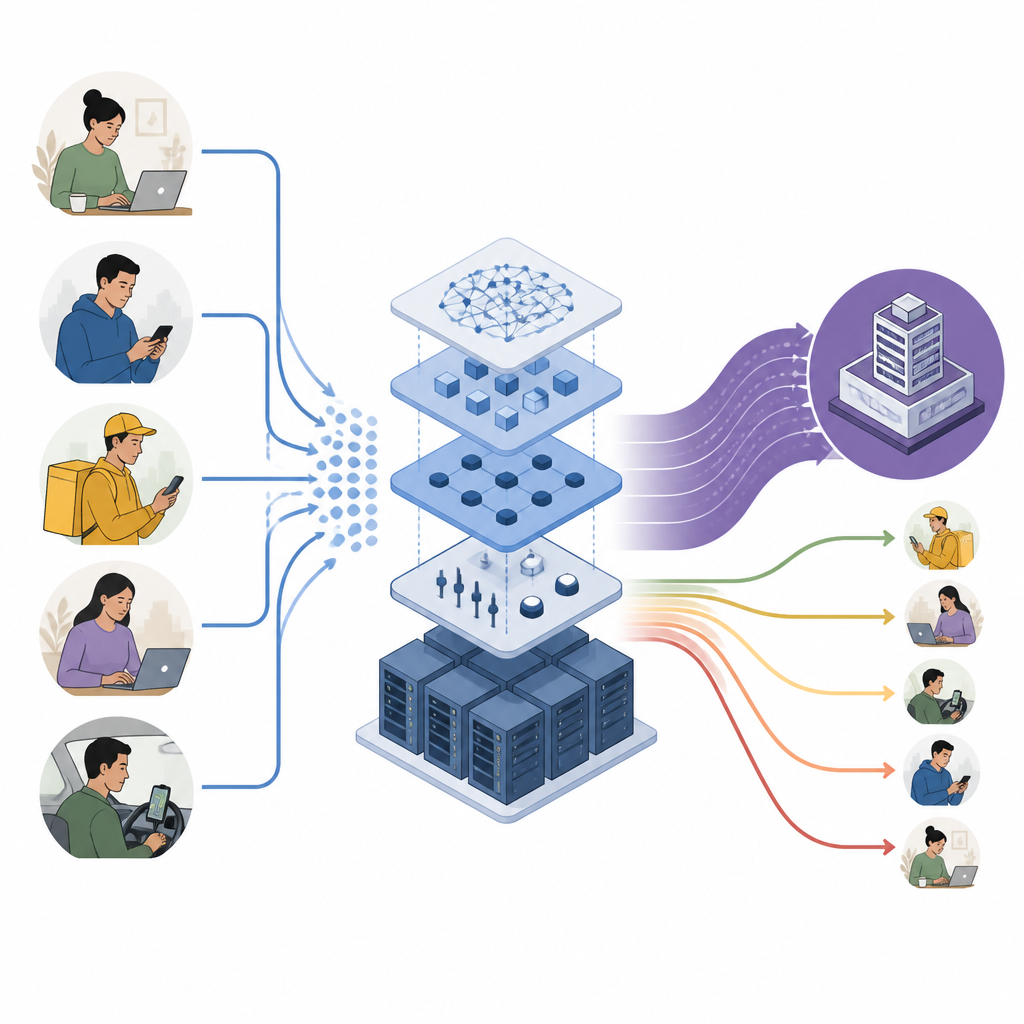
The author argues that AI does not replace the role of human labor as the source of new value, but it does change how that value is produced and divided. AI speeds up many tasks, reduces the amount of time needed per unit of output, and allows companies to watch and steer workers in fine detail. It also depends on large amounts of hidden human effort, from engineers building models to low-paid workers labeling data or filtering disturbing content. To analyze these shifts, the paper introduces a conceptual “AI enablement” factor: not a measure of value created by AI itself, but a way of thinking about how AI boosts the productivity of people and sharpens the tools companies use to capture a bigger share of what workers produce.
Where the money goes on digital platforms
In platform economies, value is generated across huge networks of workers and users, yet the rewards flow mainly to platform owners and investors. The paper maps how platforms earn revenue not only from direct fees on rides, deliveries, or freelance projects, but also from data collection, targeted advertising, and control of digital infrastructure. Network effects mean that the biggest platforms become more attractive as they grow, letting them set terms for millions of workers and users. Many contributors receive a small slice of the income or nothing at all, while platform owners collect “rents” by owning and controlling the underlying digital systems rather than by doing most of the work themselves.
Rules and institutions to balance the scales
Because these imbalances are built into laws and business models, the article calls for new rules and institutions. Suggested steps include recognizing many platform workers as employees with full rights, opening black-box algorithms to oversight, strengthening data protections, enforcing competition law, and supporting worker-owned or public platforms. Feminist and global perspectives are used to show how unpaid and poorly paid digital work, especially by women and workers in the Global South, props up today’s platform economy. The study stresses that these proposals are theoretical and need to be tested with detailed empirical research, but they offer a roadmap for how societies might align digital innovation with fairer treatment of the people whose labor makes it possible.
What this means for the future of work
Overall, the article concludes that AI and digital platforms have transformed how work is organized and how companies earn profits, but have not changed the basic fact that human labor remains the ultimate source of new economic value. Rather than seeing AI as an independent creator of wealth, the author argues that it is a powerful tool that can either deepen exploitation or, under different rules and ownership structures, support more democratic and equal digital economies. Understanding where value really comes from, and how it is shared, becomes crucial for anyone interested in the future of work in an increasingly digital world.
Citation: Zhang, F. The labor theory of value in the era of artificial intelligence and digital platforms: challenges, innovations, and new mechanisms. Humanit Soc Sci Commun 13, 717 (2026). https://doi.org/10.1057/s41599-026-07030-4
Keywords: digital labor, platform economy, artificial intelligence, labor theory of value, gig work