Clear Sky Science · en
Pre-service teachers’ perspectives on online learning and its challenges in higher education
Why learning from home still matters
When campuses close because of a pandemic, earthquake, or other crisis, online classes can keep education going. But for future teachers, learning how to teach is more than logging into a video call. This study followed English language teaching students at a Turkish university to see how years of online courses affected their views of learning, teaching, and fairness, and what it would really take to make digital education work well and feel sustainable in the long run.
Life between the classroom and the screen
The students in this study had experienced long stretches of fully online university during COVID-19 and again after a major earthquake, and later returned to regular classrooms. They could clearly compare both worlds. Most said online learning was handy: it saved time and money, cut commuting, and let them attend from almost anywhere. Some liked being able to replay recorded lessons when they were ready to focus. At the same time, a large majority still preferred being on campus, describing in-person classes as more social, lively, and motivating. For them, seeing the teacher, making eye contact, and sharing a room with classmates created a sense of seriousness and belonging that a laptop window could not match. 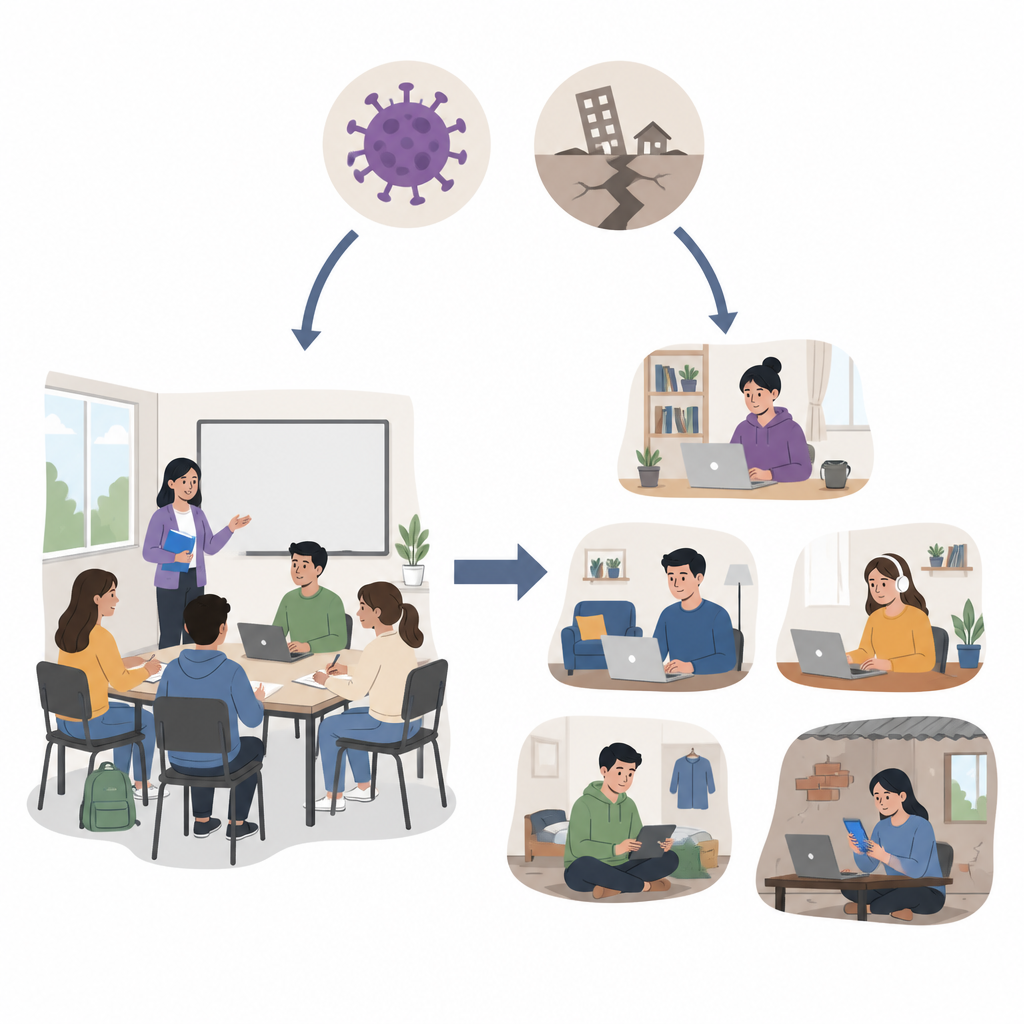
Lessons that work well online and those that do not
Student teachers drew a sharp line between kinds of courses. Theory-heavy subjects, like linguistics, literature, or education policy, were seen as well suited to online platforms. Slides, readings, and recorded talks could be digested from home with little loss. In contrast, practice-based courses where they rehearse teaching, give presentations, or act out classroom activities were widely viewed as needing a real room and a live audience. Micro-teaching over video made it hard to read faces, use body language, or sense whether anyone was paying attention. Many felt that in-person practice built their confidence as future teachers, while the online version dulled these vital experiences.
Invisible walls at home
Behind the screen, not all homes offered equal chances to learn. Some students enjoyed quiet rooms, good internet, and their own devices. Others shared a single computer with siblings, coped with weak connections, or struggled in crowded, noisy spaces where parents worked and children studied at the same time. Technical glitches routinely cut students off from live sessions. These problems were not just annoyances; they meant missed lessons, stress, and a sense of unfairness. Students also worried about the honesty of online exams, believing that cheating was common and that grades often did not reflect real effort. This eroded their trust in digital assessment and added to the feeling that online learning was less serious and less just than classroom learning.
What it feels like to teach through a webcam
Because these students were training to become teachers, the study also asked how they imagined themselves in the role of online instructor. Nearly half said they would rather remain students than teach online, pointing to the heavy workload of preparing digital materials, the difficulty of managing quiet or invisible classes, and the frustration of talking to blank screens. Some noted that even their lecturers struggled to use new platforms at first, which hurt lesson quality. A smaller group saw benefits in online teaching, such as being able to plan the course path, share rich digital resources, and reach students in distant places. Many suggested that both teachers and students need better training in digital tools, more support for technical issues, and more creative use of interactive apps to make online sessions feel active rather than passive. 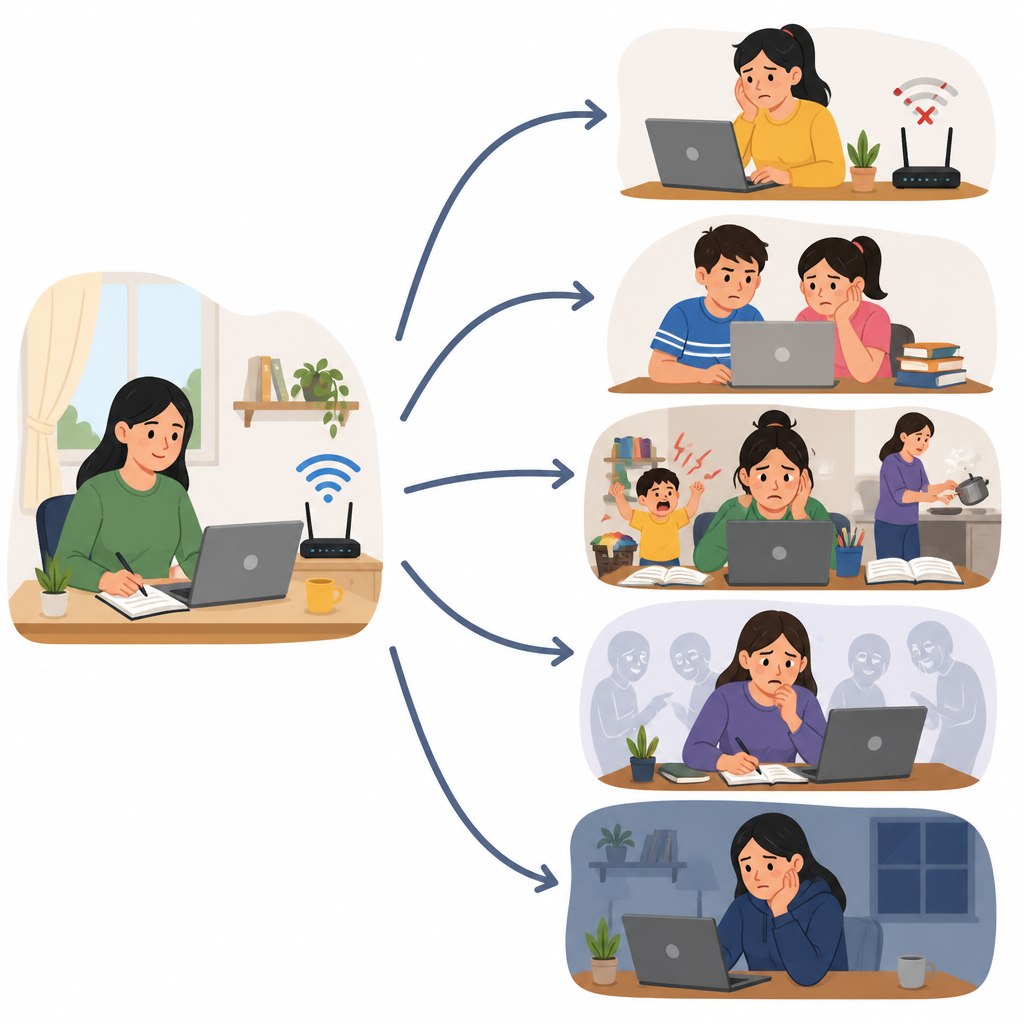
Toward fair and lasting online education
For a layperson, the main message is that online university is not simply a cheap, green replacement for campus life. It can offer real gains in flexibility and access, but only if the basics are in place: stable internet, enough devices, and homes that can double as study spaces. Even then, some of the most important parts of learning to teach, like practicing in front of real people, are still hard to recreate on a screen. The authors argue that making online learning truly sustainable will require more than new software. It will take investment in infrastructure, careful redesign of courses, fairer ways to test students, and ongoing support so that both teachers and learners can thrive, not just cope, when the classroom moves online.
Citation: Aybek, S., Kaya, E. Pre-service teachers’ perspectives on online learning and its challenges in higher education. Humanit Soc Sci Commun 13, 695 (2026). https://doi.org/10.1057/s41599-026-07001-9
Keywords: online learning, teacher education, student engagement, distance education challenges, higher education