Clear Sky Science · en
Empowered and aware: adolescent perspectives on technology and well-being in Chile and Colombia
Why this matters for families today
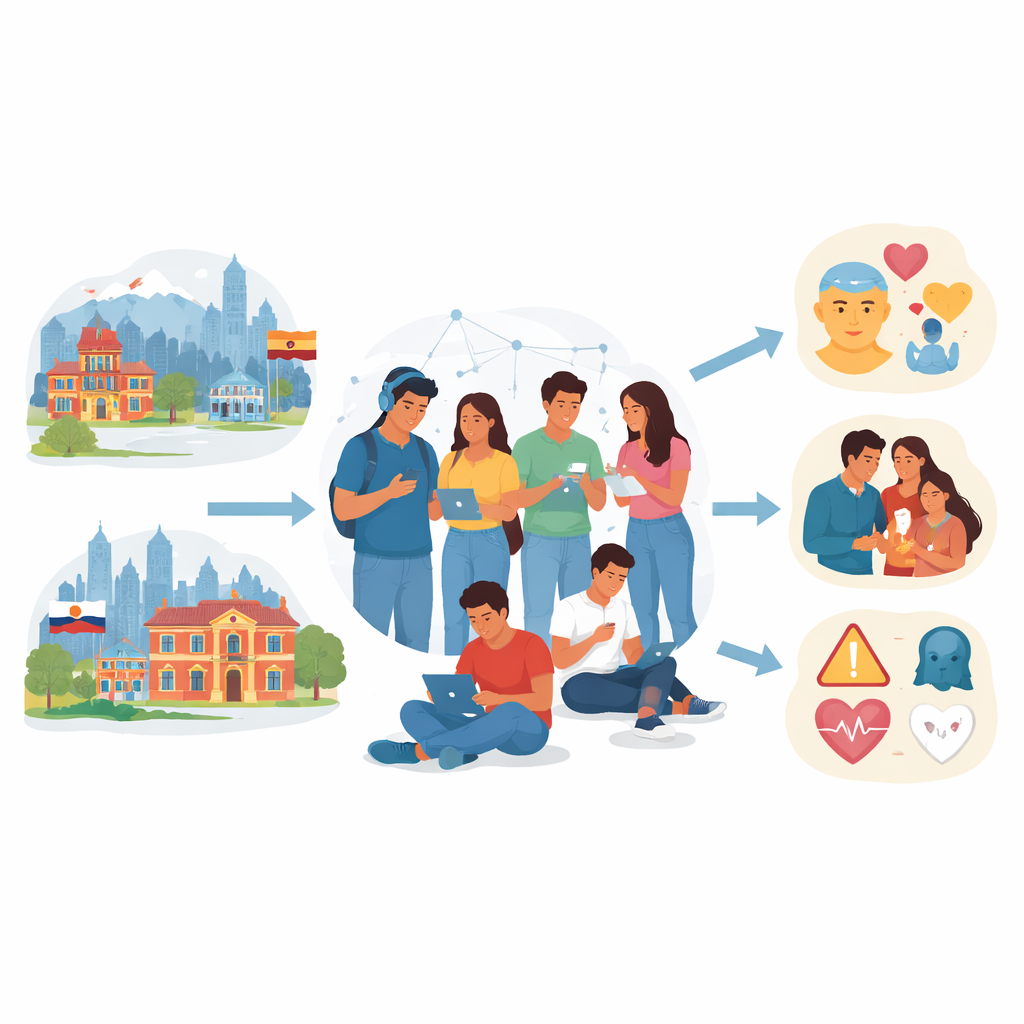
Teenagers in Chile and Colombia are growing up in a world where phones, apps, and online chats are woven into nearly every part of daily life. Parents, teachers, and policymakers often worry that screens are harming young people’s minds and relationships. This study listens directly to 210 adolescents to ask a simple but crucial question: how do they themselves see the link between technology and their own well-being? Their answers challenge some common fears and offer a more balanced, hopeful picture of young people as thoughtful and capable digital citizens.
Life online and offline, not one or the other
The teenagers who took part in focus groups in Santiago, Chile, and five Colombian cities described lives in which phones and the internet are everywhere: for homework, talking to parents, making plans with friends, and passing time. Yet, when asked what they actually enjoy most, many said they prefer being together in person—at school, in parks, or at each other’s homes. Some even said that if the internet disappeared for a week, they would simply go out more. Long stretches of online-only life during COVID-19 lockdowns seem to have made face-to-face time feel especially valuable, reminding them how much they had missed real-world contact.
Young people setting their own limits
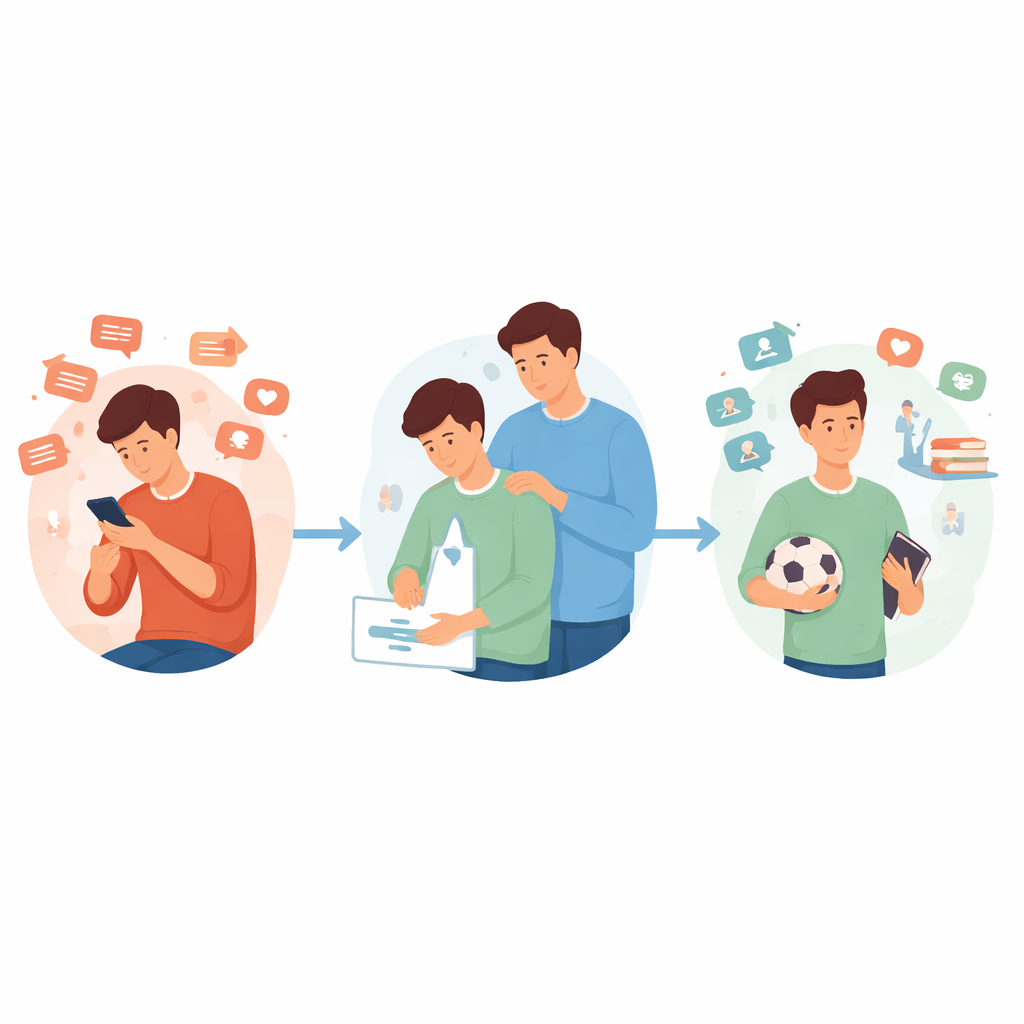
Adolescents did not describe themselves as helplessly glued to their screens. Many talked about feeling tired of constantly checking phones or chasing likes on social media, and they described specific tactics to keep use in check. Some uninstalled certain apps, set alarms to remind themselves to put the phone down, or drew a clear line between tools for learning and apps for entertainment. They also believed age and maturity matter: giving young children their own phone too early, they said, can make it harder for them to control their screen time or handle what they see online. These everyday strategies are a form of “digital resilience”—learning from experience to protect one’s own well-being.
Parents as guides, not just gatekeepers
The study found that today’s parents, who themselves grew up with mobile phones and social media, are more likely to understand digital life and use that knowledge to guide their children. Many teens described warm, open relationships in which they could share memes, ask for help with uncomfortable online situations, or even let parents access their accounts. In those families, rules and advice felt like care rather than control. At the same time, more restrictive approaches—such as strict monitoring apps or surprise phone checks—often led young people to hide messages, switch to disappearing chats, or borrow friends’ devices. Chilean adolescents, in particular, spoke strongly about privacy and felt that some parental measures crossed a personal line.
Different realities across class and country
Not all families approached technology in the same way. In higher-income households, teenagers more often described self-monitoring routines they designed themselves, like time limits or app changes. In lower-income settings, adults were more likely to set and enforce rules directly, and teens generally accepted these boundaries without open conflict. National culture also mattered: Chilean participants reported more privacy worries and resistance to strict controls, while Colombian teens tended to see parental supervision as a normal part of family life. These contrasts show that technology habits cannot be understood without looking at economic conditions, local norms, and the lingering effects of the pandemic.
What this means for supporting teens
Overall, the research suggests that phones and social media are not the main force shaping young people’s well-being. Factors like family support, poverty, schooling, and chances for play and movement remain far more important. Adolescents in this study came across as “empowered and aware”: they value being offline with friends, can describe the downsides of constant connection, and are already inventing ways to protect themselves online. Rather than treating them as digital victims in need of blanket restrictions, the authors argue for policies and education that respect teenagers as rights-bearing individuals. By listening to their experiences and strengthening both their skills and their support networks, societies can help ensure that digital tools serve young people’s growth instead of undermining it.
Citation: Santana, L.E., Alfaro, A. & López-Ordosgoitia, R. Empowered and aware: adolescent perspectives on technology and well-being in Chile and Colombia. Humanit Soc Sci Commun 13, 589 (2026). https://doi.org/10.1057/s41599-026-06934-5
Keywords: adolescent digital well-being, parental mediation, social media use, Latin American youth, digital resilience