Clear Sky Science · en
Beyond binary categorization: discursive construction of multiple identities and common ground in Hong Kong media’s coverage of international conflict
Why this story matters
The clash between China and the United States over trade is often described as a simple showdown between two rival powers. Yet our lives—through jobs, prices, and global stability—are tied to how this conflict is understood and managed. This article looks at how a major Hong Kong newspaper, the South China Morning Post, tells the story of the trade dispute in ways that go beyond "us versus them," showing how many countries are entangled in a shared economic fate.
A conflict bigger than two countries
The authors begin by explaining that news coverage of international disputes usually falls into neat camps: a virtuous "Self" and a threatening "Other." In the case of the Sino–U.S. trade dispute, that often means one side is cast as defending fair trade while the other is accused of cheating. This study argues that such a narrow view misses the messier reality of today’s global economy. Hong Kong, sitting between mainland China and the Western world, offers a rare vantage point. Its leading English-language paper, the South China Morning Post, speaks to business elites, policy watchers, and international readers, making it a useful case for seeing how the conflict is framed in a crossroads city.
How the study looked at the news
Rather than picking a few headlines and reading them closely, the researchers compiled a large collection of 486 South China Morning Post articles about the trade dispute, published from early 2018 to late 2019. They used computer tools to count which countries and regions were mentioned most often and which words tended to appear nearby. These patterns were then read in detail to see what kinds of stories the paper was building about different players. The authors combined this number-crunching with ideas from psychology that view identity as fluid and overlapping—people and nations can belong to many groups at once, not just to a single side in a fight.
Many players, many roles
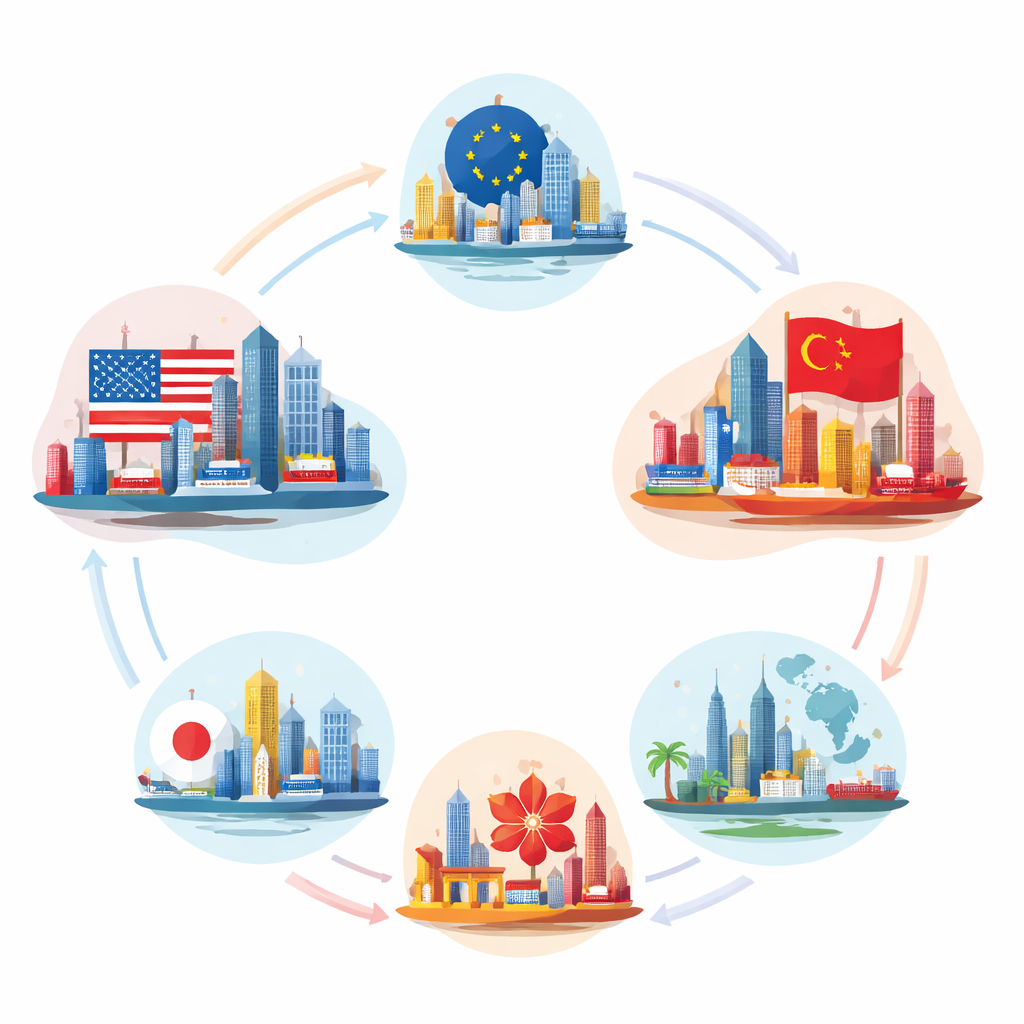
The analysis shows that while China and the United States dominate the coverage, they are far from alone. Hong Kong, Japan, the wider Asian region, and the European Union all appear frequently and in varied roles. The European Union, for example, is portrayed both as China’s economic partner and as a critic demanding fairer access to Chinese markets. Japan is sometimes grouped with other Asian economies pursuing regional trade deals, and at other times aligned with Western allies echoing U.S. security concerns about China. Hong Kong itself appears as a world city, a financial hub, a bargaining chip in negotiations, and a place where local protests intersect with great-power rivalry. These shifting portrayals reflect a world where alliances and identities overlap rather than fall into rigid blocks.
From enemies to reluctant partners
At first glance, the paper’s language still sketches a familiar divide: the United States is framed as the main driver of aggressive tariffs and hard-edged policies, while China is often portrayed as bearing economic damage and arguing for rules-based trade. Yet the South China Morning Post also repeatedly positions the two countries together as a pair whose quarrel threatens everyone else. Stories highlight how their dispute rattles global markets, complicates life for third countries, and tests institutions such as the World Trade Organization. Coverage of trade talks, negotiations, and potential deals places responsibility on both sides to compromise. Sometimes China is shown as a cause of international frustration—for instance, over market access—while the United States is presented as anxious about losing technological and economic dominance. This balances the picture and nudges readers to see a shared problem rather than a one-sided villain.
A middle ground shaped by Hong Kong
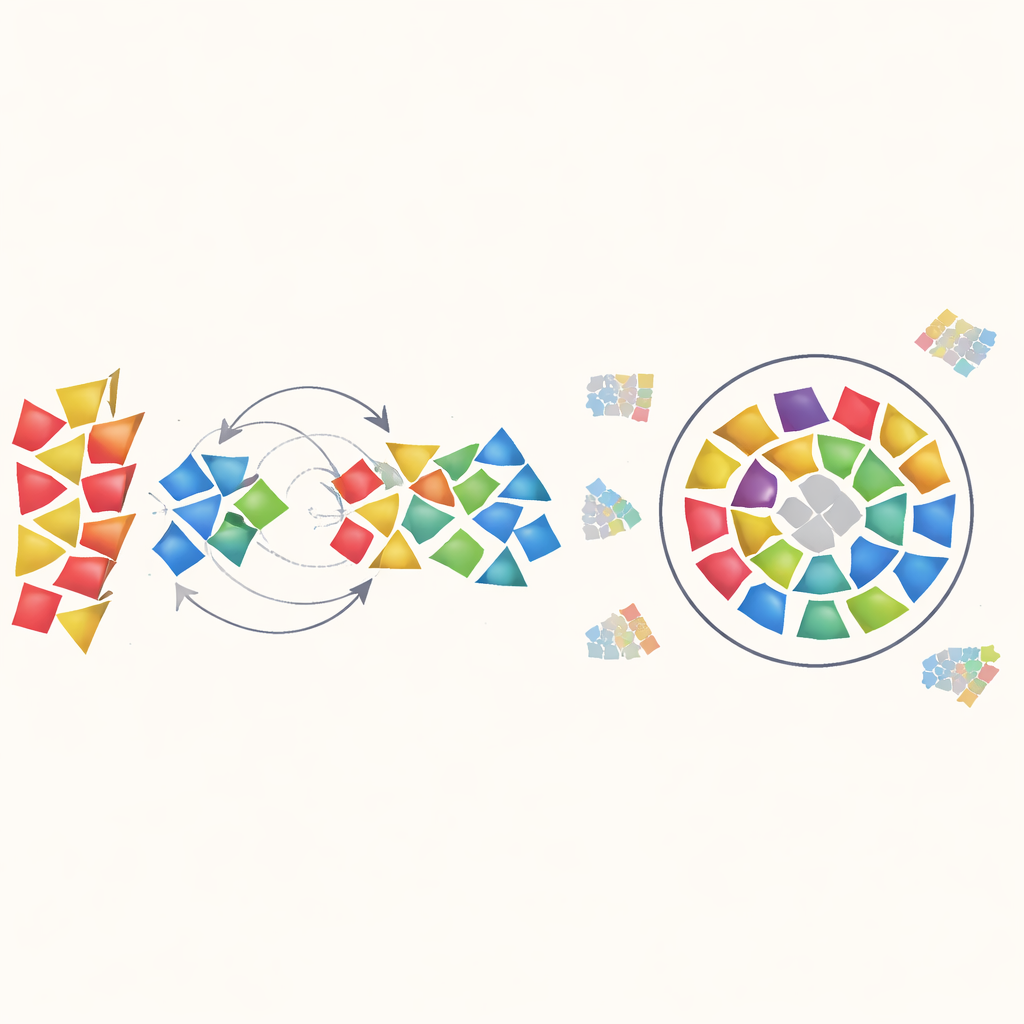
The authors argue that this more layered style of reporting is rooted in Hong Kong’s unusual position. As a special region of China with its own economic system and deep connections to global finance, Hong Kong depends on both sides of the dispute. The South China Morning Post operates in this “in-between” environment. It borrows Western journalistic norms such as fact-focused reporting and multiple expert voices, while also being attentive to Chinese perspectives and to the economic risks of rising tension. This mix encourages coverage that stresses interdependence, common interests, and the need for negotiation—what psychologists call building a “common ingroup,” a broader sense of “we” that includes former rivals.
What this means for readers and media
In the end, the study shows that news stories about conflict do not have to trap audiences in simple friend-or-foe thinking. By highlighting shared economic stakes, overlapping alliances, and the possibility of coexistence between different systems, media like the South China Morning Post can open space for more constructive public debate. While the research does not test how readers actually respond, it suggests that journalism grounded in common ground rather than pure confrontation may help societies imagine ways out of zero-sum struggles—even in something as fraught as the U.S.–China trade dispute.
Citation: Zhang, D., Zhang, Y. Beyond binary categorization: discursive construction of multiple identities and common ground in Hong Kong media’s coverage of international conflict. Humanit Soc Sci Commun 13, 593 (2026). https://doi.org/10.1057/s41599-026-06860-6
Keywords: media framing, US–China trade dispute, Hong Kong, international conflict, global interdependence