Clear Sky Science · en
Exploring the digital tourism ecosystem: unveiling user behavior through social network analysis
Why Your Travel Tabs Matter
When you plan a trip, you probably bounce between many websites: one for tickets, another for hotels, maybe a map or restaurant guide. This study asks a simple but powerful question: if we look at all those clicks together, what story do they tell about how modern travel really works online? By treating tourism websites as pieces of one big digital puzzle, the authors show how our everyday browsing builds an invisible travel network that shapes which services thrive, which stay hidden, and where new ideas could take root.
A Web of Connected Travel Sites
The researchers focused on Iran, a country where global travel giants like Booking.com and Airbnb are largely absent due to sanctions and other barriers. That makes its tourism web a self-contained digital world, ideal for study. Starting from the 500 most visited Iranian sites, five tourism experts handpicked those that truly relate to travel, such as transport, lodging, and local attractions. Then, the team expanded this list using traffic data from Alexa, looking at which sites share audiences and which ones people tend to visit just before or after a given page. After several rounds of filtering, cleaning, and removing general shopping and social media sites, they ended up with a focused set of 162 tourism-related websites.
Turning Clicks into a Travel Map
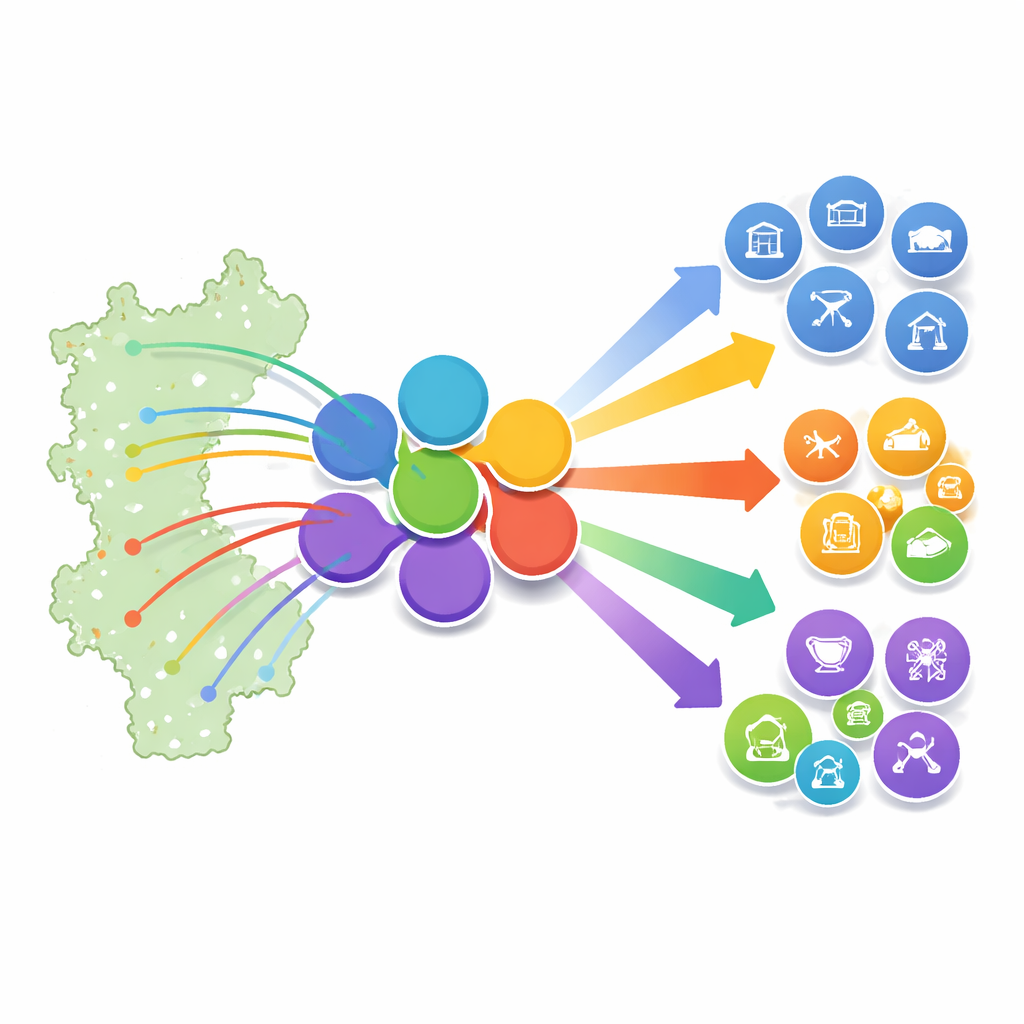
To see the hidden structure behind these sites, the authors used a technique called social network analysis. In this approach, each website becomes a dot, and every frequent move from one site to another becomes an arrow. The more people follow a particular path, the stronger that arrow becomes. With this network in hand, they applied a community-finding method that groups together sites that share many visitors. The result was a clear pattern: instead of random chaos, the digital tourism space breaks into clusters that mirror real-world needs such as booking, staying, getting around, and eating.

Eight Digital Neighborhoods of Travel
The analysis uncovered eight major “neighborhoods” of services. The largest, accounting for about a third of all sites, centered on ticket and tour booking for flights, trains, buses, and package tours. Separate clusters focused on hotel bookings; short-term rentals like suites and cottages; bus tickets; and online taxi services. Others revolved around location-based tools such as maps and local guides, websites about food and cooking, and platforms selling international tours or offering migration and visa help. Together, these groups form a complete trip: from planning and purchasing to getting around and discovering places to eat and visit.
Who Orchestrates the Journey
By studying how people move between these clusters, the authors found that ticket and tour sites play a starring role. They act as hubs where many journeys start, feeding traffic into hotel booking, bus ticketing, and international tour platforms. In other words, once travelers secure transport, they are more likely to branch out into other services. In contrast, taxi services and food or recipe sites sit on the fringes of the network. People use them, but they rarely move directly between those sites and the core planning platforms. This suggests that activities like booking a ride or exploring local dishes are treated as separate, on-the-spot decisions rather than steps integrated into the main planning path.
What This Means for Travelers and the Industry
Seen through everyday eyes, the study shows that our clicks are not just random; together they carve out well-trodden routes through the digital travel landscape. For travelers, this explains why certain sites seem to “hold everything together,” while others feel disconnected or hard to discover. For businesses and policymakers, the findings highlight where the ecosystem is strong and where it has gaps. Strengthening links between planning hubs and overlooked areas like food or local transport could make trips smoother and more enjoyable. In short, by mapping how people really move across tourism websites, the study points the way toward more joined-up, user-friendly digital travel experiences.
Citation: Maghsoudi, M., Aliakbar, S. & Mohammadi, A. Exploring the digital tourism ecosystem: unveiling user behavior through social network analysis. Humanit Soc Sci Commun 13, 441 (2026). https://doi.org/10.1057/s41599-026-06782-3
Keywords: digital tourism, online travel platforms, user navigation, social network analysis, service ecosystems