Clear Sky Science · en
Knowledge production under hegemonic shadows: the spectrum of epistemic inequality, power dynamics, and marginalisation in African studies
Why Who Tells Africa’s Story Matters
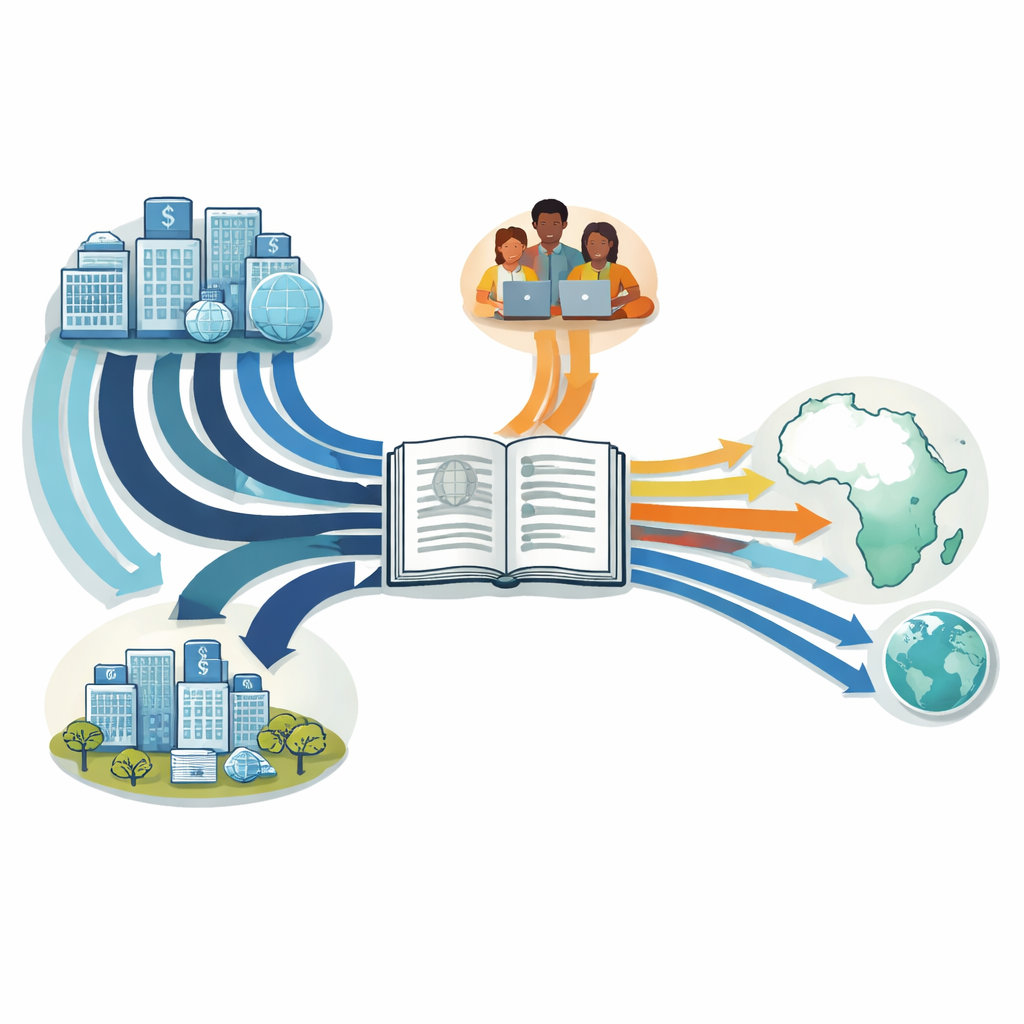
When we pick up an article about Africa—on elections, conflict, or pandemics—we rarely ask a simple question: who is doing the talking? This study looks behind the scenes of a leading journal in African Studies to show how a small group of mostly Western institutions, men, and funders still dominate what counts as knowledge about the continent. Using fifteen years of data from the journal Africa Spectrum, the authors trace patterns of authorship, topics, and funding to reveal how long-standing power imbalances continue to shape how Africa is studied and understood.
Looking Under the Hood of a Flagship Journal
To uncover these patterns, the researchers carried out a large-scale mapping of every research article published in Africa Spectrum between 2009 and 2023. They pulled records from a major academic database, checked them carefully against the journal’s own website, and then used specialised software to visualise who publishes, who gets cited, and what topics recur. This kind of “bibliometric” analysis does not read every article in depth; instead, it uses counts and connections—names, institutions, keywords, citations—to show the broader architecture of a field that might otherwise remain hidden from readers.
Whose Voices Are Loudest
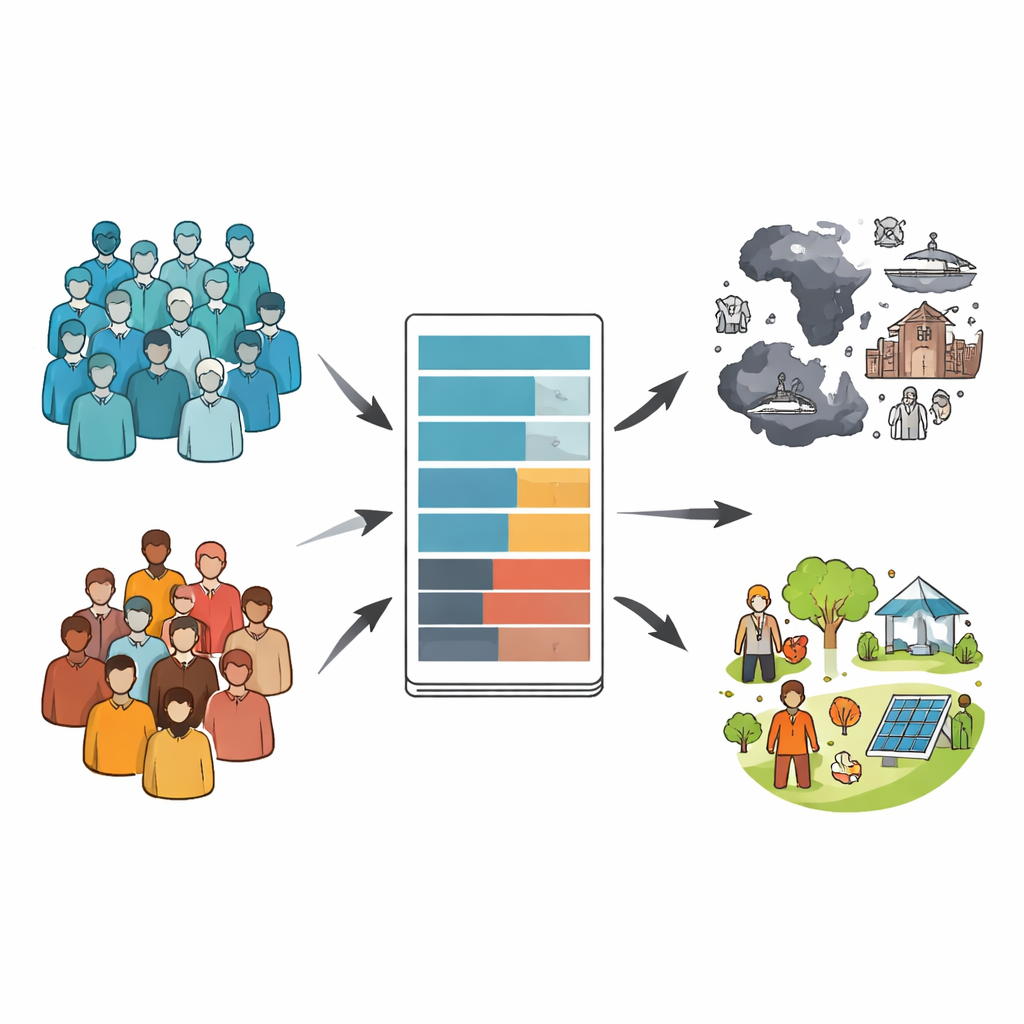
The clearest message from the data is that African Studies, even in a respected journal that seeks to be inclusive, is still largely shaped from outside the continent. Only about one-third of the authors were based in African institutions, while roughly two-thirds came from Western universities. Women were also underrepresented: just over a quarter of the authors were women, and the most cited works were written almost entirely by men. A small group of Western scholars appeared again and again as frequent authors and as the thinkers everyone cites, reinforcing their central position in conversations about Africa. Meanwhile, many African scholars—especially women—remained less visible, even when they contributed heavily to tasks such as fieldwork and data collection.
Where Research Power Lives
The imbalance shows up not only in people, but also in places. Germany, South Africa, the United States, and the United Kingdom supplied most of the journal’s authors, with a handful of powerful universities and research institutes publishing repeatedly. Many other African countries scarcely appeared at all, reflecting gaps in research infrastructure, funding, and access to global publishing networks. The same pattern holds for money: most funded articles relied on Western agencies and foundations. Local African funding bodies played only a minor role, leaving research agendas strongly shaped by priorities, interests, and criteria set in the Global North rather than on the continent itself.
How Africa Is Framed
Beyond who writes, the study also asks what they write about. The most cited articles and the most common keywords point to a narrow band of themes: conflict, civil war, power-sharing deals, authoritarian rulers, land disputes, and the economic fallout of crises such as COVID-19. Terms like “democracy” and “elections” cluster around a small set of countries, especially South Africa, Nigeria, and a few others, and they are largely approached through Western political models. Topics that might highlight everyday creativity, social progress, or locally rooted ways of knowing appear much less often. Taken together, this paints Africa as a place of recurring trouble more than a site of innovation, resilience, or intellectual leadership.
Why Change Is Urgently Needed
In plain terms, the article concludes that current systems for producing knowledge about Africa still carry the shadows of colonial-era hierarchies. A few Western institutions, funders, and senior male scholars hold most of the cards, from who gets published to which topics are seen as worthy or “serious.” The authors argue that if Africa is to speak in its own voice, several things must change: more support for Africa-based journals and universities, stronger roles for African scholars—especially women—in setting research agendas, fairer funding rules that reflect local priorities, and more room for research that moves beyond crisis narratives. Only by widening who participates and what gets studied can African Studies evolve into a field that truly reflects the diversity, agency, and intellectual autonomy of the continent.
Citation: İzgi, M.C., Karadağ, E., Yılmaz, H.İ. et al. Knowledge production under hegemonic shadows: the spectrum of epistemic inequality, power dynamics, and marginalisation in African studies. Humanit Soc Sci Commun 13, 423 (2026). https://doi.org/10.1057/s41599-026-06769-0
Keywords: African knowledge production, epistemic inequality, academic neo-colonialism, gender in scholarship, research funding in Africa