Clear Sky Science · en
Modeling the dynamics of self-efficacy sources in English speaking proficiency: insights from Indonesian high school students
Why Student Confidence in Speaking Matters
Being able to speak English opens doors to scholarships, overseas study, and better jobs. Yet many Indonesian students, despite years of lessons, still hesitate to speak up. This article explores a simple but powerful question: what actually helps teenagers believe, “I can do this” when they speak English? By tracing how different kinds of experiences shape confidence, the study offers practical clues for parents, teachers, and students who want English to become a real-life tool, not just a school subject.
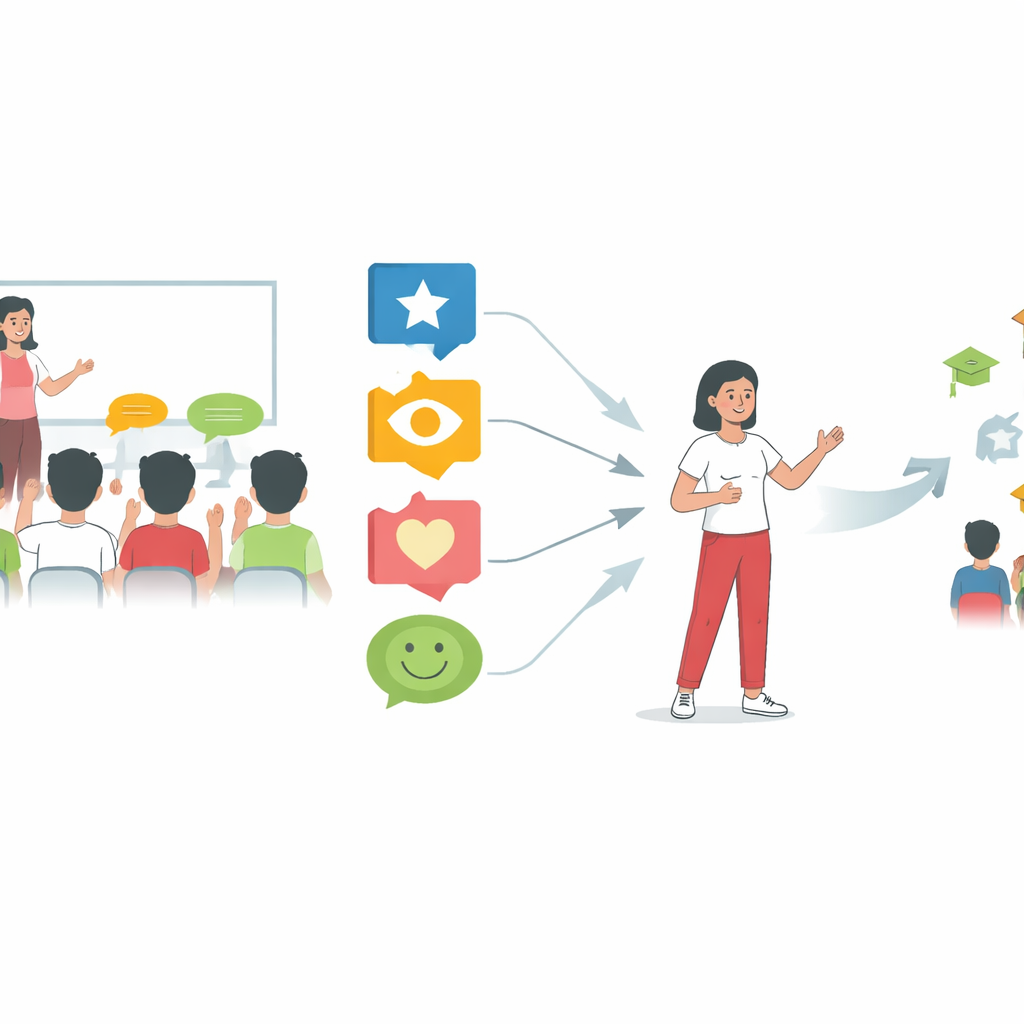
Four Everyday Experiences That Shape Belief
The researchers focus on “self-belief” in speaking English—students’ own judgment about whether they can handle speaking tasks. Building on long-standing psychological work, they examine four familiar sources of this belief: doing something successfully (mastery experiences), watching others do it (vicarious experiences), receiving encouragement and feedback (verbal persuasion), and the feelings in one’s body and emotions, such as anxiety or calm (emotional and physiological states). While these ideas come from global research, little was known about how they work together for Indonesian high school students, who often learn English in exam-focused classrooms with few chances to speak.
A Close Look at Indonesian High School Students
The study surveyed 329 first-year students from both academic and vocational high schools in one Indonesian city. Students answered questions about how confident they felt when speaking English in class and how often they experienced each of the four types of self-belief sources. The researchers then used a statistical approach that allows them to see not only which factors matter but also how they influence one another. This approach is a bit like mapping a network of cause-and-effect arrows between experiences and confidence.
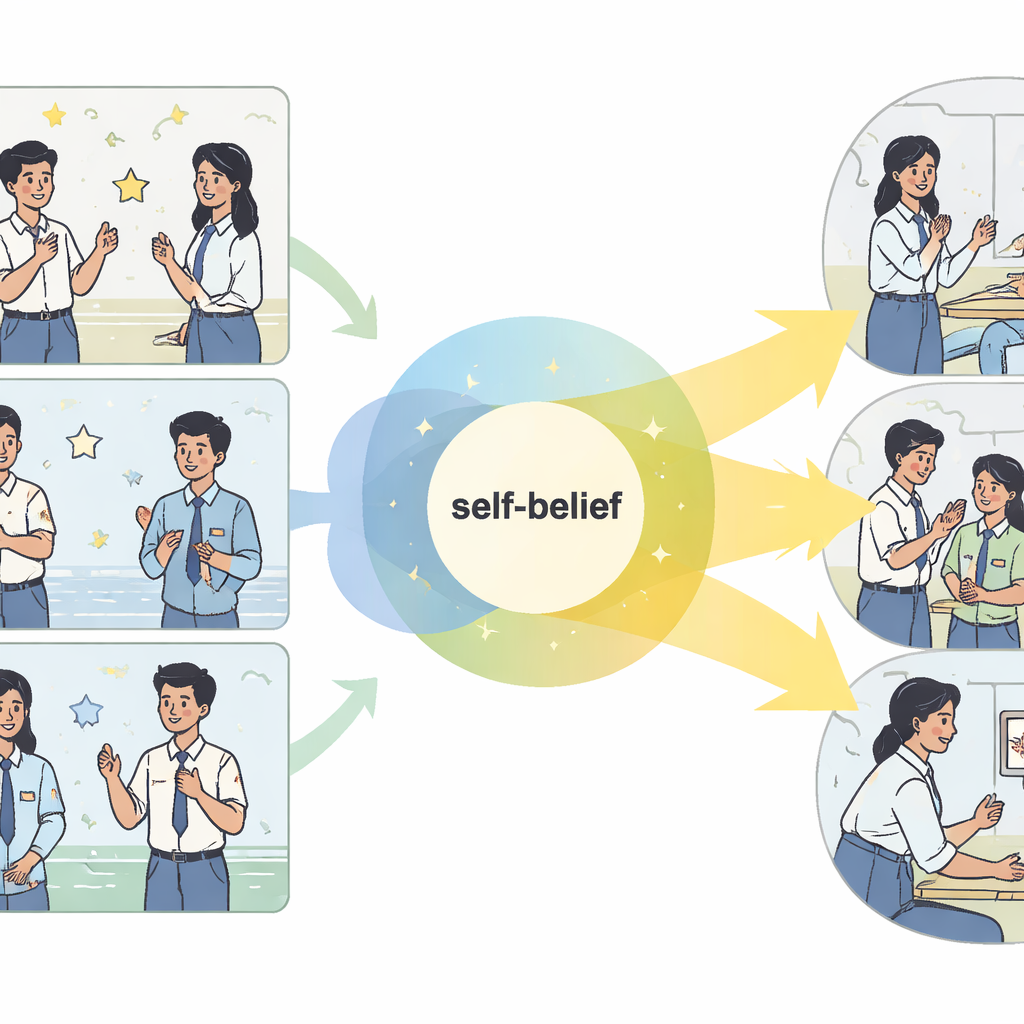
What Matters Most for Speaking Confidence
The clearest finding is that past success in speaking tasks is the strongest direct driver of confidence. When students can point to times they have actually spoken English and felt it went well—even in small, carefully guided activities—their belief in their own ability rises sharply. Encouraging words and constructive feedback from teachers and peers also have a direct positive effect. In contrast, simply watching others speak English does not, on its own, boost confidence enough for these students. And surprisingly, reported feelings such as anxiety or tension did not directly predict how confident they felt, nor did these feelings strongly shape the other factors in this particular group.
How Watching Others and Encouragement Work Together
Although observing classmates and role models did not directly raise confidence, it still played an important supporting role. Watching peers succeed helped students build confidence only when it was followed by their own successful attempts or combined with warm, believable encouragement. In other words, seeing someone like you speak English can plant a seed, but it grows only when teachers create chances for you to try for yourself and offer feedback that highlights progress rather than mistakes. The study also shows that encouragement and observation feed into mastery experiences: together they nudge students to participate, which then generates the very successes that fuel stronger self-belief.
What This Means for Classrooms and Beyond
For a layperson, the takeaway is straightforward: students do not become confident English speakers just by sitting in grammar-heavy lessons or silently watching others perform. They need many small, supported wins. The authors argue that Indonesian teachers can help by breaking speaking tasks into manageable steps, using group work and role play, drawing on multimedia and simple game-like activities, and giving gentle, process-focused feedback. Over time, these choices turn speaking from a source of fear into a source of pride. While emotions like anxiety are still present, the study suggests that the most effective way to change how students feel is to surround them with real chances to succeed, clear models to learn from, and consistent encouragement that tells them their voice in English matters.
Citation: Hadijah, S., McCauley, V. Modeling the dynamics of self-efficacy sources in English speaking proficiency: insights from Indonesian high school students. Humanit Soc Sci Commun 13, 370 (2026). https://doi.org/10.1057/s41599-026-06699-x
Keywords: English speaking confidence, self-efficacy, Indonesian high school students, language learning motivation, classroom teaching strategies