Clear Sky Science · en
Towards a deeper understanding of information manipulation: Proposing a multilevel framework for the analysis of manipulative narratives
Why stories that twist the truth matter
From vaccine rumors to election conspiracies, many of today’s fiercest public debates are driven less by hard facts than by gripping stories. This article explores how such stories—especially those designed to mislead—shape what people believe about politics and policy. It asks a simple but pressing question: when so many terms like “fake news,” “propaganda,” and “disinformation” are used at once, how can we clearly analyze the narratives that actually push people toward mistrust and division?
Many faces of misleading information
The paper begins by surveying the wide range of information tactics that can distort public debate. Some messages are outright lies; others mix truths, half‑truths, and inventions. Rather than focusing only on whether a claim is true or false, the author emphasizes intent and effect: manipulation aims to steer audiences using biased, emotionally charged content. This can appear as propaganda from states, conspiracy stories that question official accounts, or coordinated online campaigns that use fake accounts and bots. Despite their differences, these practices share one key feature: they work through stories that explain who is to blame, who is threatened, and what should be done.
Cutting through a fog of jargon
Scholars have tried to make sense of these phenomena using overlapping ideas. Some talk about “frames,” the cues that highlight certain aspects of an issue (such as danger, injustice, or cost). Others focus on “narratives,” the broader stories that tie events together into a plot. In practice, these concepts often blur, and different fields use different labels for similar things. This creates what the author calls a “fog of words,” making it hard to compare studies or build a shared understanding of information manipulation. Existing approaches may mix detailed storylines with broad themes or even with ideology itself, which operates at a different level than individual messages.

A four-layer structure for manipulative stories
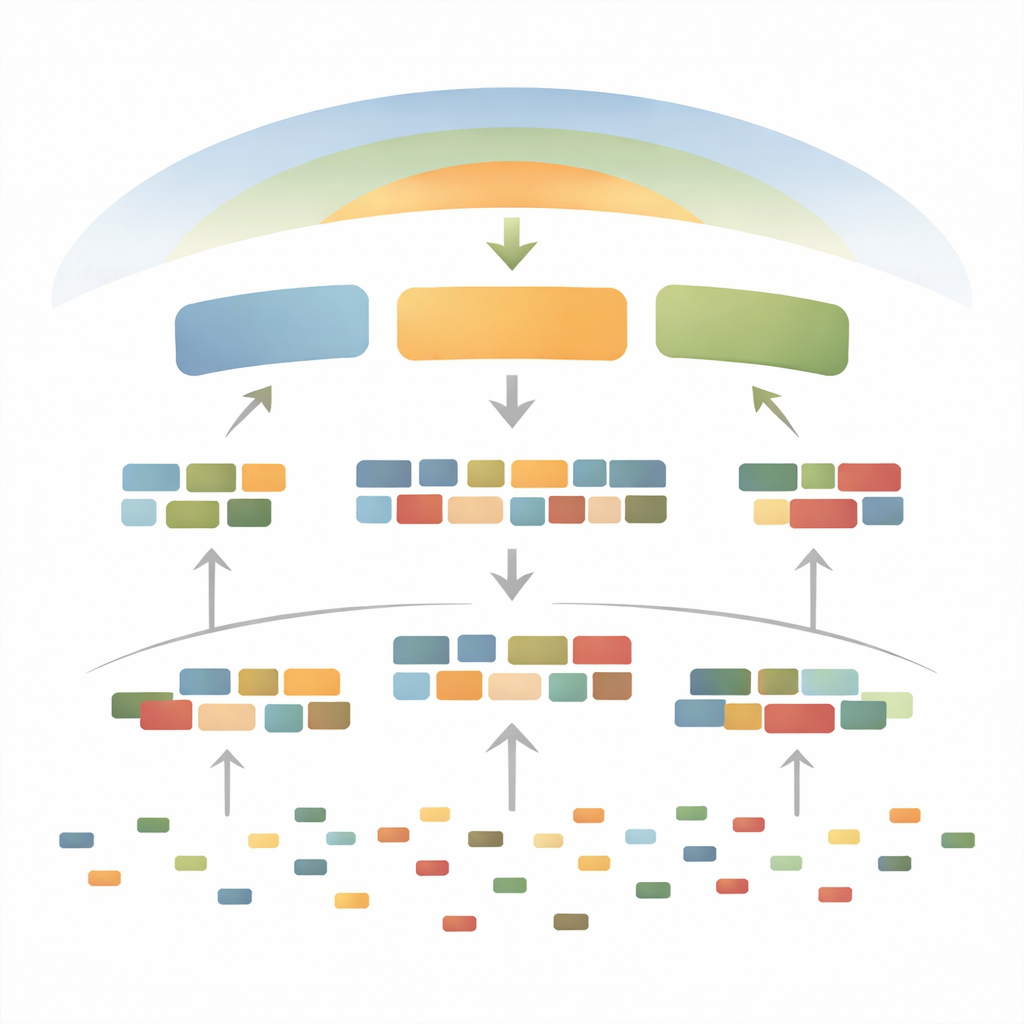
To bring clarity, the paper proposes a multilevel framework that treats manipulative stories as built from four nested layers. At the base are semantic frames—individual words and phrases that give an issue a particular tone, such as “tyranny,” “crisis,” or “burden.” These combine into strategic narratives, which are concrete stories about how a situation came about, who is responsible, and what consequences loom. Several related strategic narratives can be grouped into broader master‑narratives, the recurring storylines that a state or political actor uses across many situations. At the highest level sit meta‑frames, timeless themes like “people versus elites,” “David versus Goliath,” or “rise and fall,” which give these stories deep emotional resonance. Lower levels can be read directly from texts, while higher levels require interpretation of historical and political context.
Testing the idea: climate policy and the EU elections
To see how the framework works in practice, the author conducted a case study on narratives attacking European Union climate policies around the 2024 European Parliament elections. Using media monitoring tools, he collected 27 narratives from Russian state outlets and aligned right‑wing European media in several languages. Each article or post counted as a narrative if it told a clear story about EU climate action. Through iterative coding, the author identified key words and phrases, grouped similar stories, and linked them to higher‑level patterns. A second coder was brought in to check reliability, and their substantial agreement suggested that others can apply the framework in a consistent way.
Three recurring stories about Europe and climate change
The analysis uncovered three major master‑narratives. The first casts the EU as an oppressive force, a distant bureaucracy imposing a “green tyranny” on ordinary citizens, especially farmers and workers. Here the meta‑frame is “people versus elites”: noble citizens resist uncaring rulers. The second presents the EU’s green agenda as a new form of colonial domination over poorer countries, particularly in Africa. This taps into a “David versus Goliath” theme, portraying developing societies as underdogs suffering hunger and poverty because of rich countries’ climate rules. The third depicts Europe as a civilization in decline, ruined by its own climate policies, echoing tales of empires that collapse due to misguided leaders. This “rise‑and‑fall” meta‑frame suggests the EU is doomed to deindustrialization and crisis.
What this means for understanding manipulation
The article concludes that manipulative campaigns do not rely solely on fake facts. Instead, they weave existing grievances and real events—such as farmer protests or economic fears—into emotionally charged stories that erode trust in democratic institutions. By separating the building blocks of these stories into four clear levels, the proposed framework helps researchers and practitioners see how particular words feed into plots, how those plots repeat across issues, and how they draw power from familiar moral tales. For a general reader, the key takeaway is that when a message feels especially satisfying or enraging, it may be because it plugs into one of these deeper story patterns—making it all the more important to pause and question who is telling the story, and why.
Citation: Lenk, T. Towards a deeper understanding of information manipulation: Proposing a multilevel framework for the analysis of manipulative narratives. Humanit Soc Sci Commun 13, 343 (2026). https://doi.org/10.1057/s41599-026-06656-8
Keywords: disinformation, political narratives, framing, European Union, climate policy