Clear Sky Science · en
Global disparities in urban parks deepen inequality in resident well-being
Why City Parks Matter to Everyone
As more people around the world move into cities, parks are becoming much more than pretty places to walk a dog or sit on a bench. They help keep neighborhoods cooler during heatwaves, give children safe places to play, support wildlife, and offer a free way for people to relax and meet each other. This study asks a simple but urgent question with global consequences: who actually gets these benefits, and who is being left out?
A Global Checkup on City Parks
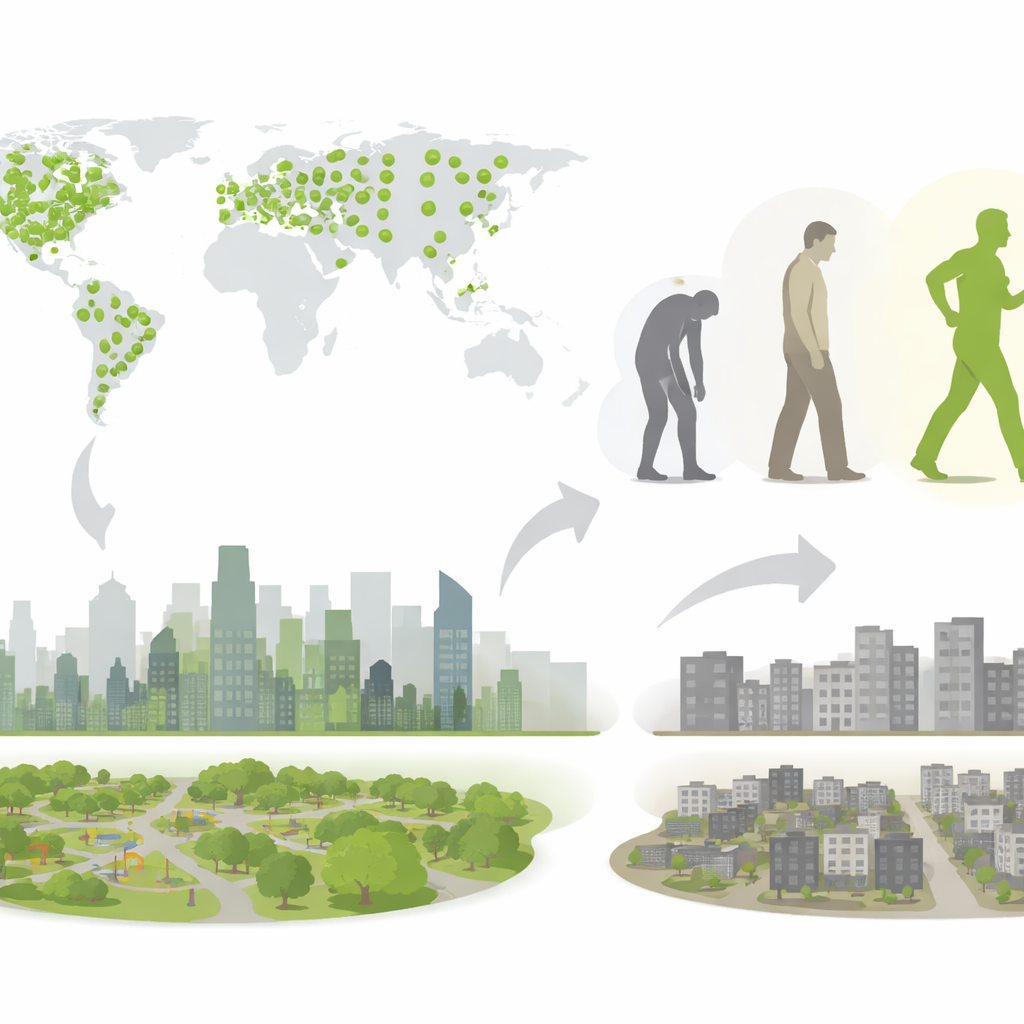
To answer this, the researchers assembled a detailed map of about 440,000 parks in 1,860 cities across the globe, covering the homes of billions of people. Instead of just counting how much green area each city has, they created a new score called the Comprehensive Benefit Index, or CBI. This index looks at three things together: how many parks there are and how big they are (richness), how healthy and leafy the vegetation is (greenness), and how easy it is for people to reach a park from where they live (accessibility). By combining satellite data, population maps, and on-the-ground information, the team could compare city parks across rich and poor countries using the same yardstick.
Where Parks Are Plentiful—and Where They Are Not
The results reveal a stark divide. Only about 8% of countries hold 80% of the world’s urban park area. High-income countries contain roughly 70% of all park land, while upper-middle-income countries hold another quarter. That leaves low- and lower-middle-income countries with just a small slice of the global park pie, even though they host large and growing city populations. On average, high-income countries have more park area per person and a higher share of their urban land devoted to parks, while poorer countries often have tiny park areas squeezed into sprawling, crowded cities.
The Three Ingredients of Park Benefits
Looking more closely at the three pieces of the CBI reveals how uneven city park systems really are. Richer countries generally score highest on all three components: they have more park space per person, greener and healthier vegetation, and parks that are woven more tightly into the urban fabric, so people travel shorter distances to reach them. Middle-income countries often do well on sheer quantity of parks but fall short on quality or access. For example, some countries have many large parks that are far from where most residents live, or they are filled with hard surfaces and sparse trees rather than lush, cooling greenery. In the poorest countries, shortfalls in all three areas are common: too few parks overall, thin or stressed vegetation, and long distances or poor transport links that make it hard for residents to visit.
Different Problems, Different Solutions
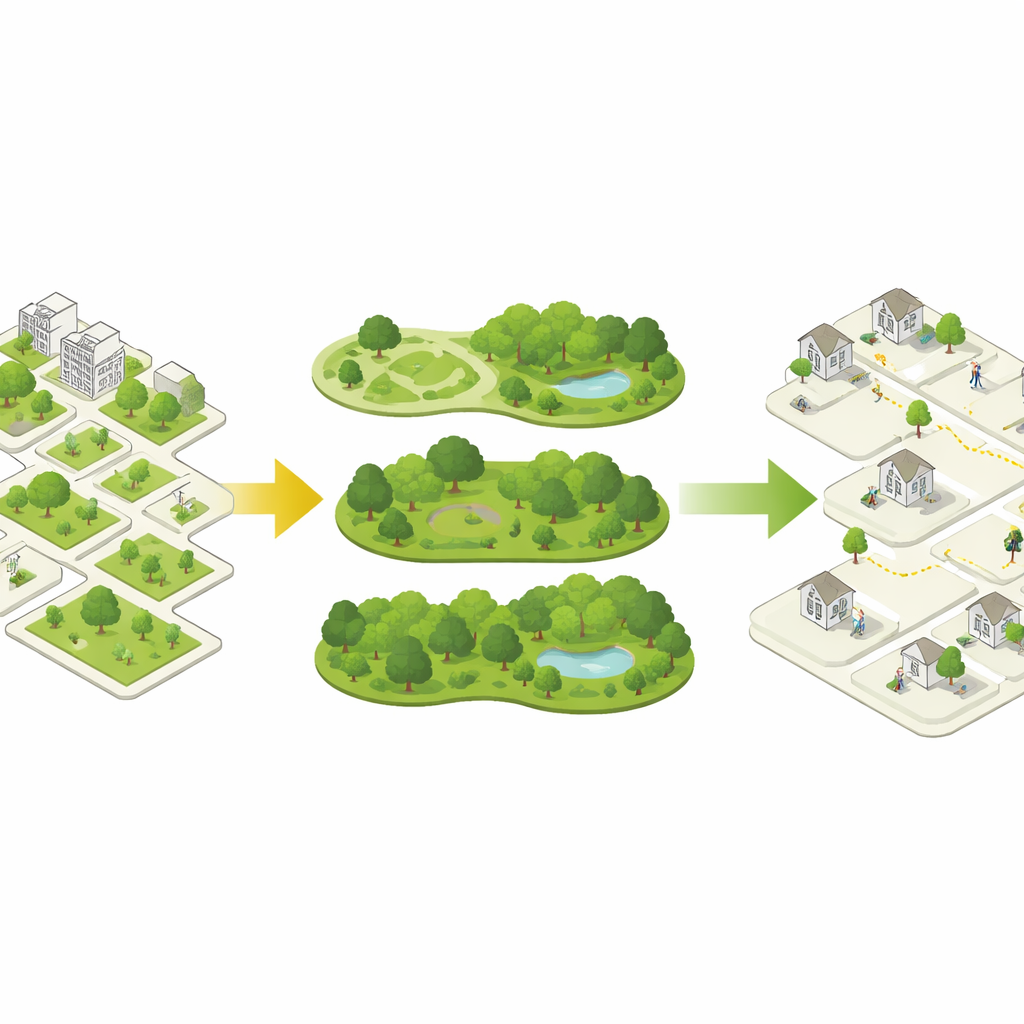
The study argues that treating all cities the same will not fix these imbalances. In upper-middle-income countries such as Brazil or Russia, the biggest problem is often accessibility: parks exist, but they are not evenly spread, and poorly connected transport makes reaching them difficult. The authors suggest aligning park planning with public transit, improving walking routes, and adding small green spaces in dense neighborhoods. In high-income but space-constrained or dry regions, such as parts of East Asia and the Middle East, the key issue is greenness. Here, the focus should be on improving vegetation—using shade trees, drought-tolerant plants, efficient irrigation, and even rooftop or vertical greenery—so parks can better cool cities and clean the air. In many low- and lower-middle-income countries, the most basic problem is richness: there simply are not enough parks. For these cities, the authors recommend reserving land for parks in all new development, building low-cost “pocket parks” near crowded or informal settlements, and securing long-term funding and community support to maintain them.
What This Means for Everyday City Life
For a layperson, the takeaway is straightforward: your chance to enjoy a nearby, leafy, inviting park depends heavily on where in the world you live and how wealthy your country is. The study’s new index shows that these differences are not just about how many parks a city has, but whether they are green enough and close enough to truly serve people’s needs. By diagnosing whether a city mainly lacks park space, healthy vegetation, or easy access, the CBI framework gives planners and policymakers a clearer guide to action. If cities and international agencies follow these tailored strategies, urban parks could become powerful tools for narrowing, rather than deepening, global gaps in health, comfort, and quality of life.
Citation: Kuang, W., Hou, Y., Dou, Y. et al. Global disparities in urban parks deepen inequality in resident well-being. npj Urban Sustain 6, 69 (2026). https://doi.org/10.1038/s42949-026-00371-8
Keywords: urban parks, environmental inequality, green space access, city planning, human well-being