Clear Sky Science · en
Gender inequalities in high psychological distress vary across European regions and occupational subgroups
Why this topic matters for everyday work
Mental strain at work is something many people feel but rarely measure. This study looks at how often men and women across Europe experience strong psychological distress in their jobs, and how this varies between regions and types of work. Understanding these patterns can help employers, unions, and policymakers design fairer and healthier workplaces.
Looking at workers across Europe
The researchers used data from more than 67,000 employees in 36 European countries who took part in the 2021 European Working Conditions Survey. Everyone in the study had worked for pay at least one hour in the week before they were interviewed by phone. To capture mental strain, the team used a short questionnaire called the WHO-5 Well-Being Index, which asks how often people recently felt cheerful, calm, active, rested, and interested in life. Low scores on this scale were used as a sign of high psychological distress, meaning a higher risk of depression, though not a clinical diagnosis.
How gender and job type were grouped
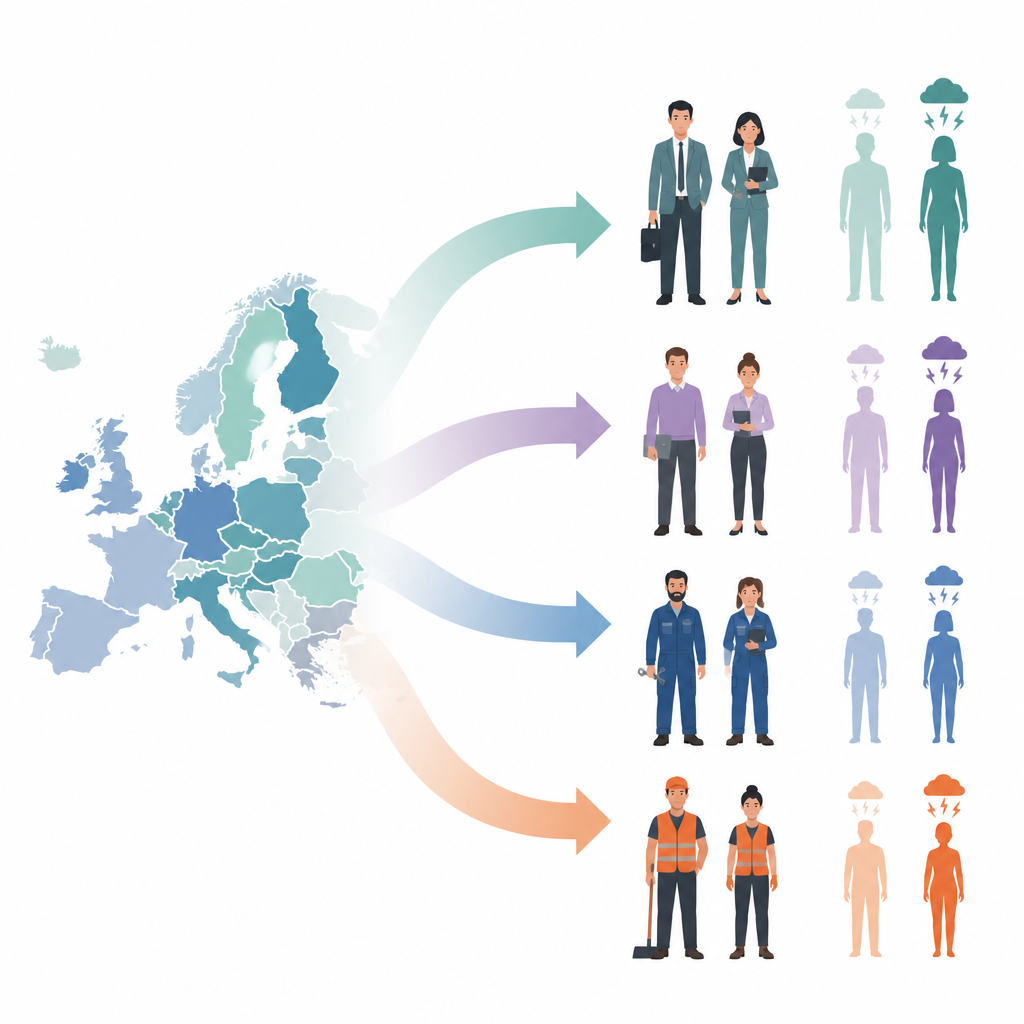
Participants reported their gender as male or female; a small group choosing “other” was excluded because the numbers were too low to analyse separately. Jobs were sorted into four simple categories. White-collar high-skilled workers included managers, professionals, and technicians. White-collar low-skilled workers included clerical, service, and sales staff. Blue-collar high-skilled workers included skilled trades and agricultural workers, while blue-collar low-skilled workers included machine operators and basic manual roles. Countries were also grouped into four regions: Western, Eastern, Southern, and Northern Europe, to ensure enough people per category for reliable comparisons.
Where distress is highest and who is most affected
Across Europe, women reported high psychological distress more often than men: about one in four women versus one in five men fell below the well-being threshold. The share of highly distressed workers differed strongly by country, with Kosovo, Romania, Denmark, and Finland showing the lowest levels and the United Kingdom, Slovakia, and Serbia among the highest for both genders. Yet a country’s overall distress level did not clearly predict how large the gap between women and men would be, suggesting that the total burden and the gender difference are partly separate issues.
Patterns across regions and occupations
When the researchers accounted for workers being clustered within regions, women had higher odds of high distress in every region. The gender gap was smallest in Eastern Europe and Northern Europe and largest in Southern and Western Europe, although many statistical uncertainty ranges overlapped. Looking at occupations, women again showed more distress in all four job groups. The biggest gaps appeared in blue-collar low-skilled roles and white-collar high-skilled roles, while blue-collar high-skilled jobs showed the smallest difference. When region and occupation were combined, white-collar high-skilled jobs in Western Europe and blue-collar low-skilled jobs in Southern Europe stood out as especially unequal, marking these groups as particularly vulnerable.
What might explain these gaps
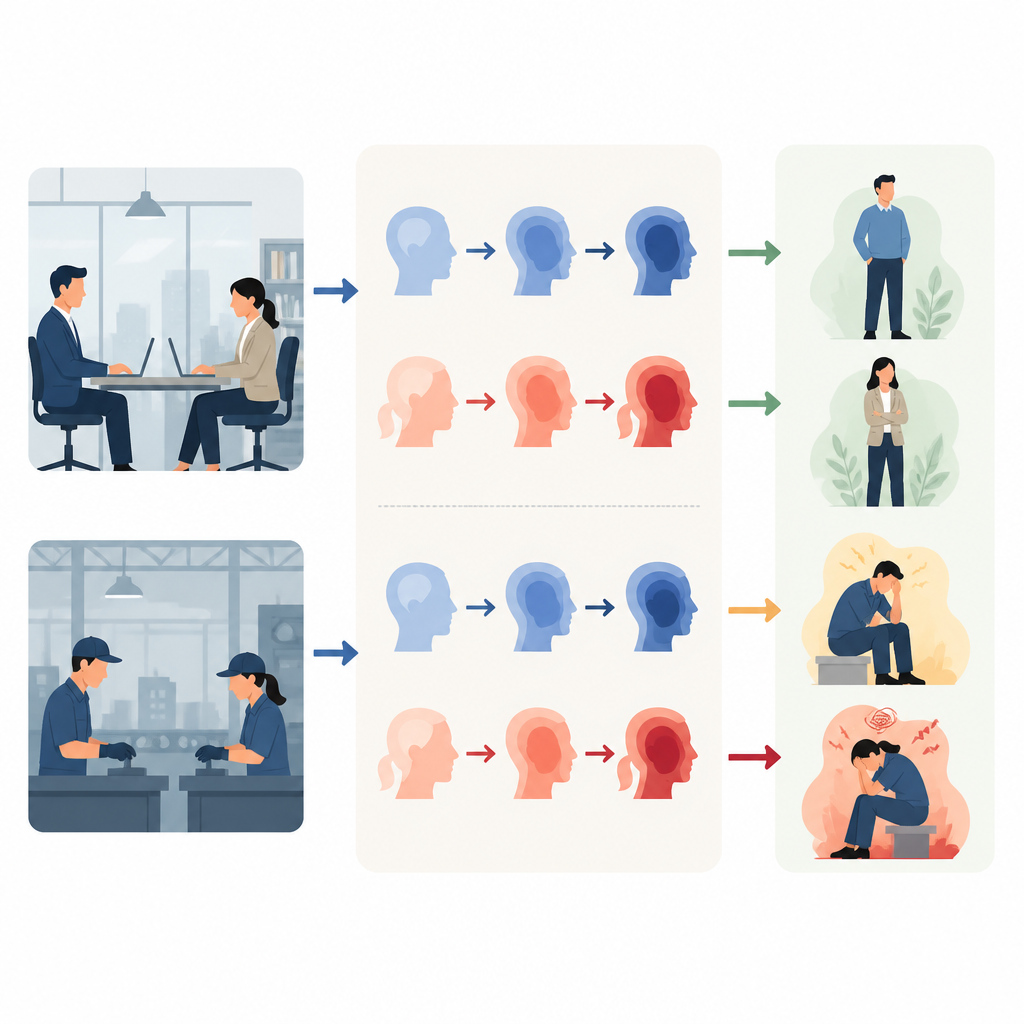
The study discusses several possible reasons for these patterns. Women in Europe still do most unpaid care work, such as childcare and caring for relatives, which can add to the strain of paid work. In high-skilled white-collar roles, the gender pay gap and feeling under-rewarded for effort may contribute to distress. In low-skilled blue-collar jobs, women often work in male-dominated environments, which may involve monotony, low control, and exposure to bias or lack of support. National factors such as gender equality, childcare systems, labour laws, and cultural norms around gender roles likely shape how these pressures play out, though this study could not test all of these directly.
What the findings mean for workers and policy
To a lay reader, the key message is that women across Europe are more likely than men to experience serious psychological distress at work, but this gap is not the same everywhere. It is wider in some regions and in certain job types, especially high-skilled office work in Western Europe and low-skilled manual work in Southern Europe. Because distress can lead to sickness absence, reduced income, and early exit from employment, these gendered patterns have real consequences for financial security and independence. The authors argue that targeted, region-specific and job-specific measures to improve working conditions, support care responsibilities, and reduce structural inequalities are needed to narrow these mental health gaps in Europe’s workforce.
Citation: Grasshoff, J., Safieddine, B., Sperlich, S. et al. Gender inequalities in high psychological distress vary across European regions and occupational subgroups. Sci Rep 16, 16586 (2026). https://doi.org/10.1038/s41598-026-54327-0
Keywords: psychological distress, gender inequality, workplace mental health, European workers, occupational groups