Clear Sky Science · en
Burnout syndrome among Tobagonian healthcare-workers during the COVID-19 pandemic
Why this matters to everyday life
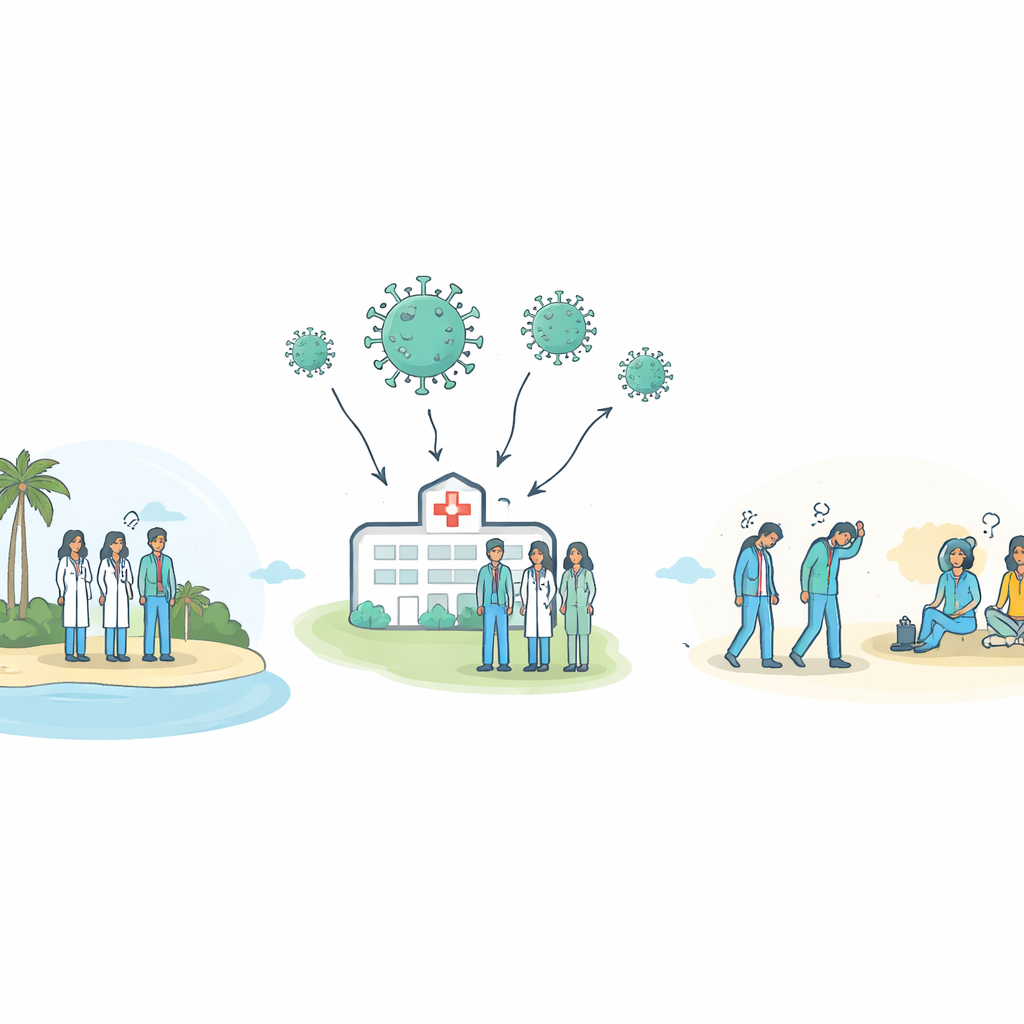
The COVID-19 pandemic put doctors and nurses under intense, prolonged pressure. This study looks at how that strain affected the mental and emotional well‑being of healthcare workers in Tobago, a small Caribbean island. Understanding who became burned out, and what helped protect them, can guide hospitals, governments, and even individuals in preparing for future crises and in caring better for the people who care for us.
Taking the pulse of a stressed workforce
The researchers surveyed 102 doctors and nurses at Scarborough General Hospital, the main public hospital in Tobago, between December 2022 and March 2023. Participants filled out standard questionnaires that measure burnout, experiences during the pandemic, and ways of coping with stress. Burnout was broken into three parts: feeling emotionally drained, becoming detached or cynical about work, and feeling less effective or accomplished. The team also asked about work patterns, family life, lifestyle habits, and religious or personal beliefs, to see which factors were linked to burnout.
How common was burnout?
About one in three healthcare workers in the study met criteria for burnout during the pandemic, and roughly one in ten had severe burnout. These numbers are substantial, but lower than many reports from larger countries, where more than half of doctors and nurses sometimes scored as burned out during COVID‑19. In Tobago, doctors and nurses were equally likely to experience burnout, and the problem did not clearly depend on age, gender, marital status, or medical specialty. Most participants said they had regular contact with people infected with the virus and worried about catching it themselves, yet almost all also felt they had the training, equipment, and support needed to manage COVID‑19 cases. That balance between high demand and decent support may have helped keep burnout rates from soaring even higher.
Habits that hurt and habits that help
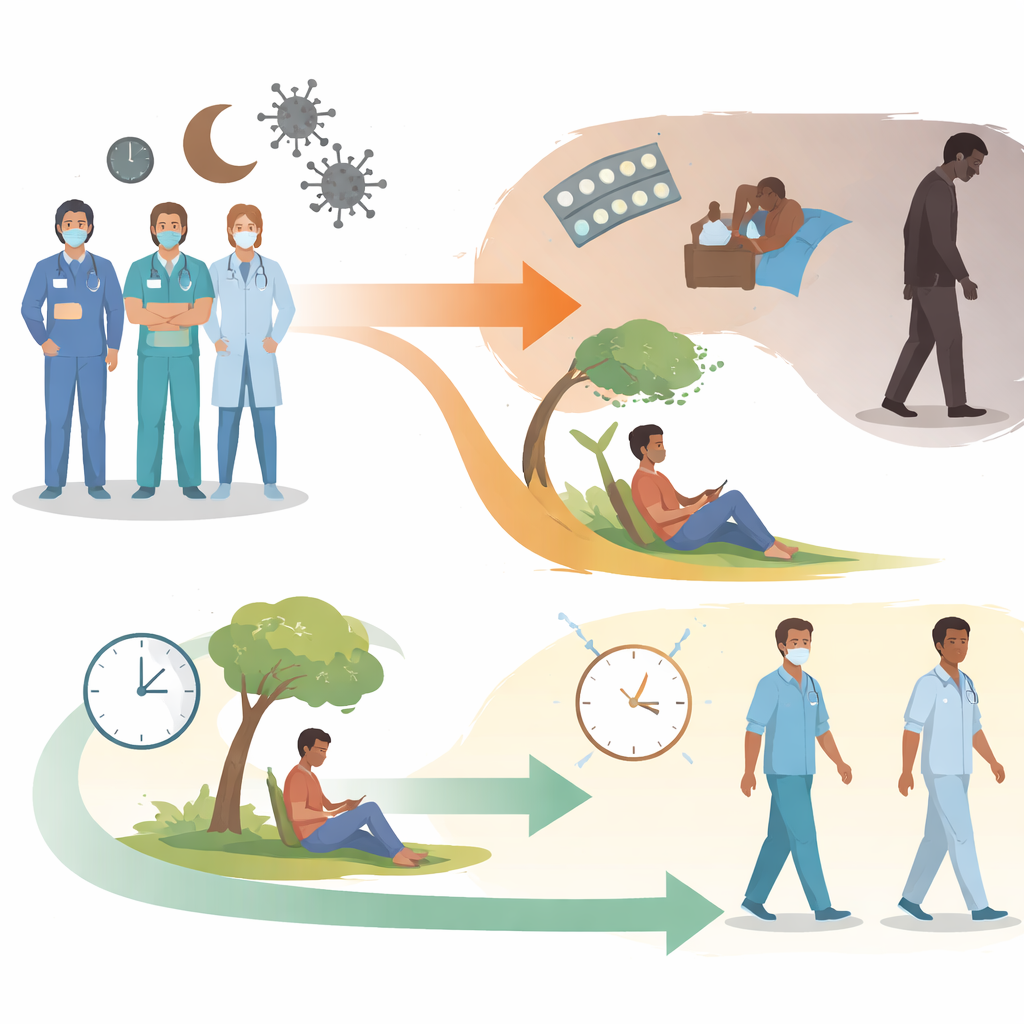
The clearest differences between burned‑out and non‑burned‑out staff emerged in daily habits and coping styles rather than in job title or background. Healthcare workers who used sleeping pills had dramatically higher odds of being burned out than those who did not. Because this was a snapshot in time, the study cannot prove whether sleep problems led to burnout or burnout led to pill use, but it underlines a tight link between poor sleep and emotional exhaustion. In contrast, workers who spent one to two hours a day—or more—on relaxing activities had a lower chance of burnout than those who relaxed for less than an hour. Time for rest, hobbies, or quiet reflection seemed to offer some protection, even in the middle of a health emergency.
Ways of coping under pressure
The survey also explored how people tried to deal with stress. The most common approaches were accepting the situation and drawing on religious faith. These are emotion‑focused strategies, aimed at making feelings more bearable rather than directly changing the problem. A less helpful style, called behavioural disengagement—essentially giving up, withdrawing, or mentally checking out—was strongly linked with burnout. Staff who scored high on emotional exhaustion also tended to use more of both practical problem‑solving strategies and avoidant strategies such as distraction, denial, substance use, and withdrawal, suggesting a complex mix of pushing through and pulling away.
What this means for protecting caregivers
The study concludes that burnout was a serious concern for Tobagonian healthcare workers during COVID‑19 and that both organizations and individuals have roles to play in prevention. At the system level, adequate staffing, fair scheduling, training, and access to equipment can buffer the impact of crises. Limiting excessive night work and helping staff get six to eight hours of restorative sleep may reduce the temptation to rely on sleeping pills. At the personal level, regularly setting aside more than an hour for relaxing and enjoyable activities, physical movement, and skill‑building hobbies can replenish energy and restore a sense of achievement. Together, these steps can help keep the people on the front lines of care healthy enough to continue caring for others.
Citation: Baboolal, N., Alexander, G. Burnout syndrome among Tobagonian healthcare-workers during the COVID-19 pandemic. Sci Rep 16, 14417 (2026). https://doi.org/10.1038/s41598-026-46230-5
Keywords: healthcare worker burnout, COVID-19 pandemic, sleep and stress, coping strategies, Caribbean healthcare