Clear Sky Science · en
Knowledge, attitudes, and practices of male barbers on hepatitis B and C transmission in Herat City, Afghanistan: a cross-sectional study
Why barbers matter for hidden liver infections
Most people think of barbershops as places for haircuts and conversation, not as potential sites where serious infections can spread. Yet the same razors and scissors that shape beards can also carry hepatitis B and C, viruses that silently damage the liver for years. This study from Herat City in Afghanistan asks a simple but important question: how well do local barbers understand these risks, and what are they actually doing in their daily work to keep clients safe?
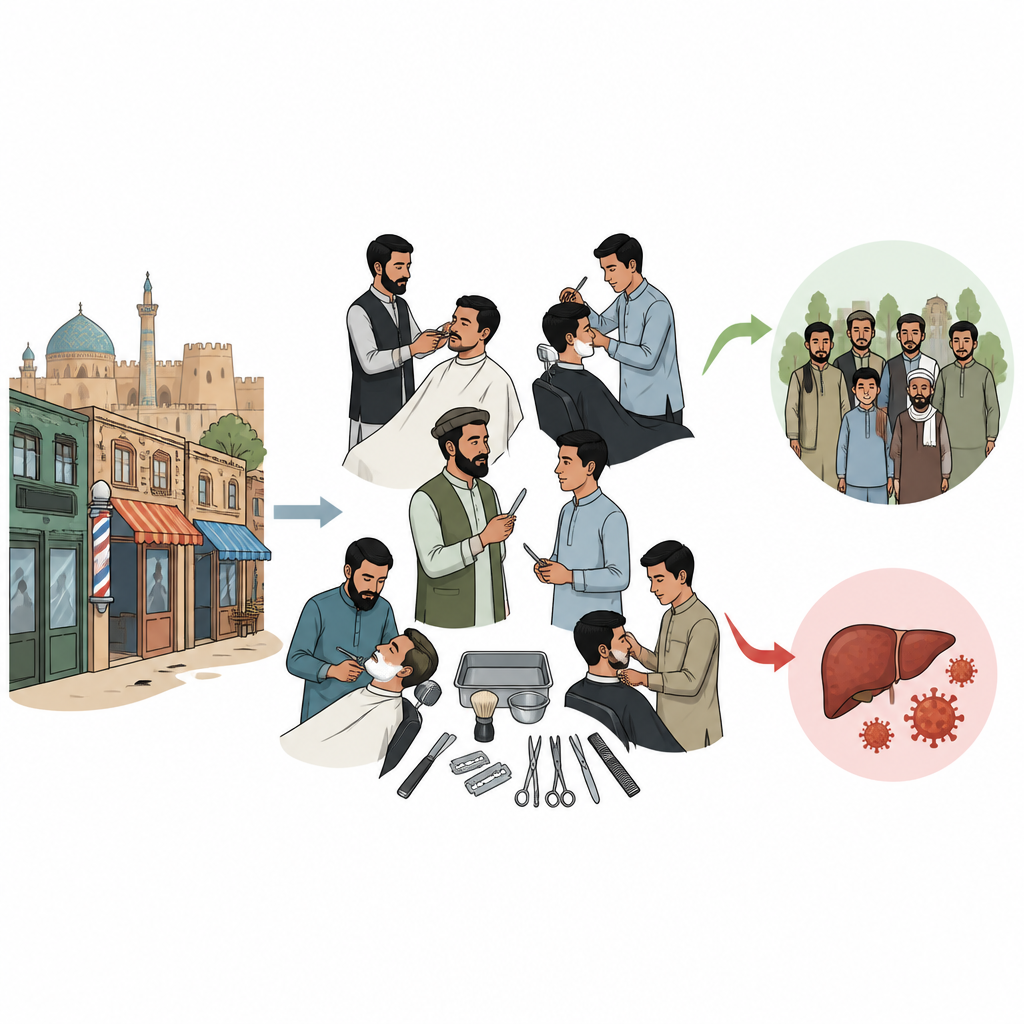
A closer look at barbers in Herat
The researchers visited 283 male barbers across all districts of Herat City and interviewed them face to face in their shops. Using a questionnaire tailored to the local language and culture, they measured three things: what barbers know about hepatitis B and C, how they feel about prevention, and the hygiene steps they say they follow in routine work. The team also collected background details such as age, income, work hours, experience, and whether barbers had ever received formal training. This provided a citywide snapshot of a common but largely unregulated profession that sees many clients every day.
What barbers know and how they feel
The study found that most barbers recognized some main ways that hepatitis can spread. Large majorities correctly linked infection with blood transfusions, shared needles, contaminated surgical tools, and sexual contact. However, deeper understanding was much weaker. Only about one in twelve barbers knew that these infections can have serious long term health effects, and fewer than one in three realized they are not easily cured. Only one in five understood that hepatitis B and C travel through the body in similar ways, suggesting that many barbers see them as unrelated problems rather than part of the same family of blood borne risks.
Strong habits but weak motivation
When asked about their day to day routines, barbers reported impressively careful hygiene. Almost all said they use a fresh razor blade for each client and throw used blades away safely. Most described disinfecting tools between customers, cleaning cuts in front of clients, and washing their hands with soap. Yet their attitudes did not match these careful habits. Fewer than half were willing to be tested for hepatitis B or C themselves, and only about one in seven thought vaccination against hepatitis B was important. Very few recognized that people who inject drugs are at higher risk, or that safe blood transfusion practices deserve special attention. This gap suggests that many barbers may be following cleanliness customs without fully understanding why they matter for invisible viruses.
Who does better and why it matters
By comparing answers with background details, the researchers found that older and more experienced barbers tended to have better knowledge. Those with more than eight years of work behind them were nearly three times as likely to score well on knowledge questions as those with less experience. Formal barber training, however, was most strongly tied to actual preventive practice: trained barbers were far more likely to report good hygiene behaviors than those who had never been trained. Barbers who saw many customers each day were somewhat less likely to keep up good hygiene, likely because time pressure makes it harder to clean tools properly between clients.
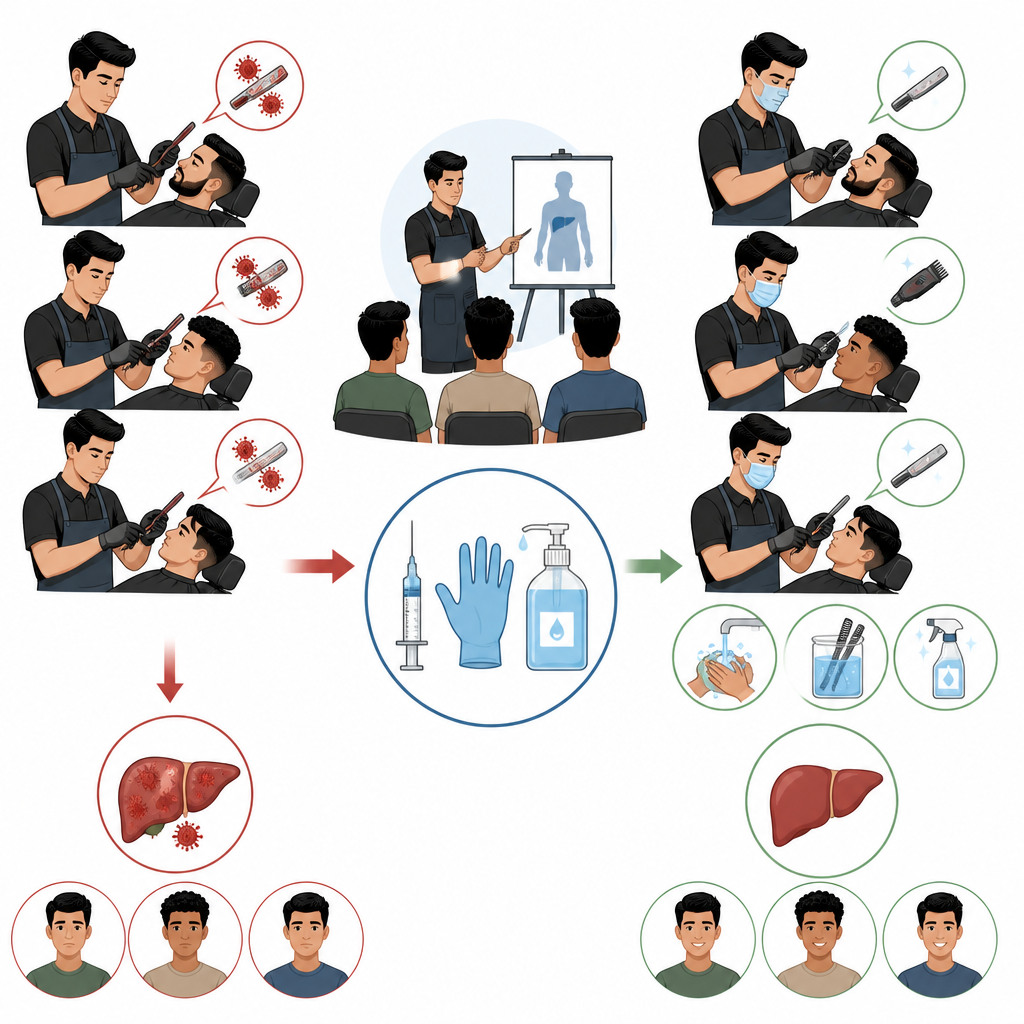
Turning barbers into partners for health
To a layperson, the main message is clear: in Herat City, barbers are already doing many of the right things with razors and disinfectants, but they often lack the knowledge and motivation that would make these behaviors strong and lasting. Because barbers see large numbers of clients and work with sharp tools, they are a natural front line in the fight against hepatitis B and C. The authors argue that health authorities should include barbers in hepatitis control efforts through structured training, easy access to testing and vaccination, and practical rules for safe practice. With better understanding and support, barbershops could shift from being possible points of infection to active partners in protecting community health.
Citation: Masudi, M., Zahed, A.R., Rahimi, A. et al. Knowledge, attitudes, and practices of male barbers on hepatitis B and C transmission in Herat City, Afghanistan: a cross-sectional study. Sci Rep 16, 15628 (2026). https://doi.org/10.1038/s41598-026-45702-y
Keywords: hepatitis B, hepatitis C, barbers, infection control, Afghanistan