Clear Sky Science · en
Longer duration of amenorrhea is associated with lower delay discounting and less hedonic eating in girls and young women with low-weight eating disorders
Why Missed Periods Matter Beyond Reproduction
For many people, a missed period is seen mainly as a sign of pregnancy or a gynecologic problem. But for girls and young women with very low body weight and eating disorders such as anorexia nervosa, long stretches without menstruation can also signal deeper changes in the brain’s reward circuits. This study asks a simple but far-reaching question: when menstrual periods stop for months or years, does that long-term hormone shortfall reshape how the brain values money and food — and could this help explain why restrictive eating becomes so hard to change?
The Link Between Hormones and the Brain’s Reward System
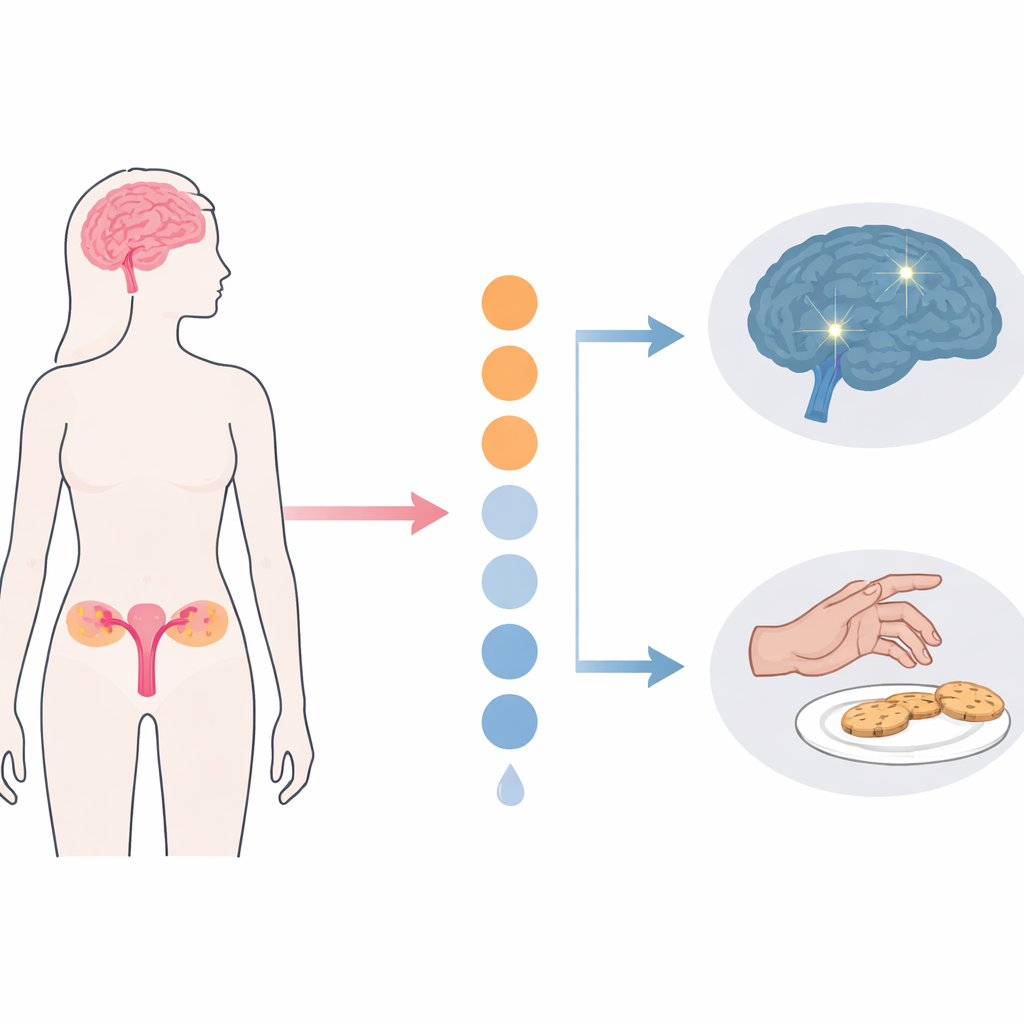
In healthy puberty, the brain and ovaries talk to each other through the hypothalamic–pituitary–gonadal axis, leading to regular menstrual cycles and steady exposure to hormones such as estrogen and progesterone. These hormones do more than prepare the body for reproduction; they also act on brain areas that process rewards and motivation. Animal and human studies suggest that changing hormone levels can alter how strongly we respond to tempting cues, from money to tasty food. In low-weight eating disorders, however, this hormonal conversation is often muted. Chronic undernutrition suppresses the reproductive axis, resulting in infrequent or absent periods, a state called oligo- or amenorrhea. The authors wondered whether the cumulative months spent in this hormone-deprived state might dampen reward sensitivity in ways that help maintain restrictive habits.
How the Study Was Done
The research team studied 56 girls and young women with low-weight eating disorders and 34 healthy peers of similar age and pubertal stage. All had already started menstruating at some point. A clinician carefully reconstructed each participant’s menstrual history to estimate how many cycles had been missed since first period, providing a lifetime measure of amenorrhea duration. On the test day, all participants ate a standardized breakfast and later a snack so that they began the key tasks in a comfortably fed, not hungry, state. The first task measured monetary decision-making: on a computer, participants repeatedly chose between a smaller amount of money available immediately and a larger amount available after a delay. The second task measured hedonic, or pleasure-driven, eating: participants were invited to taste three kinds of cookies and eat as much as they wished, while hunger ratings confirmed they were not simply refueling energy needs.
What the Researchers Found
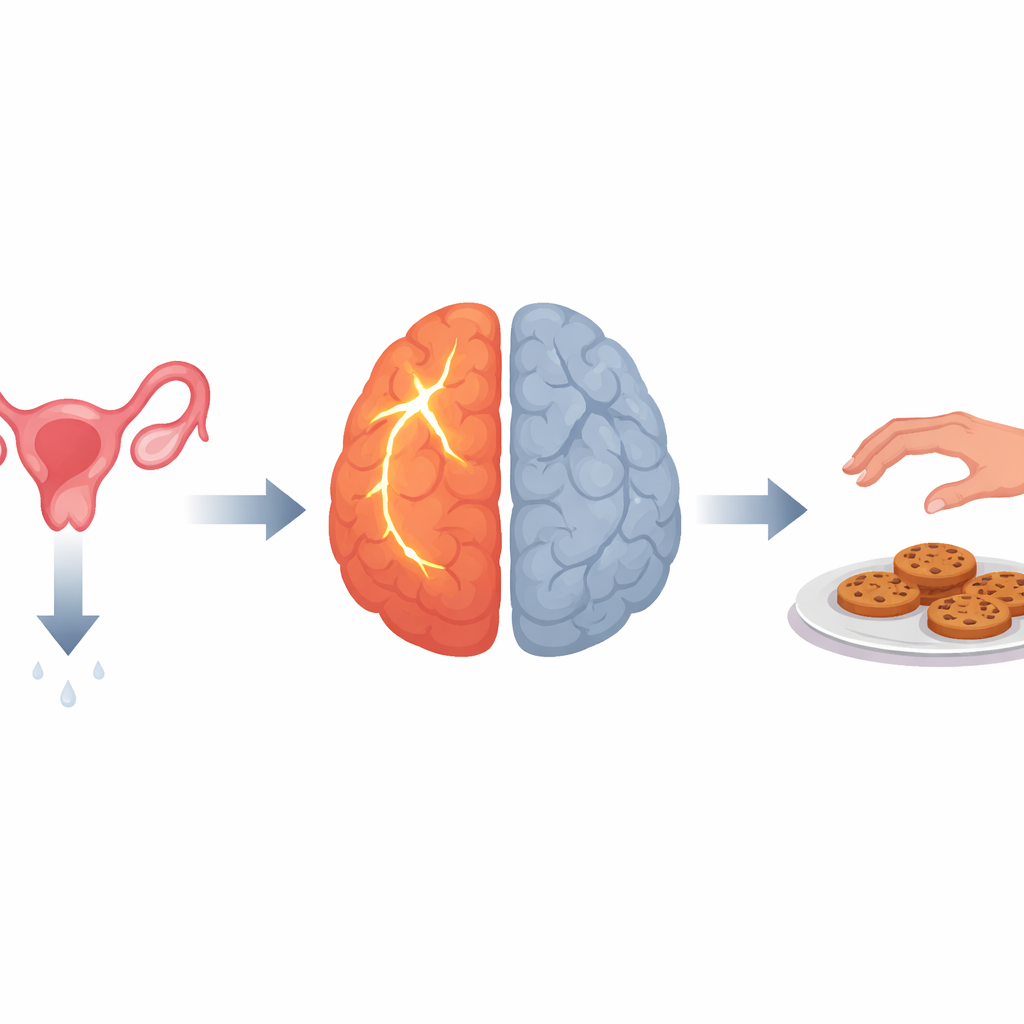
Surprisingly, when the two groups were compared overall, young people with low-weight eating disorders did not differ from healthy controls in how often they chose larger, delayed money rewards. Nor did they show steeper or shallower discounting of future rewards on average. However, within the eating-disorder group, a clearer picture emerged. Those who had gone longer without regular periods showed a stronger willingness to wait for larger, delayed rewards: their choices reflected less impulsivity and a greater preference for future gains, even after accounting for age, body mass index, illness duration, and symptom severity. The same girls with longer amenorrhea also ate fewer calories during the cookie taste test, indicating lower pleasure-driven intake of palatable food, despite similar immediate hunger levels and similar meals earlier in the day.
Hormones, Reward, and Eating: A Two-Track Influence
Interestingly, the two reward measures — monetary delay discounting and hedonic cookie intake — were not correlated with each other. This suggests that reduced exposure to ovarian hormones may influence separate aspects of reward processing: one related to patience and delayed gratification, and another related to the enjoyment of tasty foods. The findings fit with other work showing that low hormone states, such as functional hypothalamic amenorrhea or menopause, can be linked to changes in mood, cognition, and responsiveness to rewards. At the same time, the results differ from some animal experiments in which estrogen appears to reduce food-motivated behavior, highlighting that hormone–brain relationships may not be straightforward and may depend on dose, timing, and broader metabolic context.
What This Could Mean for Treatment
For families and clinicians, the main takeaway is that missed periods in low-weight eating disorders are not only a marker of bone and reproductive health, but may also signal long-term alterations in how rewards are processed. The study supports the idea that prolonged hormone deficiency could help entrench restrictive patterns by making future-oriented, self-denying choices easier and the pleasure of eating weaker. While weight restoration remains the cornerstone of care, these results raise the possibility that carefully designed hormone replacement — such as transdermal estrogen combined with cyclic progesterone — might one day be used alongside psychological and nutritional treatments to rebalance reward circuits. Ongoing clinical trials will be needed to test whether restoring more normal hormone exposure can meaningfully change decision-making and make pleasurable eating feel rewarding again for young people recovering from these serious disorders.
Citation: Wronski, ML., Plessow, F., Rogers, M. et al. Longer duration of amenorrhea is associated with lower delay discounting and less hedonic eating in girls and young women with low-weight eating disorders. Sci Rep 16, 11375 (2026). https://doi.org/10.1038/s41598-026-45493-2
Keywords: amenorrhea, anorexia nervosa, reward processing, hedonic eating, estrogen deficiency