Clear Sky Science · en
Attention-deficit/hyperactivity disorder and autism spectrum disorder in chronic pain: a study in Japanese pain centers
When Focus Problems and Constant Pain Collide
Many people live with chronic pain that does not ease, even after standard medical treatments. At the same time, growing numbers of adults recognize that they have long-standing problems with attention, restlessness, or social communication. This study asks a question that matters to patients, families, and clinicians alike: when chronic pain refuses to improve, could hidden traits of attention-deficit/hyperactivity disorder (ADHD) or autism spectrum disorder (ASD) be part of the story—and if so, through what emotional pathways?
Looking at Hard-to-Treat Pain in Everyday Clinics
The researchers surveyed 958 adults who came for their first visit to multidisciplinary pain centers across Japan. These centers see patients whose pain has lasted at least three months and has not responded to usual care such as medications, nerve blocks, or rehabilitation. Patients filled out questionnaires about their pain intensity, sleep, daily functioning, mood, and beliefs about pain, as well as standard checklists that screen for ADHD and ASD traits. Rather than making formal psychiatric diagnoses, the team focused on whether people showed enough symptoms on these checklists to be considered likely to have ADHD or ASD.
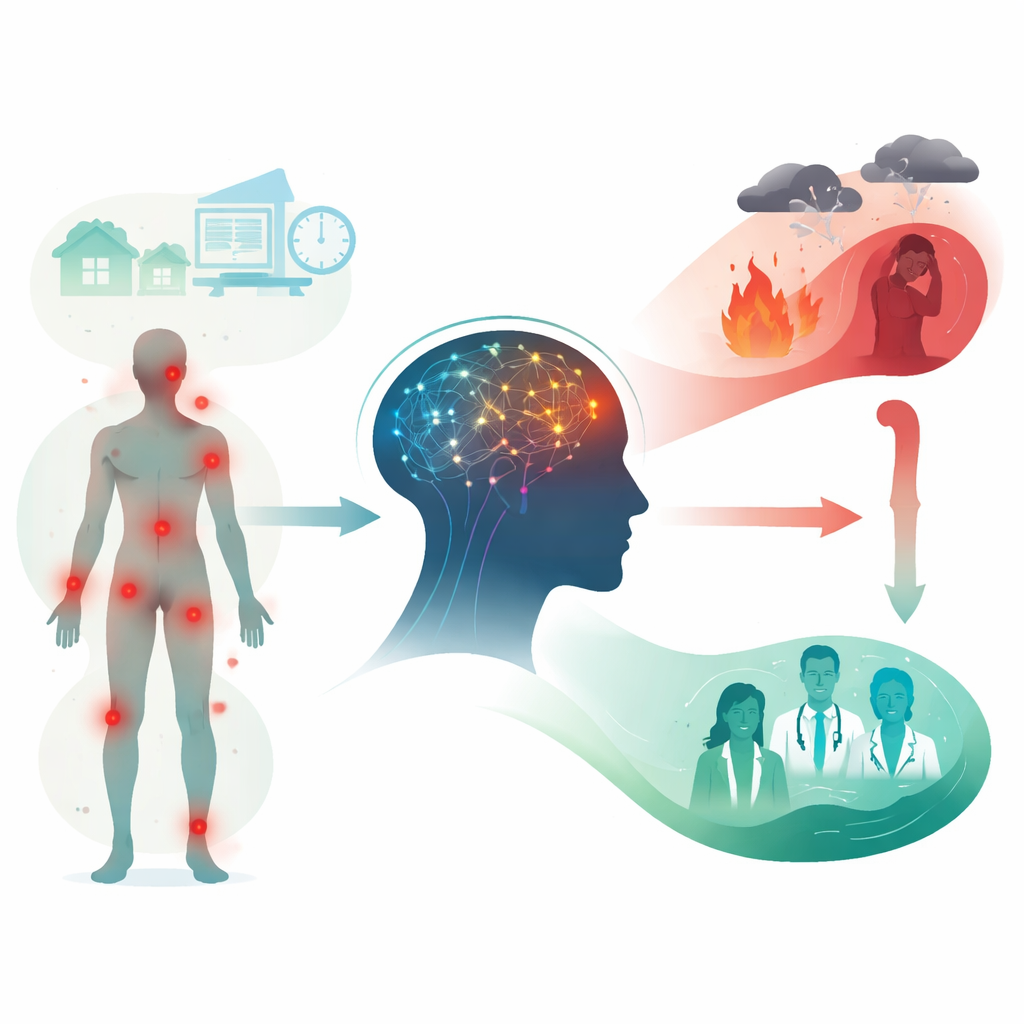
ADHD Traits Stand Out, Autism Traits Less So
About 17 percent of the patients screened positive for ADHD traits—more than twice the level reported in the general population—while roughly 4 percent screened positive for ASD traits, which is similar to population estimates. Those with the most intense pain, rating their average pain as 9 or 10 out of 10, were especially likely to show ADHD symptoms: over a quarter of this "extremely severe" pain group screened positive. As pain ratings increased across the sample, the proportion of people with ADHD traits rose steadily. In contrast, ASD traits did not show a clear link with pain intensity, although people with ASD-like features did report more sleep problems, emotional distress, and life impact from pain.
How Emotions and Thoughts Amplify Pain
To understand why ADHD traits might relate to worse pain, the researchers examined the role of emotional and thinking patterns. They focused on anxiety and depression, insomnia, and a style of thinking called "catastrophizing," in which people dwell on pain, expect the worst, and feel helpless. Statistical models showed that ADHD traits were strongly linked to higher anxiety and depression, which in turn were tied to more severe pain. When the team added catastrophic thinking to the model, it also emerged as a powerful predictor of very high pain levels. Importantly, once these emotional and cognitive factors were taken into account, the direct link between ADHD traits and extreme pain largely disappeared, suggesting that the impact of ADHD-like features on pain is channeled through mood and mindset.
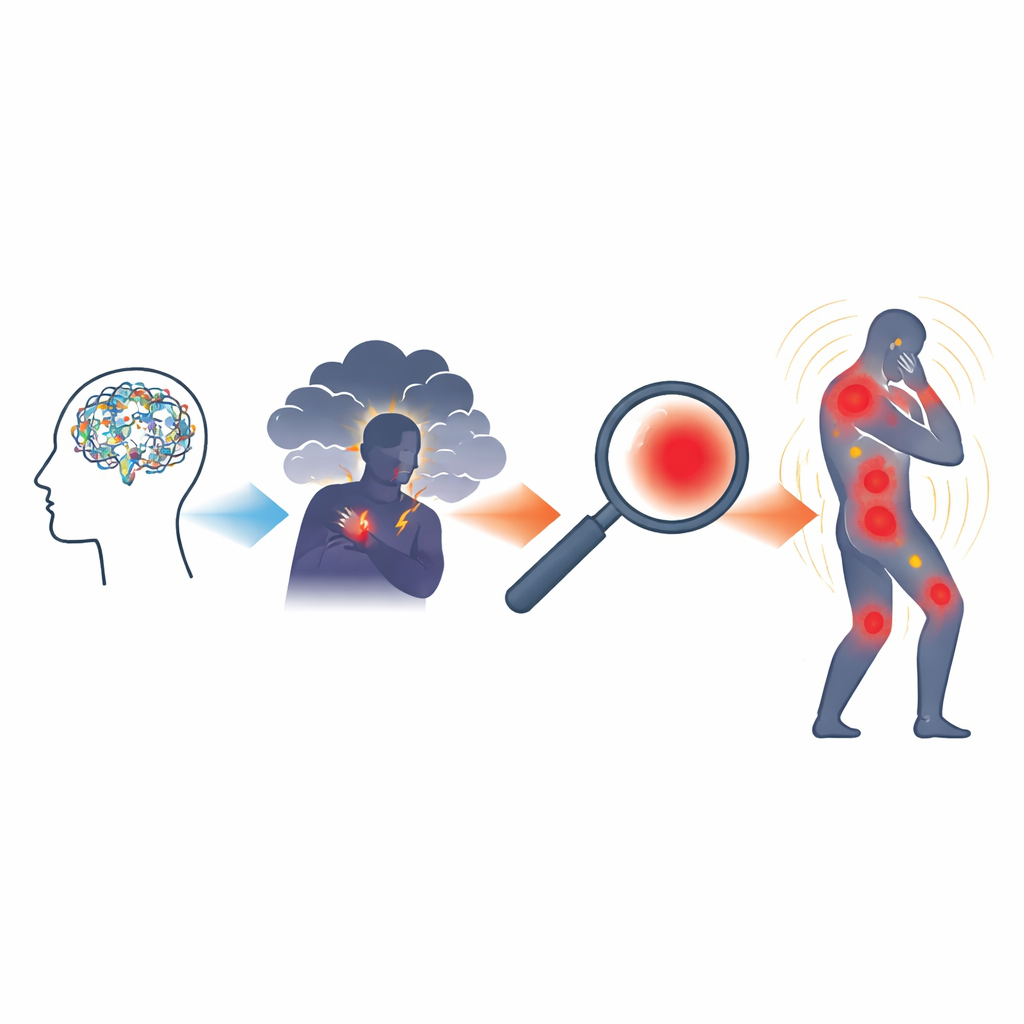
What This Means for Patients and Care Teams
These findings suggest that among adults with long-lasting, treatment-resistant pain, ADHD-like traits may be common and meaningfully connected to how intense their pain feels—but mainly because they are intertwined with anxiety, depression, and catastrophic thinking. ASD traits appear to influence how pain disrupts sleep and daily life more than how strong the pain feels. For clinicians, this means that simply increasing pain medication may not be enough. Instead, carefully screening for attention difficulties, emotional problems, and unhelpful pain beliefs may reveal hidden contributors that can be targeted with counseling, skills training, and, when appropriate, ADHD medications.
Bringing Mind, Mood, and Pain Together
In plain terms, the study concludes that trouble with attention and impulse control does not just coexist with severe chronic pain; it may help set the stage for emotional strain and negative thinking patterns that make pain harder to bear. Addressing ADHD-like symptoms, along with anxiety, depression, and catastrophic thoughts, could therefore be a key part of easing suffering in people whose pain has not improved with standard treatments. For patients and families, the message is hopeful: recognizing and treating these hidden factors may open new paths to relief beyond the usual focus on the body alone.
Citation: Kasahara, S., Aono, S., Takatsuki, K. et al. Attention-deficit/hyperactivity disorder and autism spectrum disorder in chronic pain: a study in Japanese pain centers. Sci Rep 16, 10544 (2026). https://doi.org/10.1038/s41598-026-45300-y
Keywords: chronic pain, ADHD, autism spectrum disorder, anxiety and depression, pain catastrophizing