Clear Sky Science · en
Prevalence of alcohol use disorder and its association with disease severity in symptomatic peripheral arterial disease
Why this research matters to you
As people live longer, more of us develop circulation problems in our legs, sometimes leading to painful walking, stubborn foot wounds, or even amputation. At the same time, many adults drink alcohol regularly, and a sizable minority struggle with alcohol use disorder (AUD). This study asks a simple but important question: among people who already have serious artery disease in their legs, does problem drinking go hand in hand with worse disease when they first see a specialist?
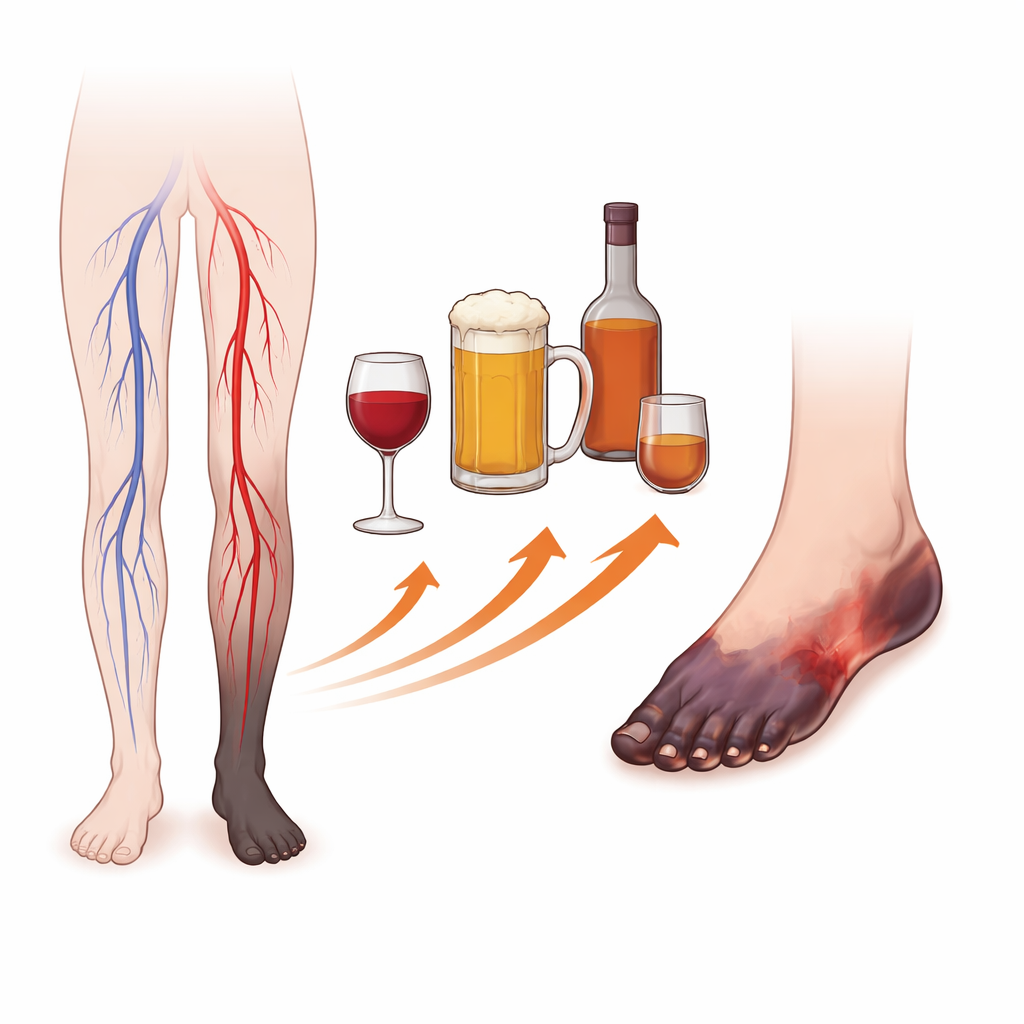
Leg blood flow and everyday drinking
The researchers focused on peripheral arterial disease (PAD), a condition in which the arteries that carry blood to the legs become narrowed or blocked by fatty, inflamed plaques. PAD can range from leg pain when walking to chronic limb-threatening ischemia, where poor circulation causes constant pain, non-healing ulcers, and gangrene. Long-term heavy drinking is known to raise blood pressure, disturb cholesterol and sugar control, and trigger inflammation, all of which can damage blood vessels. But until now, it was unclear how common harmful drinking is among people with symptomatic PAD, and whether it is linked to how advanced their limb disease is when they arrive at the hospital.
Who was studied and how alcohol was measured
The team followed 103 adults admitted to a cardiovascular unit in Rome with clear symptoms of lower-limb PAD, such as severe walking pain, rest pain, ulcers, or gangrene. Most were in their early seventies and had typical risk factors like diabetes, high blood pressure, high cholesterol, and a long history of smoking. Each patient’s leg disease was graded using the Rutherford scale, which runs from painful walking to gangrene and major tissue loss. To understand drinking patterns, addiction specialists interviewed patients using a brief screening tool and a detailed lifetime drinking history, then diagnosed AUD using standard psychiatric criteria. Patients were grouped as non-drinkers, moderate drinkers, at-risk drinkers, or having AUD.
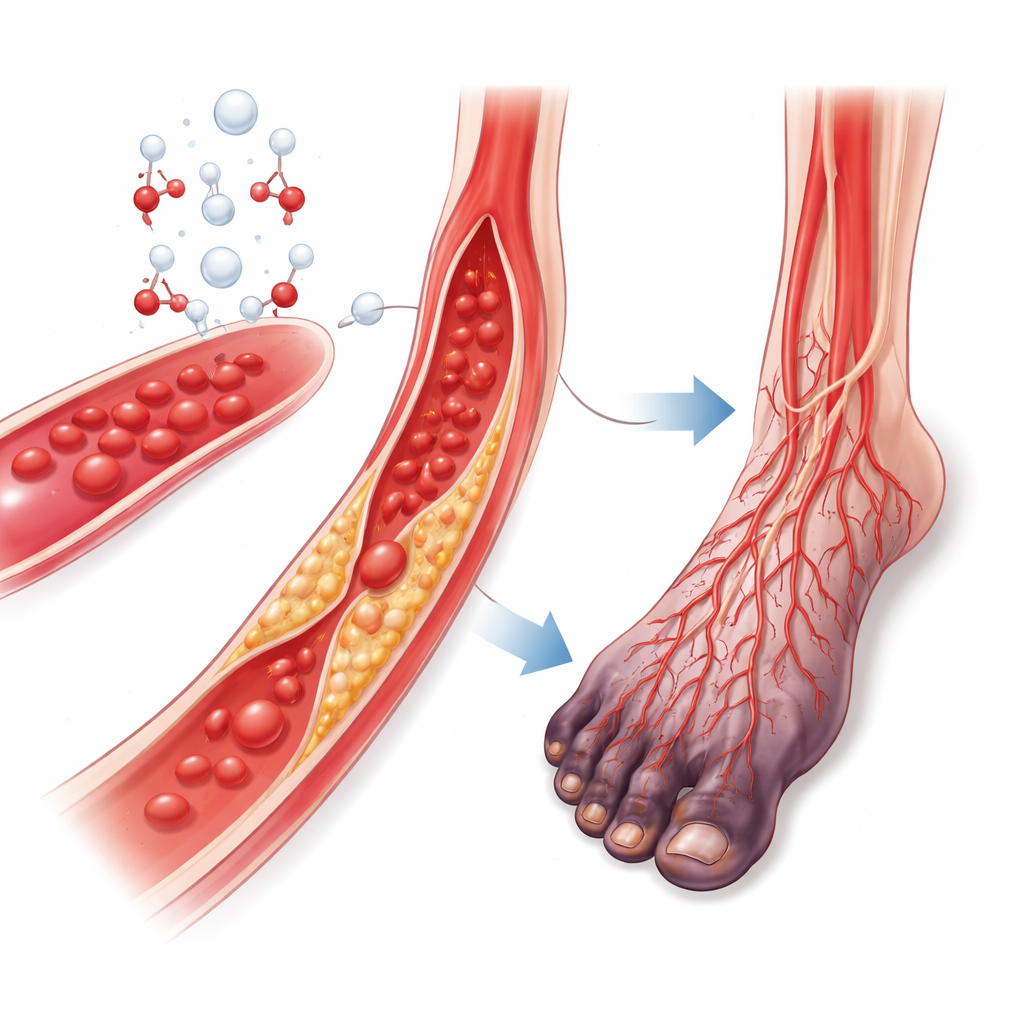
Problem drinking and more severe leg disease
Harmful alcohol use turned out to be common. About one in five patients (21.4%) met criteria for AUD—roughly double the rate seen in the general European population—while another 13.5% had at-risk drinking without full-blown AUD. People with AUD tended to be younger but had smoked for longer and showed blood test signs of heavy drinking. Crucially, they arrived with more advanced PAD: the most severe stage, characterized by gangrene or major tissue loss, was seen in over a third of patients with AUD, compared with about one in eight of those without AUD. Amputations were also more frequent in the AUD group. In contrast, people whose drinking was above recommended limits but did not reach AUD did not show clear differences in PAD severity.
How much you drink also matters
When the researchers looked at daily alcohol intake as a sliding scale, they found that each additional drink per day was linked with higher odds of having the most severe form of PAD. Statistical models that took into account other factors such as kidney function, blood fats, and blood sugar suggested that AUD itself remained associated with severe disease, even after considering these influences and smoking history. The study was relatively small, so some results did not reach conventional thresholds for certainty, but the overall pattern pointed in the same direction: heavier, more compulsive drinking went hand in hand with worse limb damage.
What this means for patients and clinicians
For people already living with PAD, the findings suggest that alcohol is more than just a background lifestyle choice; in its disordered form, it may accelerate blood vessel damage, impair wound healing, and delay seeking care until the disease is far advanced. The authors argue that screening for AUD should become routine in vascular clinics, using quick questionnaires and structured interviews. Identifying and treating problem drinking could offer a new, modifiable target to help prevent ulcers from progressing to gangrene and reduce the need for amputation. In simple terms, for patients with poor leg circulation, addressing alcohol use disorder may be just as important as controlling blood pressure, blood sugar, and cholesterol.
Citation: Biscetti, F., Rando, M.M., Danese, M. et al. Prevalence of alcohol use disorder and its association with disease severity in symptomatic peripheral arterial disease. Sci Rep 16, 14260 (2026). https://doi.org/10.1038/s41598-026-44431-6
Keywords: peripheral arterial disease, alcohol use disorder, heavy drinking, limb ischemia, vascular health