Clear Sky Science · en
Association of segmental body composition with cervical spine mobility in adults with nonspecific neck pain
Why everyday neck pain matters
Many people who spend long hours at a computer or on their phone develop nagging neck pain that seems to come from nowhere. This study looks at how daily habits, body build, and neck movement fit together in adults with long‑lasting but unexplained neck pain. By examining not just pain, but also lifestyle and body fat and muscle in the upper body, the researchers hoped to understand why some people hurt more than others, and whether stiff necks always go hand in hand with stronger pain.
How modern habits strain the neck
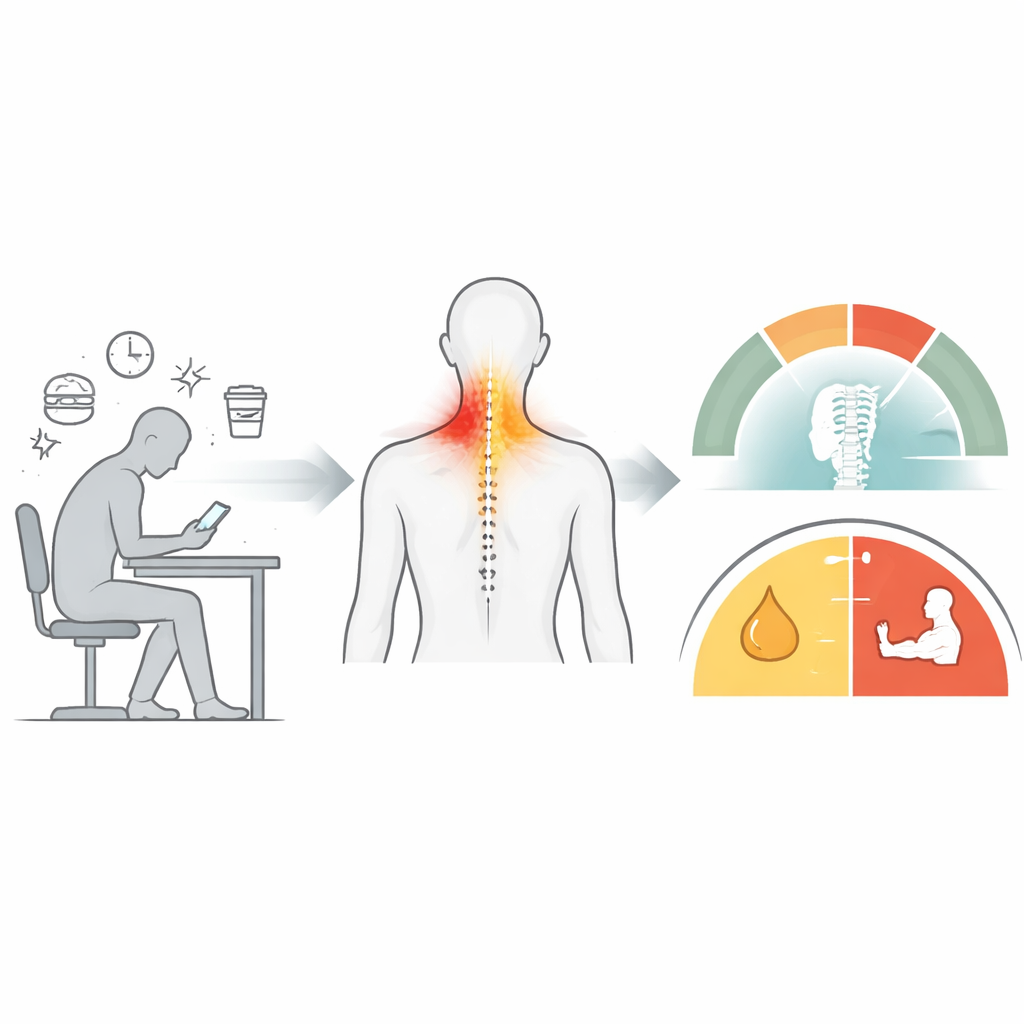
The adults in this study all had nonspecific neck pain, meaning doctors could not find a single clear injury or disease to explain their symptoms. Most participants worked at desks, spending much of the day sitting and looking at screens with their heads tilted forward. Many also used smartphones for long stretches. This posture, sometimes called “text neck,” places extra load on the neck and shoulder muscles. Participants often reported that their pain worsened during the day, especially while working at a computer or under stress, and pain frequently spread toward the head, shoulders, and arms.
Who was studied and what was measured
Forty‑six adults aged 18 to 75 took part. Before testing, they completed safety checks to rule out serious neck problems such as unstable joints or poor blood flow to the brain. They then filled in a questionnaire about their health, type of job, physical activity, stress, and pain patterns. Each person rated their neck pain on a 0–10 scale, reporting minimum, average, and maximum pain over time. The researchers also measured total body weight and the amounts of fat and muscle in the whole body and in each arm using a body composition analyzer, and they assessed how far participants could move their necks in bending, extending, tilting, and turning using a helmet‑like measuring device.
What the body reveals about pain
Participants were split into two groups based on how intense their worst pain was: a lower‑pain group and a higher‑pain group. People with stronger pain were, on average, older and had more body fat, including more fat in their upper limbs, and a higher ratio of fat to lean tissue. They were also more likely to be overweight by standard weight‑for‑height measures. The findings suggest that carrying more fat and having relatively less muscle in the shoulders and arms may be linked with greater neck discomfort, possibly because weaker muscles tire more easily and provide less support for the head and neck during long periods of sitting.
Neck movement: not the full story
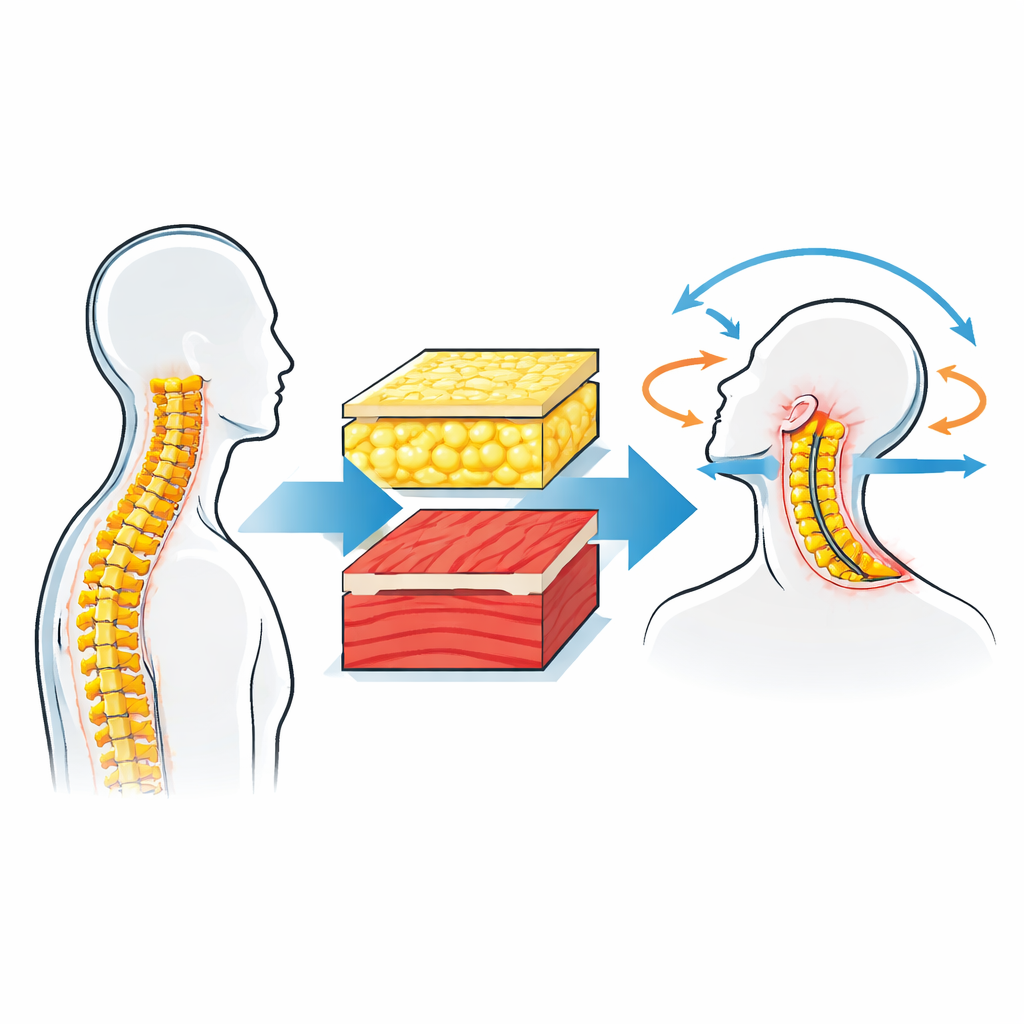
Despite clear differences in pain and body build, the actual range of neck movement was surprisingly similar in both groups. On average, participants could bend, extend, tilt, and rotate their necks within values considered normal, with only slightly reduced side‑bending. Pain tended to increase as people aged and as their body fat and body mass index rose, but it did not consistently match how far they could move their necks. Some people with strong pain could still move their necks quite well, while others with less pain had similar or slightly reduced movement. This mismatch hints that pain in these cases may depend more on how the neck is loaded and how the tissues feel than on simple stiffness.
What this means for everyday life
The study points to nonspecific neck pain as a lifestyle‑linked problem. Long hours of sitting, frequent phone and computer use, higher stress, and greater body fat all marched together with stronger neck pain, even though basic neck flexibility often remained within normal limits. For a layperson, the message is that easing this common ache is not only about stretching a “stiff” neck. It may also require changing work habits, reducing prolonged head‑forward postures, managing stress, and improving body composition through activity and healthier living. Because movement tests did not always match pain intensity, the authors argue that clinicians should look beyond simple range‑of‑motion measures and that more research is needed to untangle how everyday behavior, body build, and the sensation of pain interact over time.
Citation: Wojnicz - Ghosheh, K., Fiutowski, B., Kucza, A. et al. Association of segmental body composition with cervical spine mobility in adults with nonspecific neck pain. Sci Rep 16, 13979 (2026). https://doi.org/10.1038/s41598-026-44316-8
Keywords: neck pain, sedentary work, text neck, body fat and muscle, cervical mobility