Clear Sky Science · en
The epidemiology of neurocognitive disorders in Hungary
Why this matters for everyday life
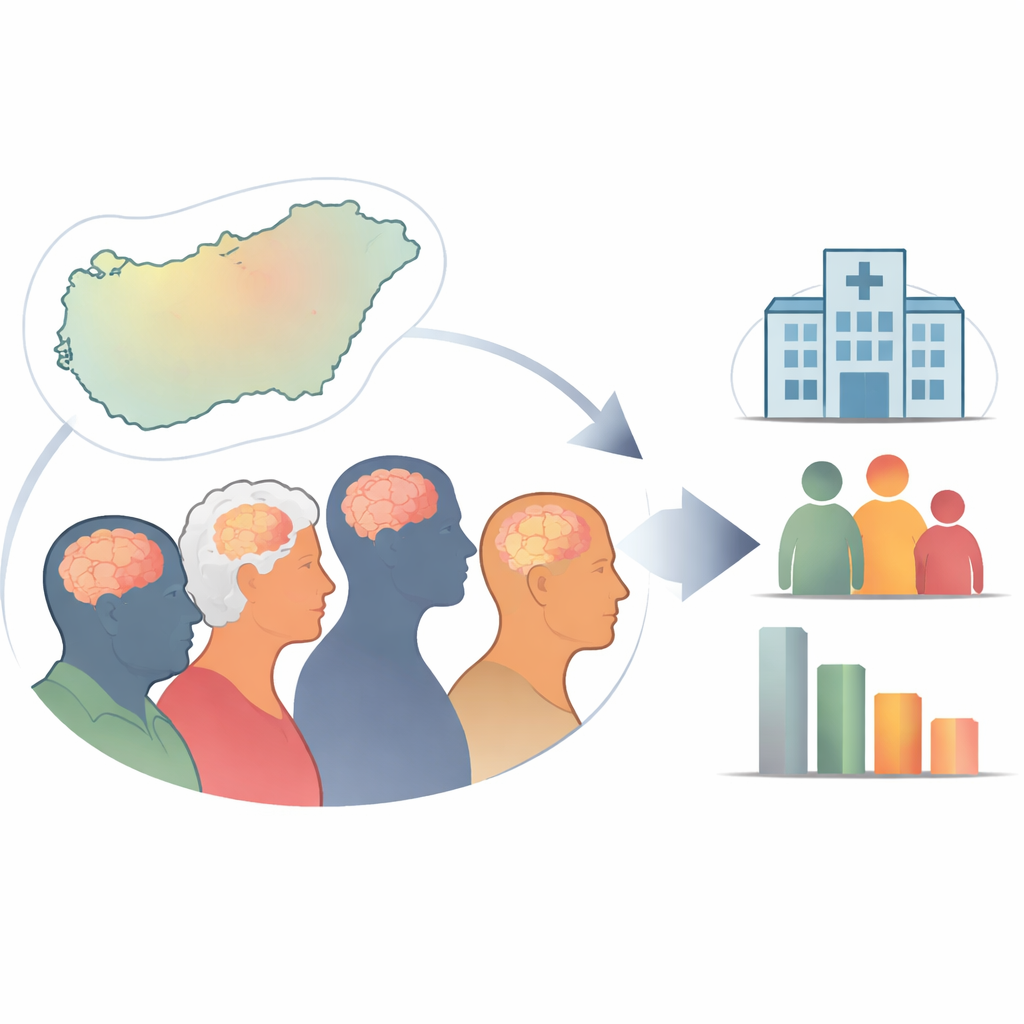
As people live longer, more families face the challenge of a loved one slowly losing memory, attention, or the ability to manage daily tasks. These problems, grouped under the term neurocognitive disorders, are not just personal tragedies—they shape how health systems plan care and how societies support aging citizens. This study looks at what is really happening with these conditions in Hungary: how common they are, who is affected, what other illnesses patients have, and how well the health system is detecting and treating them.
Who is affected and how often
The researchers examined health insurance records covering about 95% of the Hungarian population between 2016 and 2021. They counted everyone who had received a diagnosis of a neurocognitive disorder, from milder forms that do not yet disrupt daily life to more severe forms that do. Over those six years, more than 312,000 people were diagnosed. Women made up nearly two-thirds of the patients, and the share of women grew with age; among those over 80, almost three times as many women as men were affected. As expected, the likelihood of having a diagnosis rose sharply with age, but even people under 65 represented a sizable group.
Falling numbers and the shadow of the pandemic
One of the most striking findings is that recorded cases of neurocognitive disorders in Hungary went down over time. Among people aged 65 and older, prevalence dropped from about 6.6% in 2016 to 5.6% in 2021. New diagnoses each year also fell, from roughly 66,000 people in 2016 to about 43,000 in 2021. The decline became especially steep after 2019, the year before COVID-19 spread widely in Europe. The authors argue that this does not mean the disease itself is disappearing. Instead, it likely reflects fewer people seeking medical help, disruptions in routine care during the pandemic, and possible underdiagnosis—especially in the oldest age groups, where frailty and limited access to specialists are common.
Hidden illnesses that travel together
The study shows that neurocognitive disorders in Hungary rarely occur in isolation. Roughly eight out of ten newly diagnosed patients also had high blood pressure. In 2016, three-quarters had some form of blood vessel disease in the brain, and although that share fell to around 60% by 2021, it remained very high. About one-third had type 2 diabetes or abnormal blood fats, and around one-fifth had heart-related chest pain or heart failure. Depression, irregular heartbeat, and epilepsy were also more common than in the general older population. These companion illnesses are not only additional burdens; they are known to raise the risk of memory and thinking problems and can speed their progression, suggesting that prevention and better control of vascular and metabolic diseases could have a real impact on brain health.

How diagnosis and treatment fall short
Hungarian guidelines recommend that suspected patients undergo basic blood tests, brain imaging, and formal memory and thinking assessments. Yet the study found that only about 59% of newly diagnosed patients had any formal cognitive testing recorded, and fewer than one in ten received the standard brief mental exam named in the guideline. Only about half had their thyroid function checked and fewer than one in ten had their vitamin B12 level measured, both important to rule out treatable causes of memory problems. Brain scans were done in about 43% of cases, with magnetic resonance imaging used in only a small minority. Medication patterns also raised concern: only about 9–11% of incident patients filled a prescription for internationally approved dementia drugs, while a much larger share received older “brain booster” medicines whose benefits are doubtful, though use of these declined over the study period.
What this means for patients and families
For lay readers, the main takeaway is that neurocognitive disorders are common in Hungary, closely tied to widespread conditions such as high blood pressure and stroke, and more often affect women—especially at very old ages. The apparent drop in diagnosed cases likely reflects gaps in detection and care rather than a genuine improvement. At the same time, many patients are not receiving thorough testing or proven treatments. The authors argue that better prevention of vascular and metabolic diseases, more consistent use of diagnostic guidelines, and wider access to effective medications could improve quality of life and reduce the long-term burden on families and the health system. Their data also help fill an important information gap for Central and Eastern Europe, where reliable figures on dementia and related disorders have long been scarce.
Citation: Váraljai, C., Horváth, A.A. & Kamondi, A. The epidemiology of neurocognitive disorders in Hungary. Sci Rep 16, 13941 (2026). https://doi.org/10.1038/s41598-026-44201-4
Keywords: dementia, Hungary, aging, comorbidities, diagnosis