Clear Sky Science · en
Fortification of Daqu with the soy sauce-functional fungus Aspergillus oryzae CICC 2339: investigations into Daqu properties and Baijiu brewing outcomes
A new twist on an ancient drink
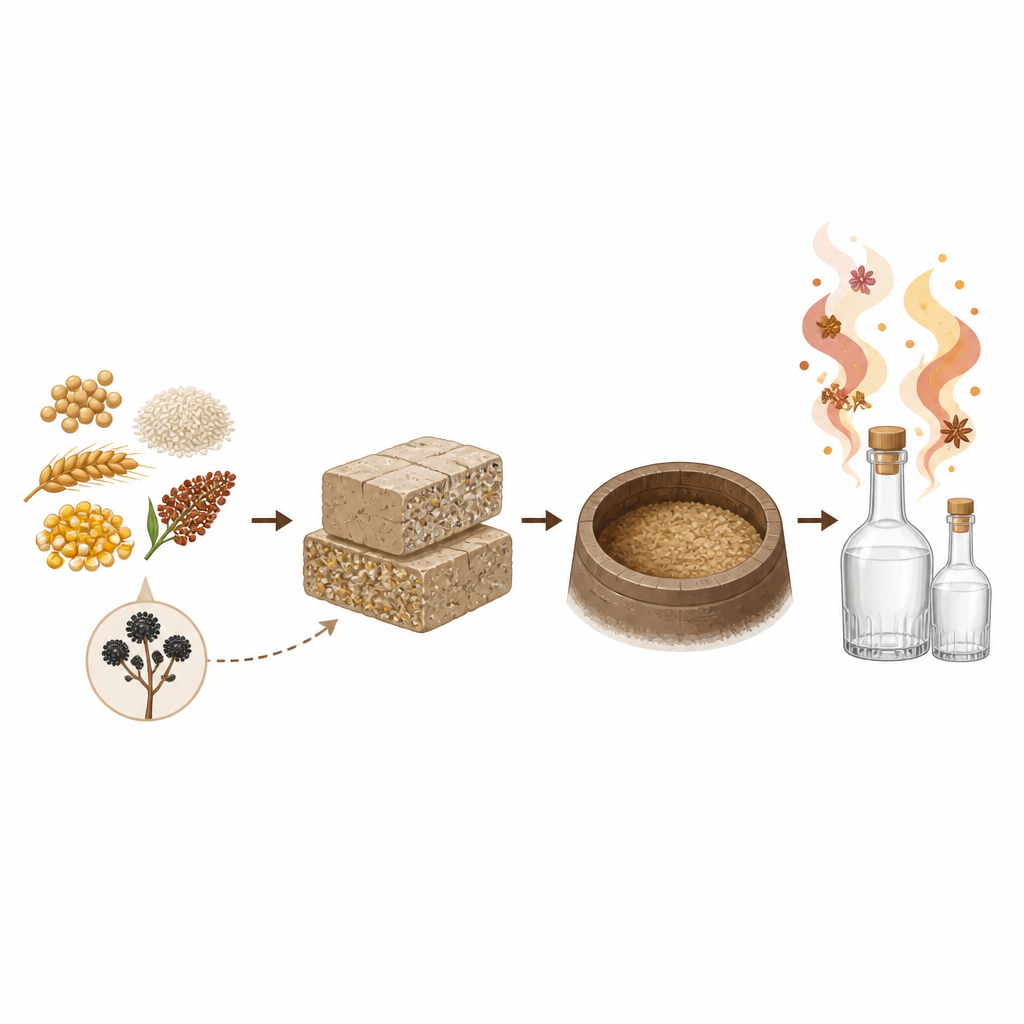
Chinese Baijiu is one of the world’s most widely enjoyed spirits, prized for its complex aromas that can range from floral and fruity to rich and sauce like. At the heart of Baijiu is Daqu, a brick of fermented grain packed with living microbes that drive fermentation and create flavor. This study asks a simple but powerful question: what happens if we borrow a helpful fungus from soy sauce making and add it to Daqu, to gently steer Baijiu toward richer taste and aroma while keeping its traditional roots?
Borrowing a helper from soy sauce
In this work, researchers focused on a well known fungus used in many Asian fermented foods, including soy sauce and miso. This fungus, Aspergillus oryzae CICC 2339, is valued because it breaks down starches, proteins, and fats into smaller pieces that can later turn into flavor compounds. The team mixed a small amount of a bran based starter containing this fungus into the raw materials used to make medium high temperature Daqu at a Baijiu distillery. They compared this “fortified” Daqu with standard Daqu made in the usual way, tracking how the microbes developed, how active the key enzymes were, and which aroma compounds formed in both the Daqu and the crude Baijiu distilled from it.
Shaping the hidden community in the starter bricks
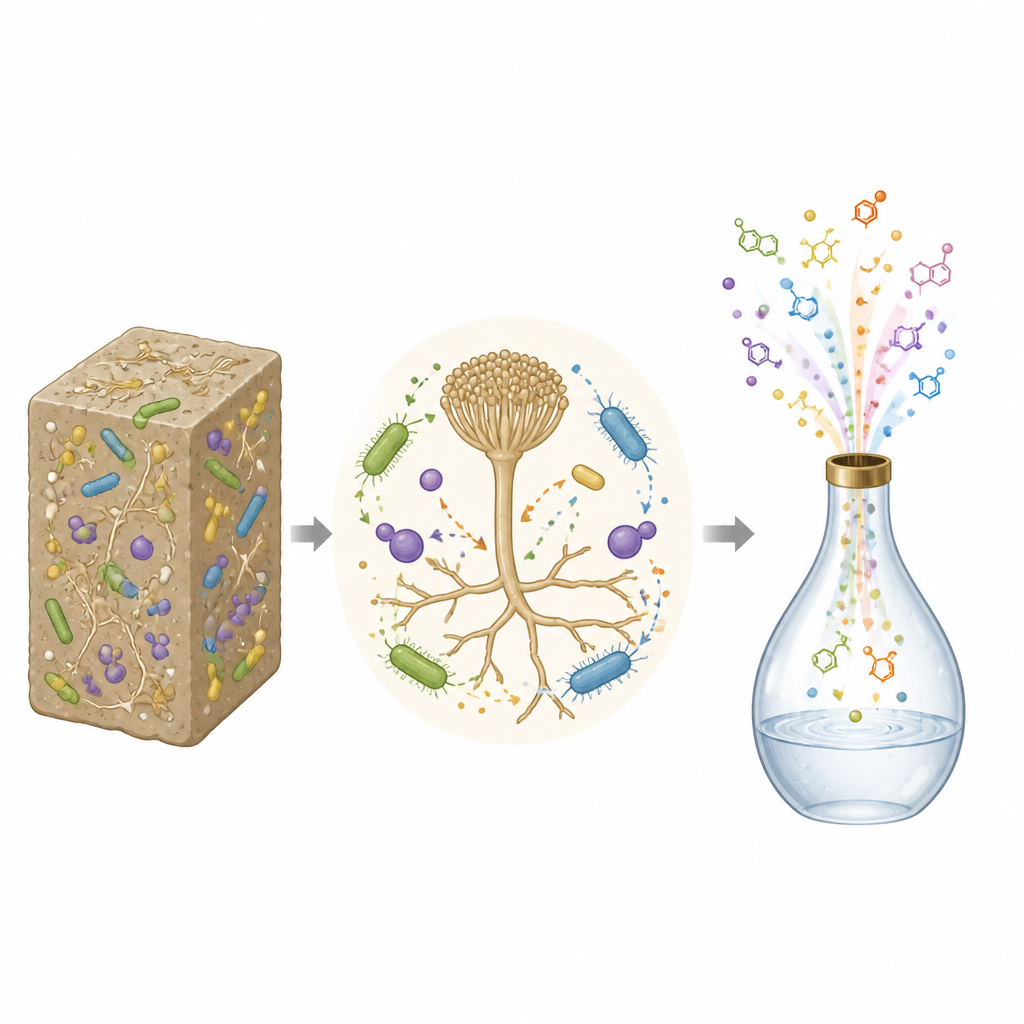
The added fungus did not wipe out the native community in Daqu; instead, it nudged it into a new balance. DNA based tests showed that the fortified Daqu still hosted a rich mix of bacteria and fungi, but heat loving groups such as Aspergillus and Bacillus became more prominent. These microbes are known workhorses in fermentation, able to thrive at higher temperatures and to produce strong enzyme activity. At the same time, some lactic acid bacteria decreased, and overall acidity dropped. Network analyses suggested that the key microbes were still cooperating closely, sharing nutrients and helping each other adapt, so the fortified Daqu remained stable rather than being disrupted.
Turning grain into flavor building blocks
Enzyme measurements revealed why this microbial shift matters for flavor. In the fortified Daqu, enzymes that cut starch into sugars and proteins into amino acids were noticeably stronger, and the ability to drive fermentation and form esters increased as well. These changes mean that the starter bricks generated more of the basic building blocks that later form aroma compounds. Indeed, when the team measured volatile substances in the Daqu, they found far higher levels of key groups such as esters, phenols, and pyrazines, many of which are linked with fruity, floral, nutty, or sauce like notes. The overall bouquet of the fortified Daqu differed clearly from the control, hinting that the downstream spirit would also change.
From pit to still: how the changes echo in the spirit
The real test was whether these starter tweaks would carry through to the crude Baijiu itself. Using matched sets of fermentation pits, the researchers produced Baijiu with either standard or fortified Daqu and then analyzed the resulting spirits. The Baijiu made with the soy sauce fungus enriched Daqu contained more kinds and higher levels of flavor compounds, especially esters that bring fruity and cellar like aromas, and pyrazines associated with sauce like and roasted notes. Certain compounds linked to floral character, such as phenylethyl alcohol, were also enriched. Interestingly, more new flavor molecules appeared in the Baijiu than in the Daqu, suggesting a “cascade effect” where the modified starter sets up conditions that are further amplified during pit fermentation and distillation.
What this means for Baijiu lovers
For drinkers, the takeaway is that a small, carefully chosen adjustment to the starter bricks can noticeably enrich the flavor of Baijiu without discarding its traditional process. By borrowing a safe, food grade fungus from soy sauce production, the researchers were able to strengthen helpful microbes and enzymes in Daqu, lower harsh acidity, and boost the generation of complex aroma compounds in the final spirit. While future work still needs to confirm how these chemical changes translate into sensory experience in the glass, this study shows that cross pollinating ideas between different fermented foods can be a practical way to refine the taste and consistency of an age old national drink.
Citation: Yu, Y., Yang, T., Zhu, D. et al. Fortification of Daqu with the soy sauce-functional fungus Aspergillus oryzae CICC 2339: investigations into Daqu properties and Baijiu brewing outcomes. Sci Rep 16, 14906 (2026). https://doi.org/10.1038/s41598-026-44158-4
Keywords: Baijiu, Daqu starter, Aspergillus oryzae, fermented beverages, aroma compounds