Clear Sky Science · en
The COVID-19 pandemic could worsen the psychological well-being of people with disabilities in Cambodia
Why this story matters
The COVID-19 pandemic disrupted lives around the globe, but its impact was not felt equally. This study looks closely at people with disabilities in Cambodia, a low-income country where many already live on the edge. By asking how the pandemic affected their happiness, life satisfaction, and depression, the authors shed light on a group that is often missing from national statistics and public debates — and offer clues for how future crises can be handled more fairly.
Taking the pulse of a hidden population
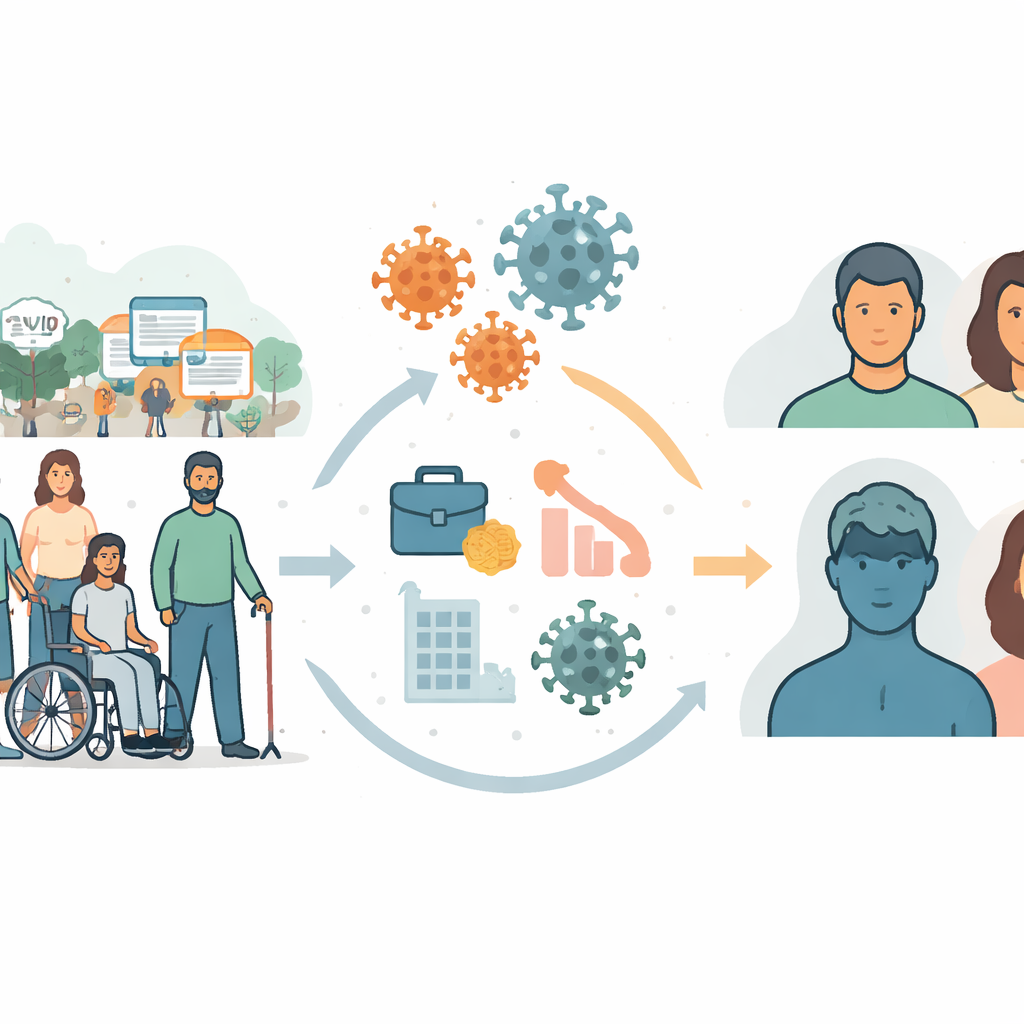
Most of what we know about disability and COVID-19 comes from wealthier countries. To fill this gap, the researchers worked with Cambodia’s national statistical office to add special questions to the 2021 Cambodia Socio-Economic Survey, a large, nationally representative household survey. They focused on working-age adults between 20 and 59 who reported difficulties in seeing, hearing, moving, speaking, feeling, or mental functioning that were not simply due to old age. Using this information, they identified 276 adults with moderate or severe disabilities and compared them to thousands of similar adults without disabilities living in the same villages or districts.
How well-being differed during the pandemic
The survey asked people to rate their happiness and life satisfaction on a ten-point scale and to report how often they had experienced worrying, poor sleep, and low energy in the past week, which together indicate depression. Across the board, adults with disabilities reported lower happiness and life satisfaction and higher depression than adults without disabilities. These gaps were especially marked for people with physical disabilities, such as difficulty moving, but they were also present for those with non-physical disabilities, including sensory and psychological difficulties. Severe depression was roughly half again as common among adults with disabilities as among their non-disabled peers.
Economic pain, health fears, and daily precautions
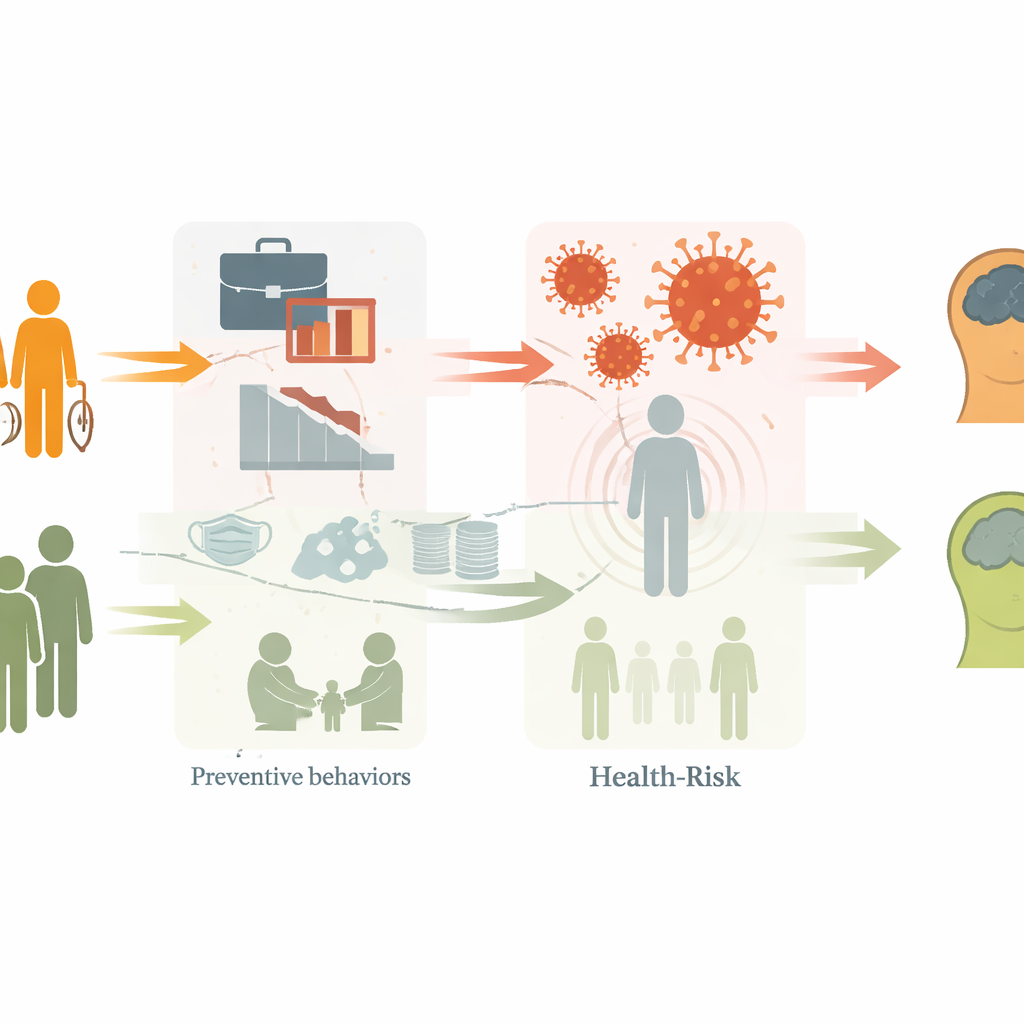
To understand why these differences appeared, the authors examined two kinds of pandemic shocks. The first was economic: whether people had lost work or income since March 2020 and whether they were in paid work at the time of the survey. The second was health-related: how likely people thought they or others in their village were to be infected with COVID-19 in the coming year. They also recorded five basic preventive behaviors — mask use, handwashing, keeping distance, staying home, and avoiding gatherings — and combined these into an overall index. By linking these pieces together with a statistical model, the team could trace how disability fed into shocks and behaviors, and how these in turn related to mental well-being.
Different paths for different disabilities
The study uncovered distinct patterns. Adults with physical disabilities were more likely to experience job loss or nonemployment during the pandemic, and this economic shock was strongly tied to lower happiness and life satisfaction and more severe depression. For them, the loss of work explained a sizable share of the gap in well-being. Adults with non-physical disabilities, by contrast, were especially affected by health fears. They reported higher perceived risk of infection, and this was linked to worse mental health. At the same time, they were less likely to report regular preventive behaviors. People with certain underrepresented disabilities — particularly psychological or feeling difficulties — stood out as having the lowest well-being, the largest economic and health shocks, and the greatest trouble maintaining precautions such as social distancing, staying home, or even mask use and handwashing, likely because of sensory or support needs.
What this means for future crises
For a general reader, the main message is clear: in Cambodia, adults with disabilities entered the pandemic already disadvantaged and emerged with deeper emotional scars. Job loss and the strain of making ends meet weighed especially heavily on those with physical impairments, while fear of infection and difficulty carrying out basic protective measures took a toll on those with non-physical disabilities. Although the data cannot prove cause and effect, the patterns strongly suggest that the pandemic worsened psychological well-being for disabled adults. The authors argue that national surveys must routinely track both disability and mental health, and that future pandemic responses should build in disability-inclusive support — from targeted cash and job programs to tailored help with health protection — so that people with disabilities are not left to face the next crisis alone.
Citation: Takasaki, Y., Kogure, K. & Onuki, M. The COVID-19 pandemic could worsen the psychological well-being of people with disabilities in Cambodia. Sci Rep 16, 12592 (2026). https://doi.org/10.1038/s41598-026-43087-6
Keywords: COVID-19 and disability, mental health, Cambodia, economic shock, health risk perception