Clear Sky Science · en
Prevalence of excessive screen time and its associated factors among schoolchildren in Damascus, Syria: a cross-sectional study
Why this matters for families
Across the globe, parents wonder how much screen time is too much for their children. This question is especially urgent in places where outdoor play is limited and digital devices fill the gap. This study looks closely at schoolchildren in Damascus, Syria, to find out how many are spending more time on screens than experts recommend, and which everyday habits and circumstances are driving that overuse. The findings reveal patterns that will feel familiar to many families, and point toward practical changes that could help protect children’s health.

Kids growing up in a digital world
Children today are surrounded by screens—smartphones, televisions, tablets, and game consoles. International health organizations advise that older children and teenagers keep recreational screen time under about two hours a day, in part because sitting too long in front of screens has been linked to poor sleep, weight gain, and emotional difficulties. Yet studies around the world suggest that many young people far exceed these limits, a trend that intensified during the COVID-19 pandemic when schools closed and outdoor activities were restricted. Until now, however, very little was known about how this plays out for children living in the unique social and economic conditions of Syria.
A closer look at schoolchildren in Damascus
To fill this gap, researchers surveyed 892 boys and girls aged 11 to 14 from 22 schools spread across all districts of Damascus between 2023 and 2024. They measured children’s height and weight, and asked parents detailed questions about how long their children spent using TVs, phones, tablets, computers, and game consoles on weekdays and weekends. They also collected information on family size, income level, parents’ education and work, how many devices were in the home, whether children owned their own device, how long they had been using screens, and whether they used them at bedtime. Children averaging two or more hours of daily screen use were considered to have excessive screen time.
How much is too much in Damascus
The results were striking: more than eight out of ten children (85.1%) exceeded the recommended limit, averaging about three and a half hours of screen time per day. Boys were particularly heavy users and were nearly four times as likely as girls to have excessive screen time. Older children (ages 13–14) tended to spend more time on screens than younger ones. Children from smaller families and those from better-off households also had higher screen use, likely because more devices were available and shared among fewer siblings. While parents’ level of education did not make a clear difference, having an employed mother and higher household resources were linked with more time spent in front of screens.
Devices, habits, and health risks
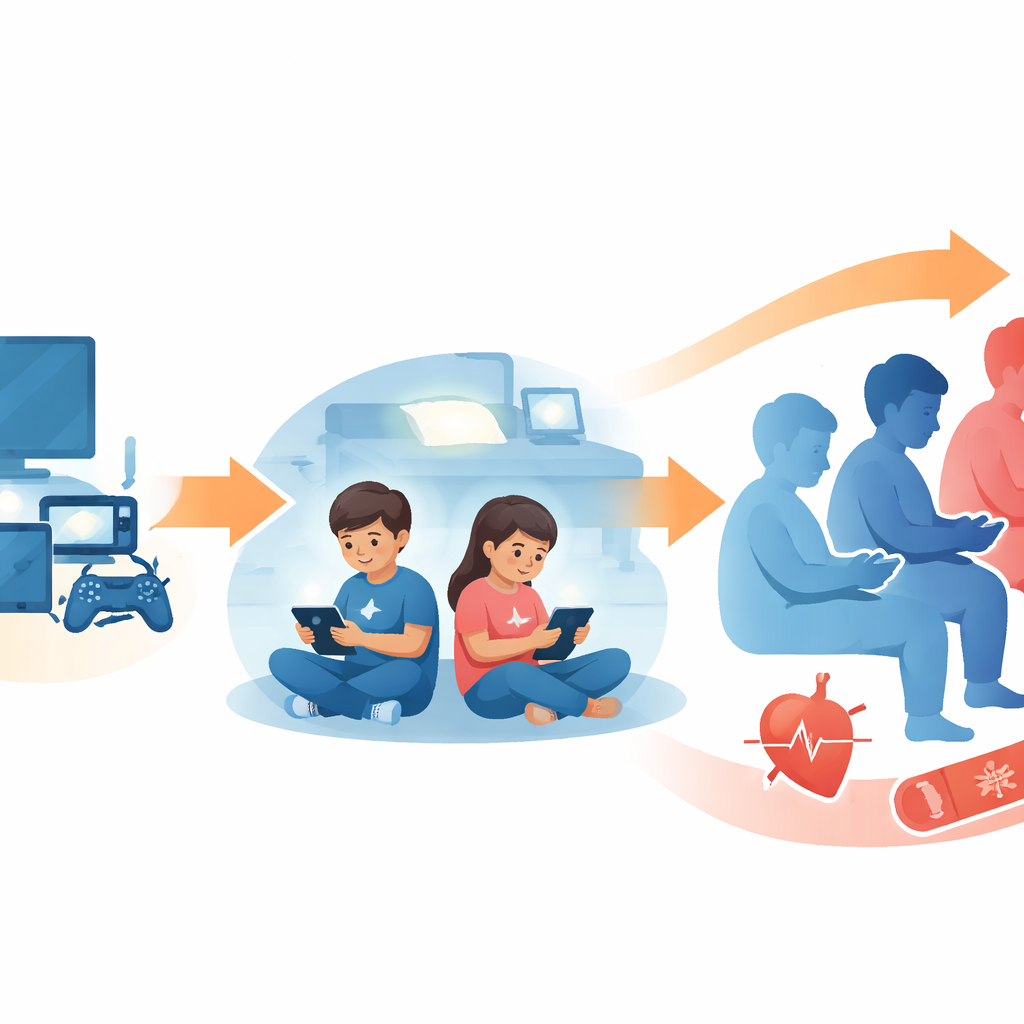
The type and availability of screens strongly shaped how much time children spent using them. Smartphones were the most commonly used device, followed by televisions. Nearly one third of children had their own personal device, and this single factor turned out to be the strongest predictor of excessive use: these children were more than eleven times as likely to exceed the two-hour threshold. Having several devices at home and using them for many years also pushed screen time higher. Recreational activities such as gaming, social networking, and video watching were far more strongly tied to long hours than studying. Using screens at bedtime was another important signal of overuse. Health-wise, children with obesity were more than twice as likely to be heavy screen users, suggesting a close, though likely two-way, relationship between long hours of sitting with devices and weight gain.
What this means for parents and policymakers
Taken together, these findings paint a clear picture: in Damascus, excessive screen time is the norm rather than the exception for early adolescents, driven mainly by modifiable habits and home environments rather than by fixed traits. Boys, children with obesity, those who own personal devices, long-time users, and those who watch a lot of television or play games late into the night are at especially high risk. For families, steps such as delaying personal device ownership, reducing the number of entertainment devices in children’s bedrooms, setting screen-free times before bed, and encouraging non-digital play can make a real difference. For schools and health authorities, programs that teach balanced digital use and create safe, appealing alternatives to screen-based entertainment could help children reap the benefits of technology without sacrificing their health.
Citation: Alshayeb, L., Dashash, M. Prevalence of excessive screen time and its associated factors among schoolchildren in Damascus, Syria: a cross-sectional study. Sci Rep 16, 12279 (2026). https://doi.org/10.1038/s41598-026-42464-5
Keywords: children screen time, digital device use, childhood obesity, Syrian schoolchildren, media and health