Clear Sky Science · en
Evaluation of the removal ability of Iodoform Paste in primary teeth pulpectomies using rotary files: a pilot study
Why saving baby teeth matters
Parents often think of baby teeth as temporary placeholders, but keeping them healthy and in place is crucial for speech, eating, jaw growth, and guiding adult teeth into the right position. When deep cavities or injuries damage the nerve inside a baby tooth, dentists can sometimes rescue it with a mini root canal called a pulpectomy. This study looks at what happens when that first treatment doesn’t last and the tooth needs a second chance—specifically, how well modern motor‑driven tools can clean out an old filling paste so the tooth can be retreated instead of removed.
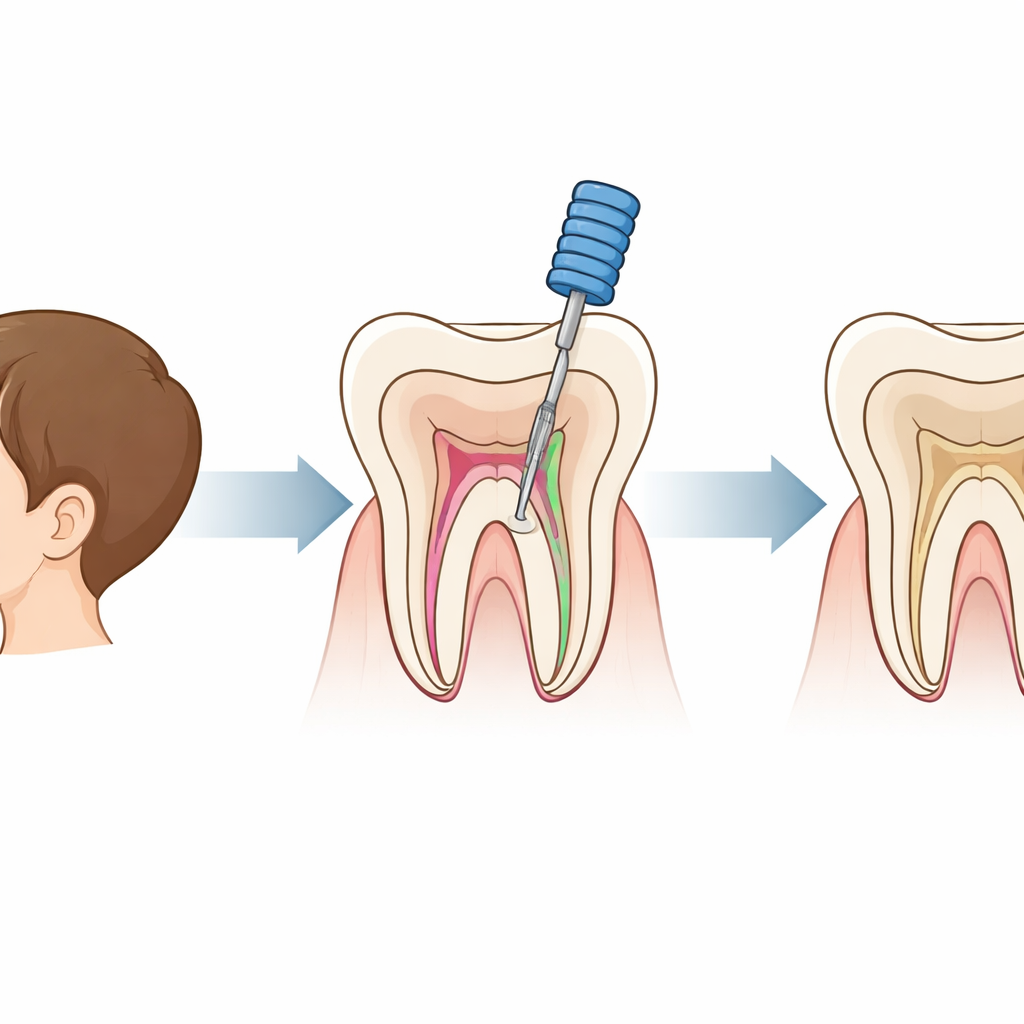
Cleaning tiny roots in small mouths
In a pulpectomy, the dentist removes the infected soft tissue inside the roots, shapes the narrow channels, and fills them with a paste that seals out germs. In children, one popular paste combines calcium hydroxide and iodoform. It is easy to place and tends to dissolve as the baby tooth’s roots naturally resorb. However, the same paste can slowly break down inside the canal, leaving gaps where bacteria might hide. If the tooth is still needed for several more years, the dentist may want to refill it—which first requires removing as much of the old material as possible from roots that are often thin, curved, and fragile.
Testing a kid‑sized rotary system
The researchers worked with ten extracted baby teeth—mostly molars plus a few front teeth—that had no previous treatment or heavy root loss. They performed a standard pulpectomy using a rotary system designed specifically for children, called Endogal Kids. These pencil‑thin metal files spin inside the canal, shaping it while liquid disinfectant washes out debris. The team scanned each tooth three times with high‑resolution micro‑computed tomography (micro‑CT): after the canals were first cleaned and shaped, after they were filled with the calcium hydroxide–iodoform paste, and again after the filling material was removed using the same rotary system in retreatment mode.
Measuring hidden spaces in 3D
Micro‑CT allowed the authors to build detailed 3D models of each root. They measured the empty space inside the canal, the volume occupied by filling material, and the overall internal volume at each stage. By comparing these measurements, they could see how much paste remained after retreatment and whether the spinning files were wearing away too much of the tooth’s inner walls. On average, about half of the paste volume—roughly 52 percent—was removed. Front teeth, which have wider and straighter canals, tended to give up more material, often well over 60 percent. Molars, with their multiple narrow, curved roots, showed more variable and generally lower removal.
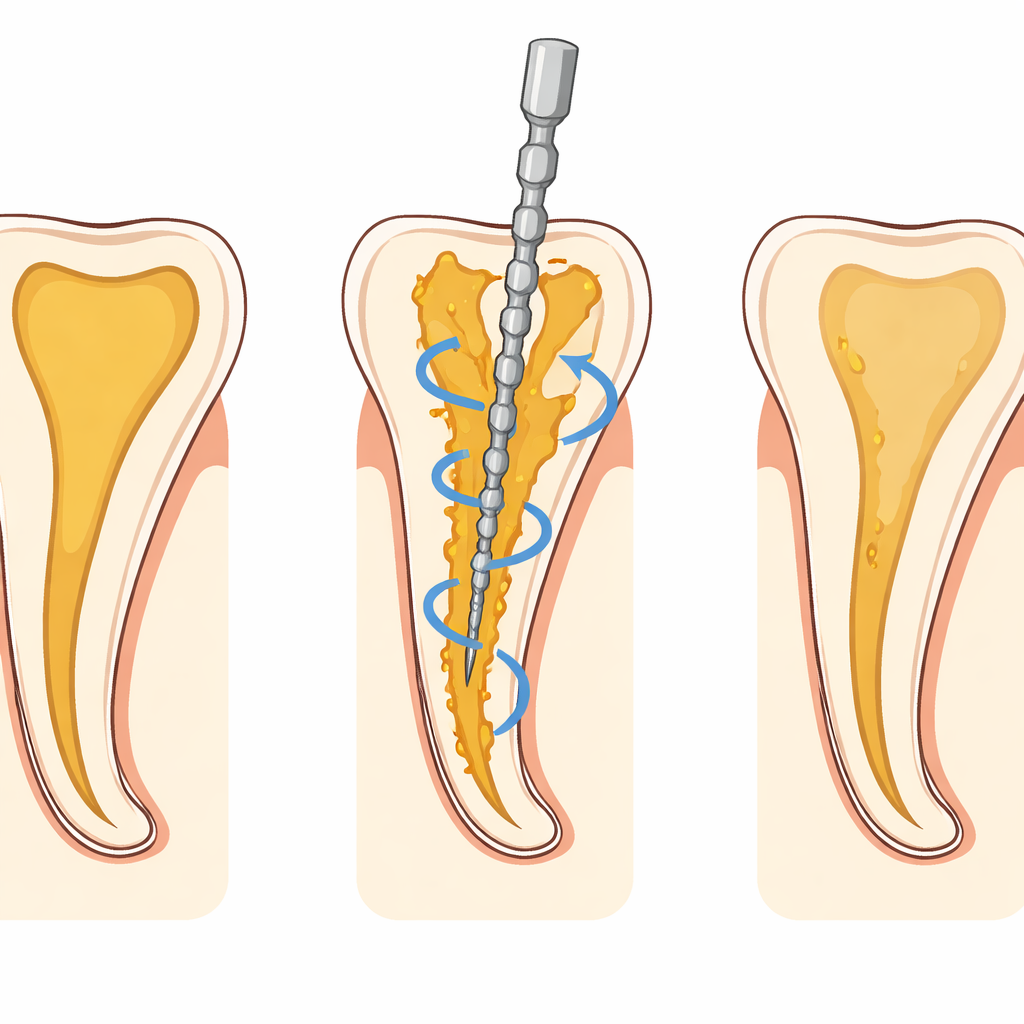
Keeping structure while cleaning
An important concern in children’s dentistry is protecting the already thin walls of baby roots. The study found that the total internal volume of the canals changed very little across the three scans—only about a 1 percent net increase from start to finish. In other words, retreating the canals with rotary files did not significantly hollow out the teeth. The empty canal space shrank when the paste was placed, and increased again when the paste was removed, but it did not fully return to the original size, confirming that some material clung to the walls, especially in more complex molar roots.
What this means for children’s care
For parents and clinicians, the takeaway is that modern rotary tools can safely remove a substantial amount of iodoform‑based paste from baby teeth without stripping away too much tooth structure. This makes retreatment—rather than extraction—a realistic option in selected cases where keeping the tooth is especially valuable, such as when adult teeth are delayed or space maintainers are not ideal. At the same time, the study shows that complete removal of paste is unlikely, particularly in molars, and that treatment plans must account for the tooth’s shape. As a pilot study with few teeth, these results are an early step, but they support using conservative, rotary‑based retreatment alongside advanced imaging to give some baby teeth a second chance.
Citation: González, M.F.R., Ortiz, A.R., García-Navas Fernández de la Puebla , M.L. et al. Evaluation of the removal ability of Iodoform Paste in primary teeth pulpectomies using rotary files: a pilot study. Sci Rep 16, 11580 (2026). https://doi.org/10.1038/s41598-026-42179-7
Keywords: pediatric dentistry, pulpectomy, root canal retreatment, iodoform paste, rotary endodontics