Clear Sky Science · en
Shell game: Neanderthal use of the European pond turtle (Emys orbicularis) in the Last Interglacial landscape of Neumark-Nord (Germany)
A lakeside mystery from our ancient cousins
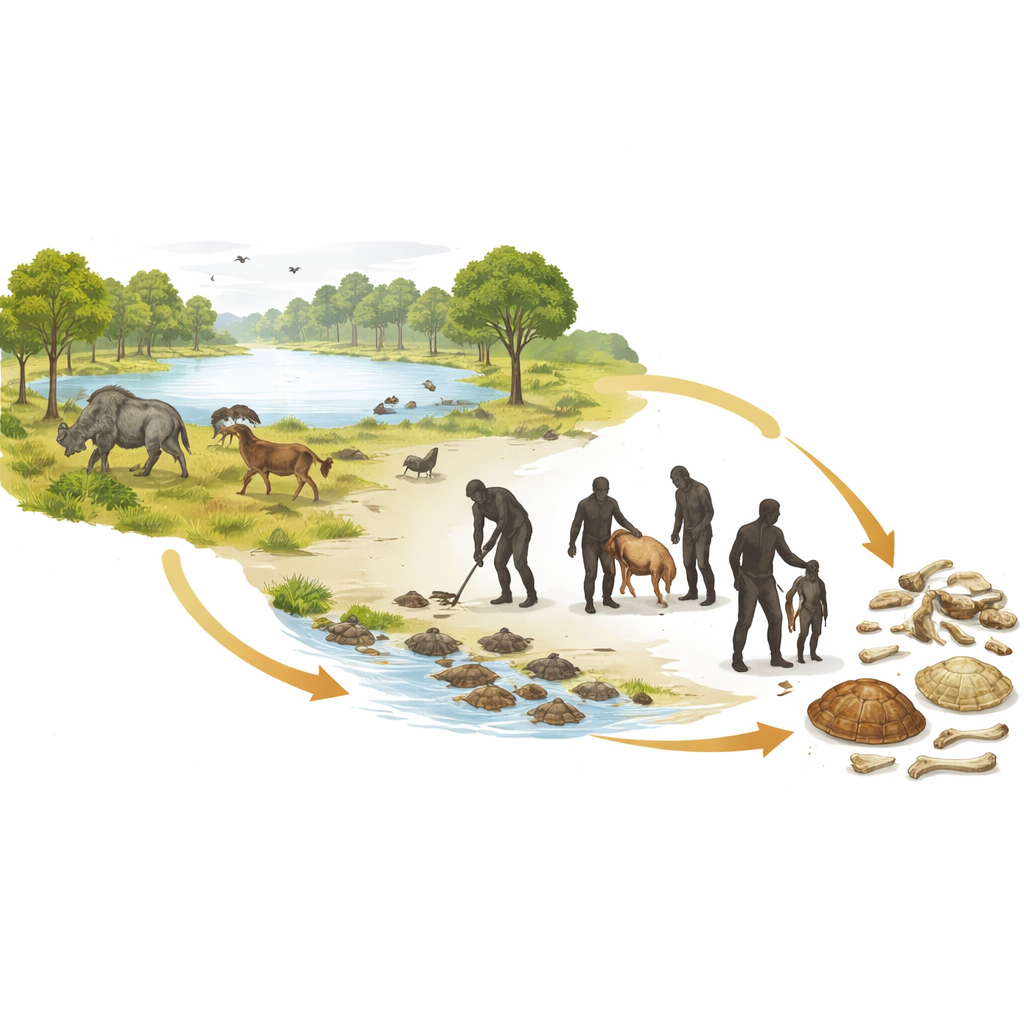
Imagine standing on the shore of a warm German lake 125,000 years ago. Nearby, elephants, deer, and wild cattle roam, yet some of the local Neanderthals are also picking up small pond turtles from the shallows. This study explores why, in a landscape rich with big game, these early humans bothered with such tiny animals—and what that choice reveals about their lives, tastes, and ingenuity.
A rich land of big and small animals
The research focuses on Neumark-Nord, a former lake district uncovered in a lignite mine in central Germany. During a warm period between ice ages, this area held two shallow basins surrounded by open woodland and wetlands. Neanderthals visited these lakes for thousands of years, leaving behind stone tools, butchered animal bones, traces of fire, and plant remains. The animal fossils show an impressive range of prey: from deer, horses, and wild cattle to enormous straight-tusked elephants weighing over ten tons. Mixed into this record are the fragile shells of European pond turtles—animals weighing only about a kilogram each.
Finding clues in tiny shells
Most of what we know about ancient diets comes from scattered bone fragments built up slowly over long periods at many different sites. Neumark-Nord is special because it captures, in high detail, what happened around a single set of lakes over a relatively short slice of time—hundreds rather than tens of thousands of years. In this dense record, researchers identified 92 fragments of pond turtle shells from two basins. By studying which parts of the upper shell and lower “belly plate” were present, they could estimate how many animals were involved and how big they were. The turtles were mostly small adults, similar in size to other warm-period populations in Europe, with a mix of males and females.
Marks of careful butchery
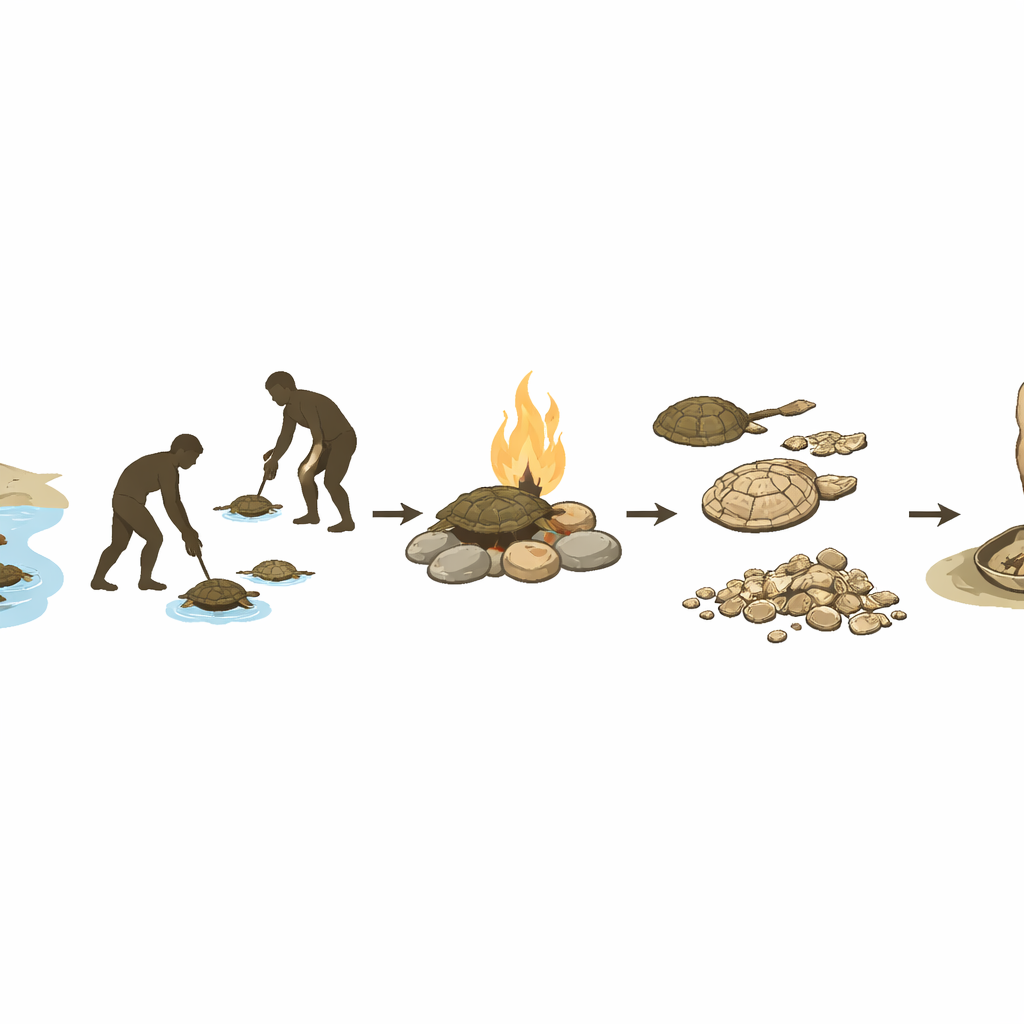
Under magnification, many shell pieces showed fine cut marks. These tiny grooves were located in very specific places: around where the limbs and shoulder and hip bones once attached, and along the inner edges of the shell. Their positions and patterns match actions like removing the limbs, opening the shell, and scraping away meat and organs. In several cases, the lower shell plates bear sets of parallel cuts that fit with scooping out soft tissues. On some upper shell pieces, the marks suggest not just meat removal but deliberate cleaning of the inside, leaving a sturdy, empty shell behind. This hints that the shells may have been reused, perhaps as simple containers or scoops, much as small shells are used in some traditional societies.
Why bother with such small meals?
At first glance, pond turtles are not impressive food packages. Each animal offers little meat and fat compared with the elephants, deer, and cattle that Neanderthals were clearly hunting and processing nearby. The sheer abundance of large-animal remains at Neumark-Nord shows that these groups were not scraping by; they were able to secure high-calorie prey and even rendered fat from bones at dedicated processing spots. In this context, repeatedly collecting small turtles likely had other motivations: perhaps taste preference, opportunities for children to help gather food along the lakeshore, or the appeal of hard shells that could be turned into handy tools for daily tasks.
What this reveals about Neanderthal lives
The Neumark-Nord turtles represent the first clear evidence that Neanderthals north of Europe’s main mountain chains also exploited these small aquatic animals, not just their Mediterranean relatives. Taken together with the broad range of mammals and plant foods found at the site, the turtle remains show that Neanderthals were flexible, curious foragers who made use of many different resources within a compact landscape. Their activities shaped the environment around the lakes, and their choices—from elephant hunts to turtle “shell games”—paint a picture of a versatile people who mixed practicality, experimentation, and perhaps even a sense of culinary variety in their daily lives.
Citation: Gaudzinski-Windheuser, S., Böll, S., Griesch, A. et al. Shell game: Neanderthal use of the European pond turtle (Emys orbicularis) in the Last Interglacial landscape of Neumark-Nord (Germany). Sci Rep 16, 8628 (2026). https://doi.org/10.1038/s41598-026-42113-x
Keywords: Neanderthals, Pleistocene lakeshore, European pond turtle, prehistoric diet, small game hunting