Clear Sky Science · en
Impact of music on pain perception during office-based transperineal prostate biopsy: a prospective non-randomized study
Why Music in the Clinic Matters
Many men who need a prostate biopsy worry not just about the results, but about the pain and stress of the procedure itself. Doctors are increasingly using a safer route called the transperineal biopsy, which goes through the skin between the scrotum and anus rather than through the rectum. But even with local anesthesia, this approach can still be uncomfortable. This study explored a simple question with big practical implications: can listening to music during the procedure meaningfully ease pain without adding drugs or complexity?
A Safer Biopsy That Still Hurts
Transperineal prostate biopsy is now preferred because it greatly lowers the risk of serious infections and allows better sampling of hard-to-reach parts of the prostate. However, the way the needles enter the body and the need for multiple tissue samples mean that many men still find the test painful. This discomfort can make them reluctant to return for repeat biopsies and can discourage clinics from offering the safer method in a simple office setting. Finding low-cost ways to improve comfort is therefore important both for individual patients and for broader cancer care.
Putting Music to the Test
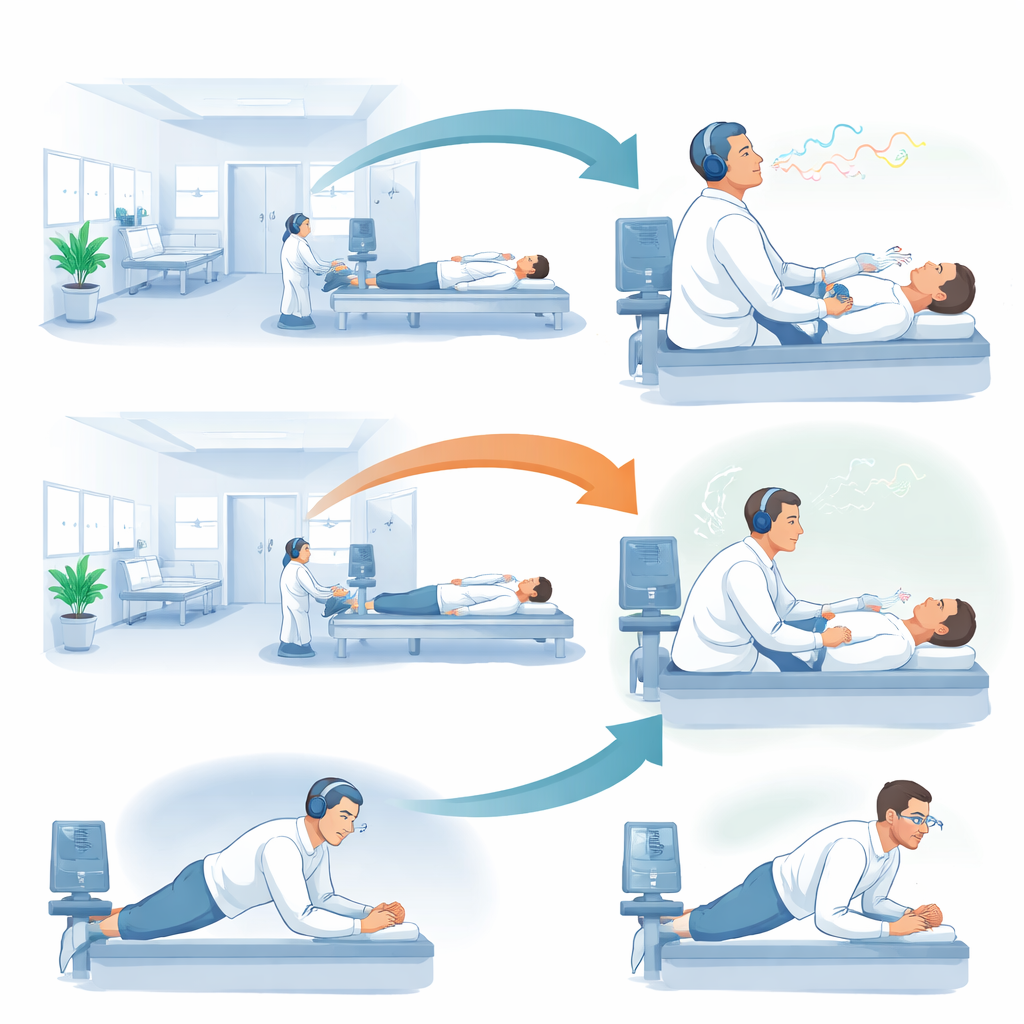
To examine whether music could help, researchers at an Italian academic center followed 200 men having their first transperineal biopsy in an outpatient clinic between March 2024 and March 2025. Half were assigned to listen to music of their choice played through a portable speaker behind their head; the other half had the procedure as usual, without music. All men received standard local anesthesia. Pain was measured using a 0–10 rating scale at six steps: after numbing cream, after each stage of anesthesia, after the first tissue sample, after the last sample, and at discharge. The team also calculated how each man’s pain changed compared with his own baseline, to separate the effect of the procedure from his natural pain sensitivity.
When the Needles Start, the Music Helps
At the very beginning, before music was started, men in the future music group actually reported slightly more discomfort than those in the control group. During the numbing injections, pain scores were similar between groups once baseline differences were taken into account. The picture changed when the biopsy needles began taking samples. Compared with controls, patients who listened to music had a smaller rise in pain at the first core and an even more striking reduction by the last core. By the time they were getting dressed to go home, men in the music group on average reported pain levels lower than their starting point, while those without music still had slightly higher pain than at baseline.
Following Pain Over Time
To capture the full pattern, the researchers used a statistical model that followed each patient’s pain ratings across all stages. This analysis confirmed that pain typically rose during the middle of the procedure and fell afterward. It also showed that music’s benefit was not constant: it became clear during the sampling phase and persisted to discharge, but made little difference during the early numbing injections. People who were more sensitive to discomfort at the outset tended to report more pain all the way through, yet music still provided an extra reduction for them during the critical moments when the needles were repeatedly entering the prostate.
What This Means for Patients
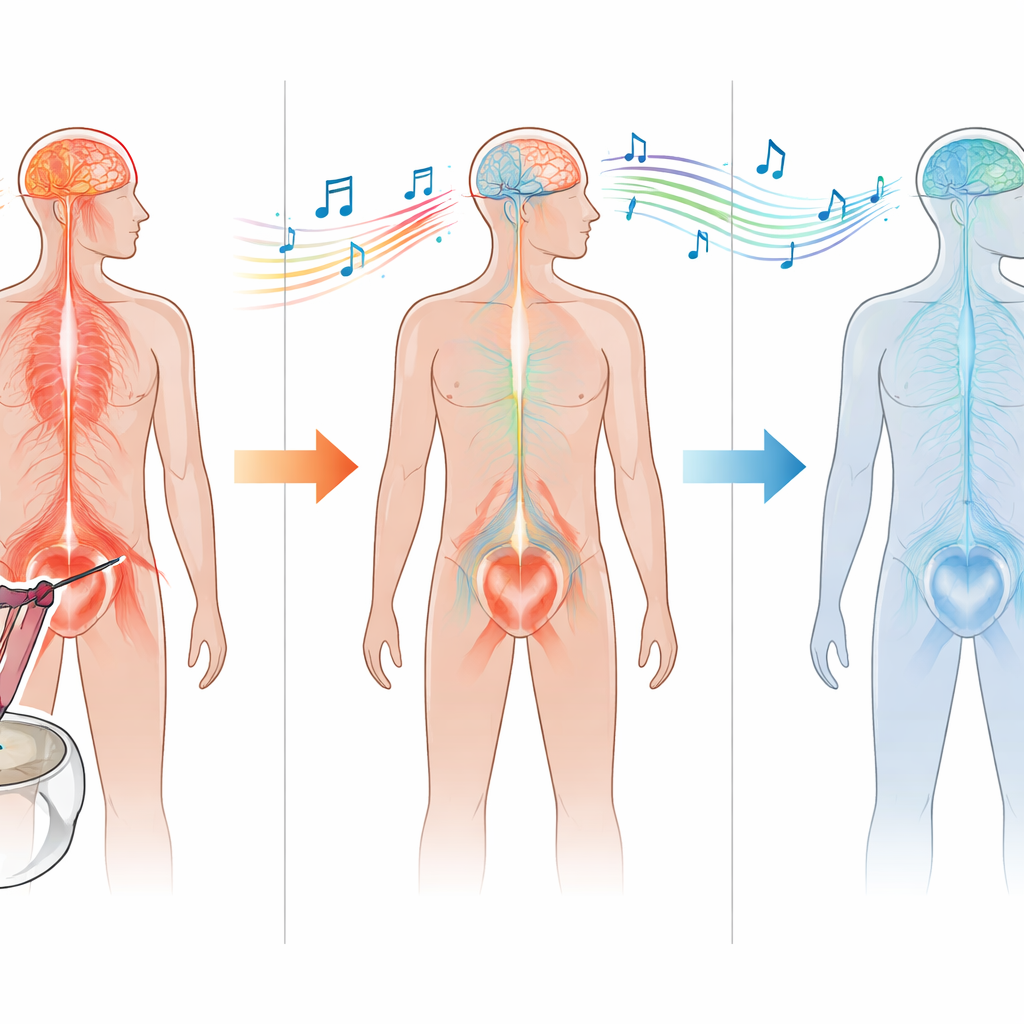
For men facing a prostate biopsy, the findings suggest that a simple playlist could make a noticeable difference at the most unpleasant points of the test. Music does not replace anesthesia, and it will not turn the procedure into a spa treatment. But it appears to take the edge off pain when the tissue samples are taken and helps patients feel better by the time they leave the clinic. Because music is safe, inexpensive, and easy to offer in any office, it may be a practical way to improve comfort and encourage wider use of the safer transperineal approach without requiring extra medications or staff.
Citation: Montrone, L., Finati, M., Ricapito, A. et al. Impact of music on pain perception during office-based transperineal prostate biopsy: a prospective non-randomized study. Sci Rep 16, 13339 (2026). https://doi.org/10.1038/s41598-026-41323-7
Keywords: prostate biopsy, music and pain, non-drug pain relief, office-based procedures, patient comfort