Clear Sky Science · en
Low-plastic diet and urinary levels of plastic-associated phthalates and bisphenols: the randomized controlled PERTH Trial
Why plastic in daily life matters
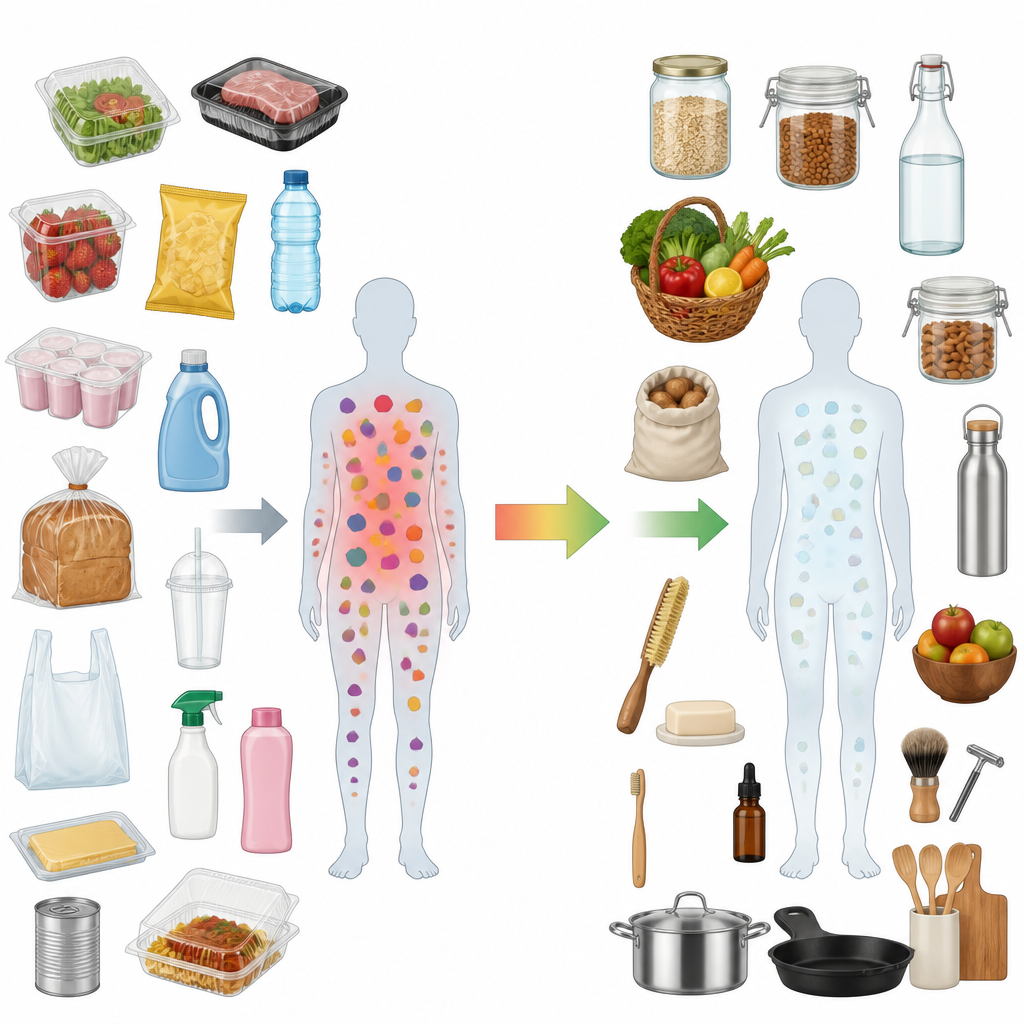
Most of us handle plastics from breakfast to bedtime, often without thinking about it. Food packaging, drink bottles and personal care products all contain chemicals that can escape into what we eat, drink and touch. This study asked a simple but pressing question: if people sharply cut down these plastic contacts for just one week, would the levels of plastic related chemicals in their bodies fall, and what everyday habits are most tied to those exposures?
Everyday plastic and the body
The researchers focused on a group of chemicals commonly found in plastics, called phthalates and bisphenols, which can act like hormones in the body. They followed 211 healthy adults in Perth, Australia, collecting urine, blood and nasal rinse samples on multiple days while also tracking their food choices, use of beauty and hygiene products and other lifestyle details. Nearly everyone had several of these chemicals in their urine on any given day, showing how hard they are to avoid in modern life.
Food choices and hidden chemical exposure
By pairing urine results with detailed diet records, the team found that certain eating habits were especially important. People who ate more highly processed foods, canned foods and items wrapped or stored in plastic tended to have higher levels of several plastic related chemicals. Even everyday conveniences such as microwaving food in plastic or relying on individually wrapped snacks added to the burden. In contrast, the small group whose diets leaned toward fresh, minimally packaged foods had noticeably lower levels of many phthalate breakdown products.
Personal care routines also play a role
The study did not stop at the kitchen. Volunteers reported which soaps, shampoos, lotions and cosmetics they used over each 24 hour period. Using more of certain products was linked to higher levels of specific phthalates in urine, especially those found in perfumes and skin creams. Shampoo, makeup and general skin products all showed clear associations with particular chemical markers, highlighting that what we put on our bodies can be as important as what we put in them.
A one week trial of a low plastic lifestyle
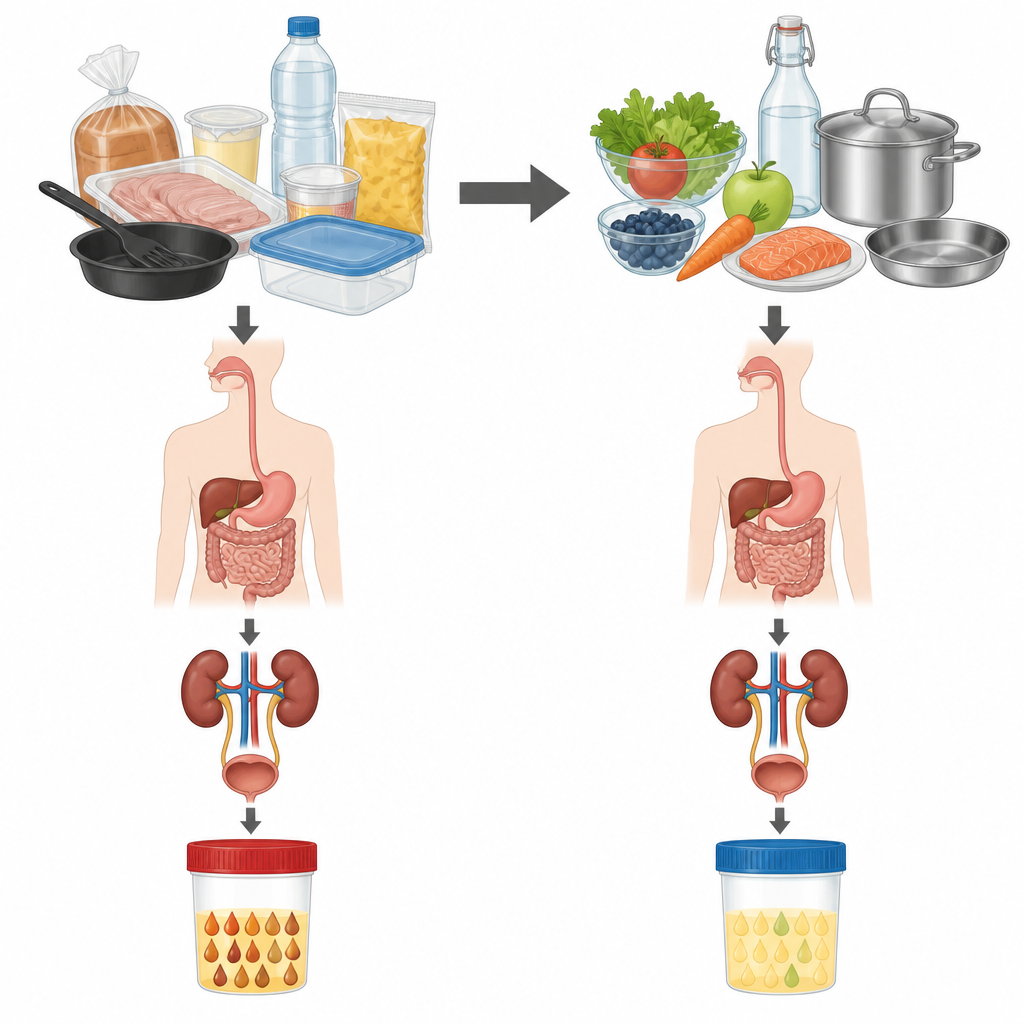
To see whether changing habits could quickly lower exposure, 60 participants from the larger group joined a seven day trial. They were randomly assigned to different combinations of changes: some received a full diet made from foods produced, processed, stored and delivered with minimal plastic; some also received metal, glass or wooden kitchenware plus step by step preparation guidance; others replaced their usual personal care products with carefully screened low plastic versions; one group changed nothing. Despite keeping overall calorie intake steady, those eating the low plastic foods saw urine levels of several phthalate markers and bisphenol A fall by roughly half compared with the control group. Swapping personal care products alone also lowered one key phthalate, although diet changes had the broadest impact.
What this means for everyday life
This research shows that plastic related chemicals are widespread in healthy adults, but that at least some of this exposure can be reduced within a week by changing how food is produced, packaged, stored and prepared, and by choosing different personal care products. The study does not prove long term health benefits, and some chemicals, such as those linked to certain flexible plastics, did not fall over the short trial. Still, the findings suggest that trimming back highly processed, plastic heavy and canned foods, and being selective about products we use on our skin, can meaningfully cut the amount of these chemicals our bodies have to handle, even in a world where plastic remains all around us.
Citation: Harray, A.J., Lucas, A.D., Herrmann, S.E. et al. Low-plastic diet and urinary levels of plastic-associated phthalates and bisphenols: the randomized controlled PERTH Trial. Nat Med 32, 1871–1883 (2026). https://doi.org/10.1038/s41591-026-04324-7
Keywords: plastic chemicals, phthalates, bisphenols, food packaging, personal care products