Clear Sky Science · en
Seasonal influenza mRNA vaccine induces stronger innate and comparable or better adaptive responses than licensed inactivated vaccines
Why this new flu shot approach matters
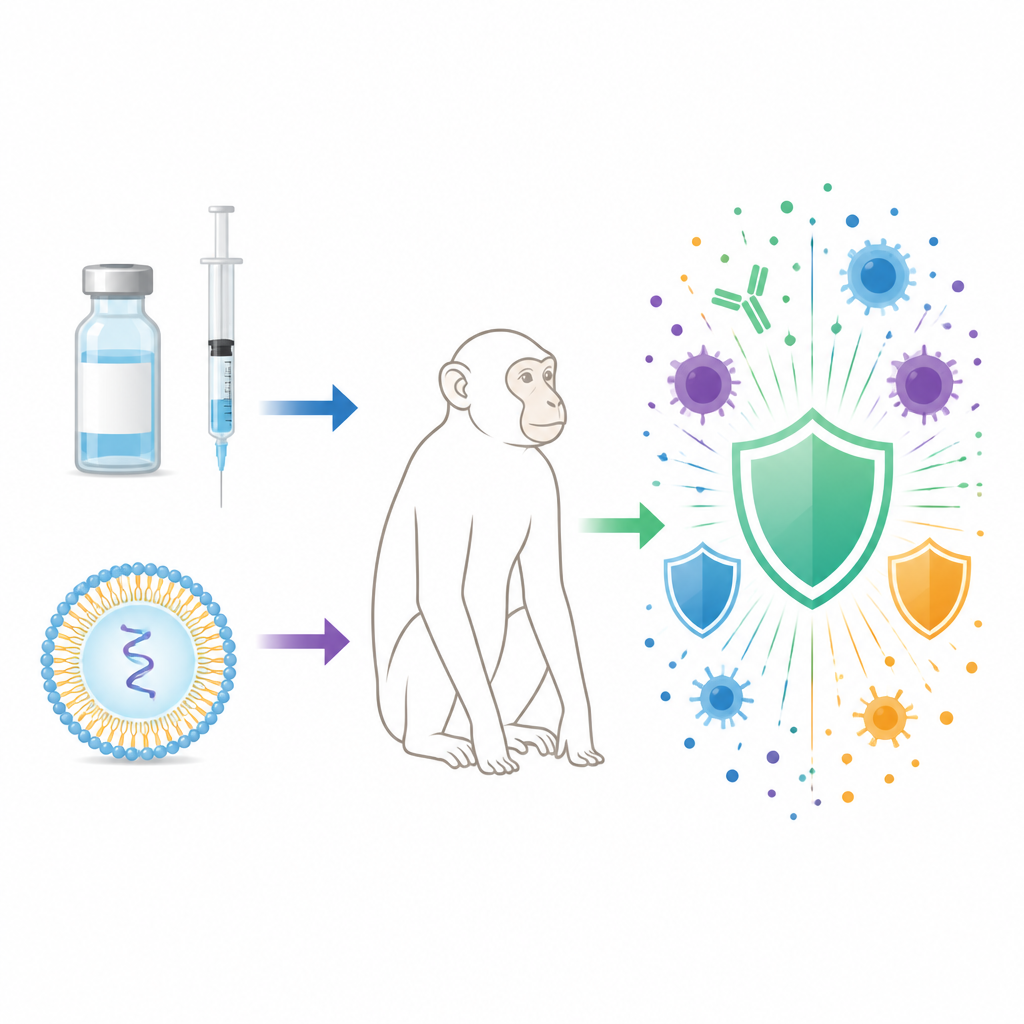
Every year, flu season brings a familiar call to get vaccinated, yet the protection people receive can be patchy and short lived. This study explores whether a newer type of shot, built from genetic instructions rather than whole virus pieces, can prompt the body to mount stronger defenses than today’s standard flu vaccines. Using non-human primates as a stand-in for people, the researchers directly compared an experimental mRNA flu vaccine with two widely used inactivated vaccines, looking not only at antibody levels but also at how the immune system was switched on and trained for long term memory.
How today’s flu shots fall short
Traditional flu vaccines are made by growing virus in chicken eggs, then inactivating and purifying parts of it, mainly a surface protein called hemagglutinin. This slow, egg-based process makes it hard to quickly update vaccines when the virus changes. It can also introduce small changes in the virus proteins that alter how the immune system sees them. As a result, the protection offered by current products like Vaxigrip and Fluad varies widely from year to year and often fades within months. Scientists are therefore searching for platforms that can be produced faster, matched more closely to circulating strains and capable of triggering broader and more durable immunity.
What an mRNA flu shot tries to do differently
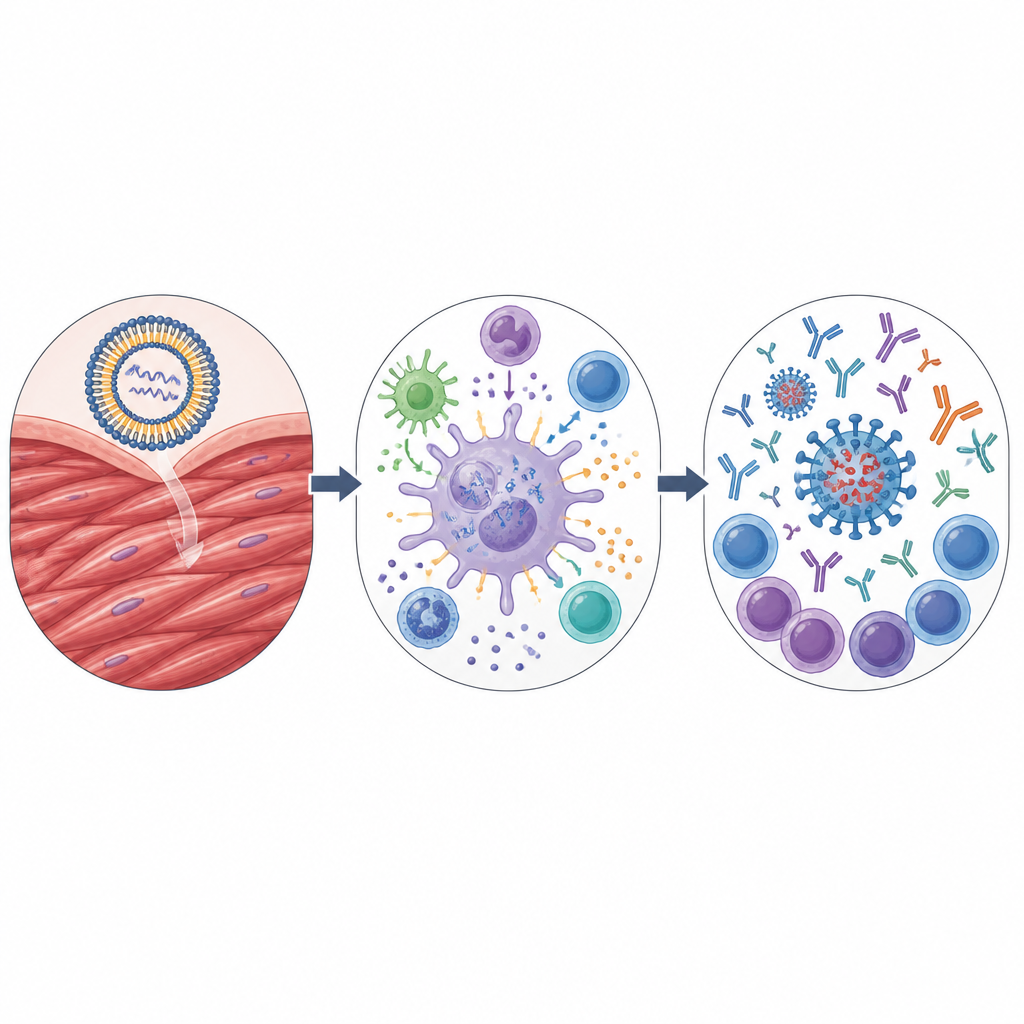
The mRNA vaccine tested here contains tiny fat bubbles carrying genetic instructions for four different flu hemagglutinins, matching two influenza A strains and two influenza B strains. Once injected into muscle, cells read these instructions and briefly make the flu proteins themselves, exposing the immune system to them in a way that can resemble a viral infection without causing disease. This design makes it relatively easy to swap or mix strains and to include several targets in one shot. In this study, animals received two doses and, for some, two later boosters so that the team could track both short term reactions and longer term immune memory in blood, lungs, lymph nodes and spleen.
Stronger early alarm signals from the mRNA shot
One day after vaccination, the mRNA flu shot produced a much more intense early alarm response in the animals’ blood than the inactivated vaccines. Thousands of genes tied to antiviral defense, antigen presentation and movement of immune cells were more strongly switched on. A particular group of immune cells called intermediate monocytes expanded sharply, and a wide range of signaling proteins associated with inflammation rose in the bloodstream. Despite this vigorous activation, measures such as body temperature, weight and routine blood chemistry stayed within safe ranges, suggesting that the stronger early alarm did not translate into obvious harm in this model.
Antibodies and memory cells across different flu strains
All three vaccines generated measurable antibodies against the four hemagglutinin targets, with levels rising after the second dose, dipping over months and then rising again after later boosters. Overall, the mRNA and Fluad vaccines produced higher amounts of binding antibodies than Vaxigrip, though how well these antibodies neutralized live virus varied by strain. For some strains, Fluad achieved the highest neutralizing power, while the mRNA vaccine matched or slightly surpassed Vaxigrip. Importantly, both the mRNA shot and Fluad produced more hemagglutinin-specific memory B cells in blood than Vaxigrip, and the mRNA vaccine drove especially strong memory B cell and T cell responses in the lymph nodes that drained the injection site and in the spleen. These tissue responses suggest richer training of immune memory, including in the respiratory tract where flu first takes hold.
What this could mean for future flu seasons
Taken together, the findings show that this unmodified mRNA flu vaccine triggers a stronger early immune alarm and builds at least as much, and in some ways more, long lasting immune memory than two licensed inactivated vaccines in non-human primates. Although not every strain showed the highest neutralizing antibody levels with the mRNA shot, the combination of robust early signaling, solid antibody responses and strong memory B and T cell formation points to mRNA flu vaccines as a flexible and powerful tool for seasonal protection. If similar patterns hold in people, such vaccines could make it easier to update flu shots quickly and to equip the immune system with a deeper, more adaptable shield against the shifting influenza virus.
Citation: Bermúdez-Méndez, E., Lenart, K., Arcoverde Cerveira, R. et al. Seasonal influenza mRNA vaccine induces stronger innate and comparable or better adaptive responses than licensed inactivated vaccines. npj Vaccines 11, 108 (2026). https://doi.org/10.1038/s41541-026-01492-y
Keywords: influenza vaccines, mRNA vaccine, immune response, memory B cells, T cell immunity