Clear Sky Science · en
Spillover between influenza and COVID-19 vaccination behaviors across pandemic phases and implications for general vaccine hesitancy
Why this study matters to everyday life
Many people think of each shot—whether for flu or COVID-19—as a separate decision. This study, conducted in Hong Kong from 2021 to 2023, shows that these choices are linked. Getting a flu shot before the COVID-19 pandemic made people more likely to complete COVID-19 vaccination during the crisis, which in turn made them more likely to get a later flu shot when influenza came roaring back. Along the way, people’s general feelings about vaccines became more or less negative, shaping what they did next. Understanding these chains of influence can help public health officials design smarter campaigns that protect more people.
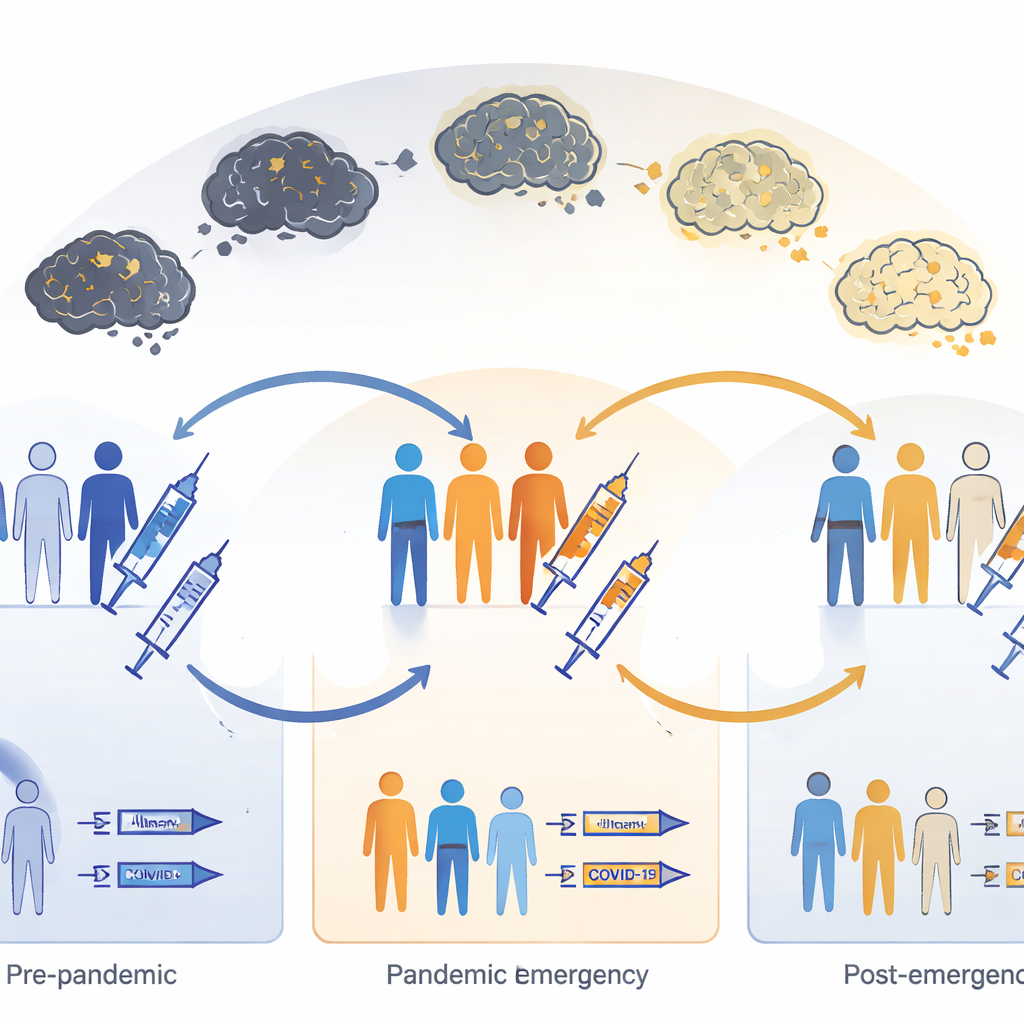
Following people through changing pandemic times
The researchers followed 411 adult social media users in Hong Kong over three key periods: a control phase in 2021 when COVID-19 cases were low but primary vaccination was under way; an emergency outbreak phase in 2022 dominated by the Omicron wave and booster doses; and a post-emergency phase in 2023, when COVID-19 restrictions had lifted but seasonal flu activity surged. At each wave, participants reported their vaccination records and answered questions about how wary they felt about vaccination in general—covering trust in benefits, worries about side effects, suspicion of commercial motives, and preference for “natural” infection over shots.
How one shot led to another
Using statistical models that account for age and other background factors, the team found clear “spillover” between different vaccines. People who had taken a seasonal flu shot before the pandemic were much more likely to have completed the three-dose COVID-19 series during the Omicron outbreak. Those who finished the COVID-19 series were, in turn, more likely to receive a flu shot in the 2022–2023 season, when influenza finally returned in force. These links held even after adjusting for education, income, and other influences, suggesting that building habits around one vaccine can prime people to accept others later, both in emergencies and in routine seasons.
Changing minds about vaccines as a whole
The study also tracked broader attitudes toward vaccination—not toward any one product, but toward the idea of vaccines as a public health measure. People who had taken a flu shot before COVID-19, and those who completed COVID-19 vaccination during the outbreak, were more likely to report less negative general views of vaccination two years later. At the same time, participants who started out with fewer doubts about vaccines were more likely to go on to get both full COVID-19 vaccination and a later flu shot. This two-way pattern supports the idea of an ongoing loop: experiences with vaccination can soften hesitancy, and friendlier attitudes make future vaccination more likely.

Unpacking the spillover chain
To explore how these pieces fit together, the researchers built a mediation model—essentially a map of which factors seem to drive others over time. They found that getting a flu shot before the pandemic did not just directly predict later COVID-19 vaccination; it also did so indirectly, by first reducing negative general attitudes and then encouraging people to complete the COVID-19 series. A similar pattern appeared for later outcomes: people who had lower general hesitancy at the start and then completed COVID-19 vaccination tended to have less hesitancy and higher flu vaccination in the post-emergency phase. However, for repeat flu shots, long-standing, flu-specific views still played a large role, so general attitudes and COVID-19 vaccination explained only part of the effect.
What this means for future vaccination campaigns
The findings suggest that hesitancy about vaccines in general is not just background noise; it can shape a lasting pattern of behavior across different diseases and over several years. At the same time, actually going through vaccination—receiving clear information, having manageable side effects, and navigating the system successfully—can chip away at doubts and make later vaccines more acceptable. The authors argue for a “two-tier” approach to promotion: keep investing in strong routine programs that normalize vaccination well before the next emergency, and pair disease-specific messages with efforts to build broad confidence in vaccination overall. Done well, each successful vaccination campaign can make the next one easier, protecting more people when new threats emerge.
Citation: Luo, S., Huang, S., Lee, E.W.J. et al. Spillover between influenza and COVID-19 vaccination behaviors across pandemic phases and implications for general vaccine hesitancy. npj Vaccines 11, 70 (2026). https://doi.org/10.1038/s41541-026-01398-9
Keywords: vaccine hesitancy, influenza vaccination, COVID-19 vaccines, behavioral spillover, public health communication