Clear Sky Science · en
Trimester of diagnosis affects tumor characteristics and survival in breast cancer during pregnancy: first results from the STURGATE collaboration
Why this matters for expecting mothers
Many women today delay childbirth, so breast cancer can, in rare cases, appear during pregnancy. This study asks a question with immediate real-world impact: does it make a difference for the cancer and for survival whether it is found in the first, second, or third trimester? Using nationwide data from the Netherlands and Sweden, the researchers show that timing during pregnancy is closely linked to how aggressive the tumor is and how well women fare in the years after diagnosis.
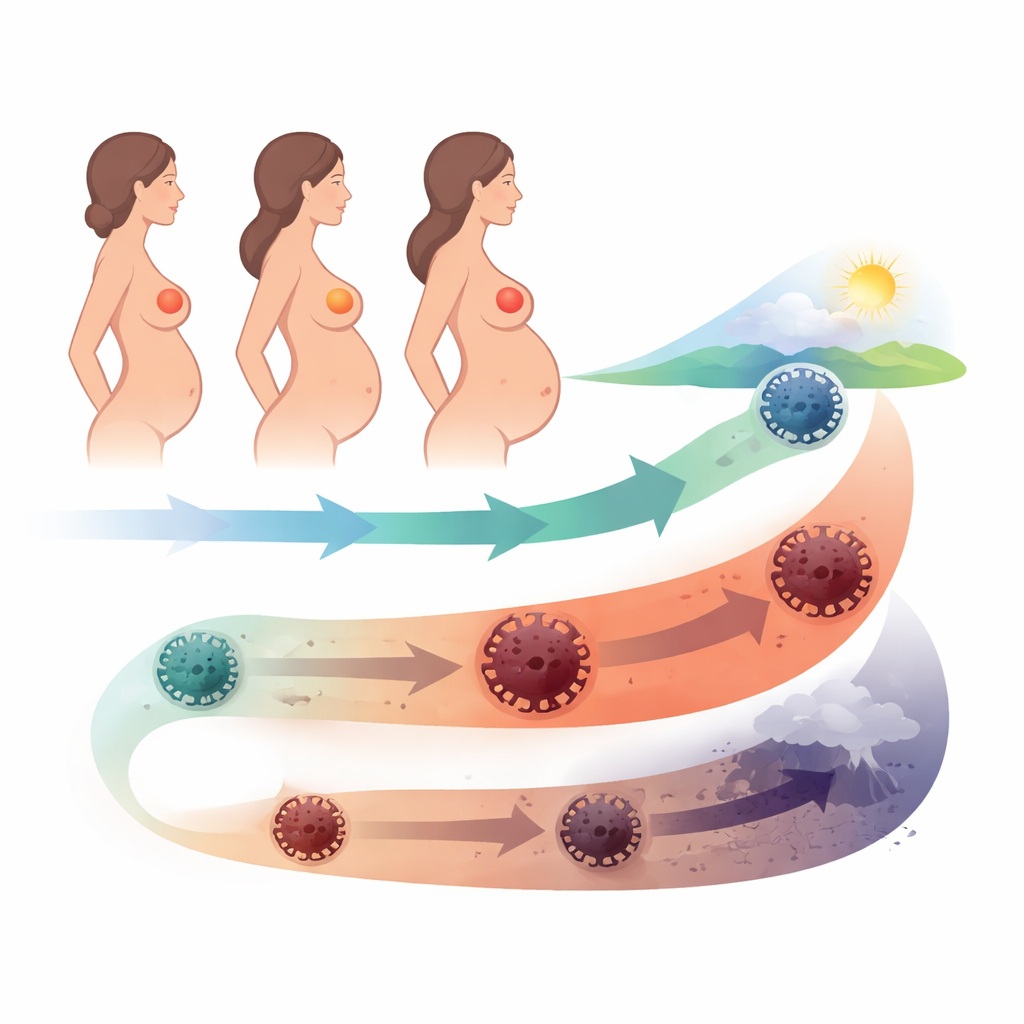
Looking at cancer across two countries
To explore this issue, the team combined data from cancer registries in the Netherlands and Sweden, creating one of the largest collections of breast cancers diagnosed during pregnancy to date. They identified 534 pregnant women with invasive breast cancer and compared them with 1,602 similar women of the same age and diagnosis year who were not pregnant when their cancer was found. This design allowed the researchers to separate the influence of pregnancy itself from other factors like age, calendar year, and general advances in cancer care.
How tumor features change by trimester
The study found that breast cancers discovered in pregnant women differed strikingly by trimester. When the cancer appeared in the first trimester, its features looked much like those in non-pregnant women of the same age. By contrast, cancers diagnosed in the second and especially in the third trimester were more likely to be high grade (a sign of rapidly growing cells), lack hormone receptors, and present at a more advanced stage. These tumors were also more often of the so-called “triple-negative” type, a form that tends to be harder to treat and is linked to poorer outcomes.
Treatments given versus outcomes
One concern is that pregnant women might receive less intensive treatment. Here, however, the authors saw that use of chemotherapy, hormone therapy, and targeted drugs was broadly similar between pregnant and non-pregnant women when comparing tumors of the same biological subtype. In some subgroups, chemotherapy was even given more often during pregnancy. Surgical approaches differed somewhat, with more mastectomies in pregnant patients, likely reflecting attempts to achieve strong local control while navigating the constraints of pregnancy-safe treatments.
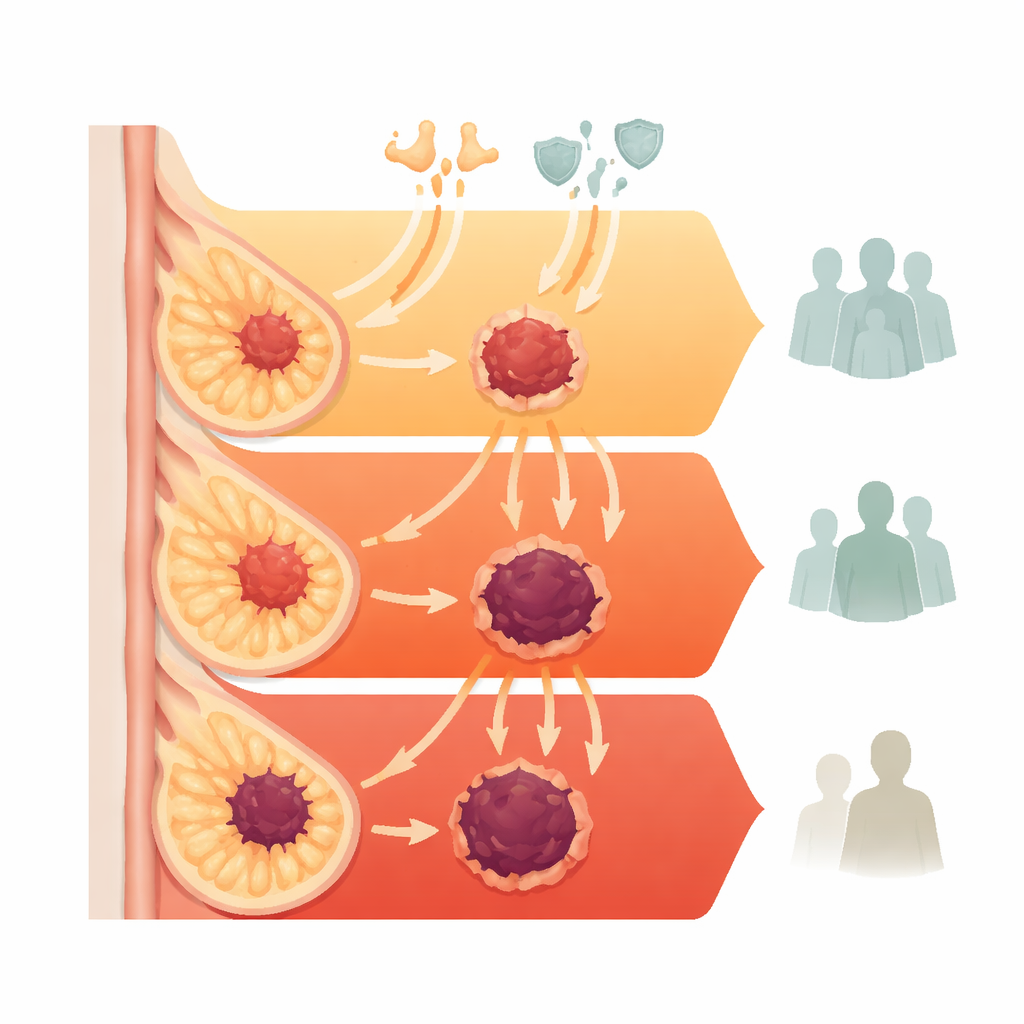
Survival and the hidden role of timing
Despite similar treatment patterns, overall survival within ten years was worse for women whose breast cancer was diagnosed during pregnancy compared with their non-pregnant counterparts. When the researchers adjusted their statistical models step by step for tumor grade, biological subtype, and how advanced the disease was, the survival gap narrowed but did not fully disappear. The excess risk was clearest for cancers diagnosed in the second and third trimesters. For first-trimester diagnoses, survival was closer to that of non-pregnant women, echoing the more favorable tumor features seen earlier in pregnancy.
What this means going forward
For lay readers, the message is that breast cancer during pregnancy is not a single, uniform situation. Cancers found later in pregnancy tend to be more aggressive and are linked to worse survival than those found early or outside pregnancy, even when women receive similar modern treatments. The authors suggest that changing hormone levels, immune adjustments, and other pregnancy-related shifts could be shaping how tumors grow across trimesters. Their work underscores the need for trimester-aware research, closer monitoring of breast changes in late pregnancy, and further study of how to optimize treatments so that both mother and baby have the best possible chance of a healthy future.
Citation: Bakhuis, C.F.J., Gkekos, L., van Diest, P.J. et al. Trimester of diagnosis affects tumor characteristics and survival in breast cancer during pregnancy: first results from the STURGATE collaboration. npj Breast Cancer 12, 49 (2026). https://doi.org/10.1038/s41523-026-00918-z
Keywords: pregnancy and breast cancer, trimester and tumor aggressiveness, breast cancer survival, cancer during pregnancy, tumor biology and hormones