Clear Sky Science · en
Evaluating multiple candidates simultaneously reduces racial disparities in promotion and tenure
Why This Matters Beyond Campus Walls
Who gets promoted to the highest ranks in universities shapes the ideas, discoveries, and leaders that emerge from higher education. Yet in the United States, Black and Hispanic professors remain strikingly underrepresented in tenured positions, even when they have strong records of accomplishment. This study asks a deceptively simple question with wide-reaching consequences: can merely changing how promotion committees look at candidates—one at a time versus side by side—make these decisions fairer?
The Hidden Power of How Choices Are Framed
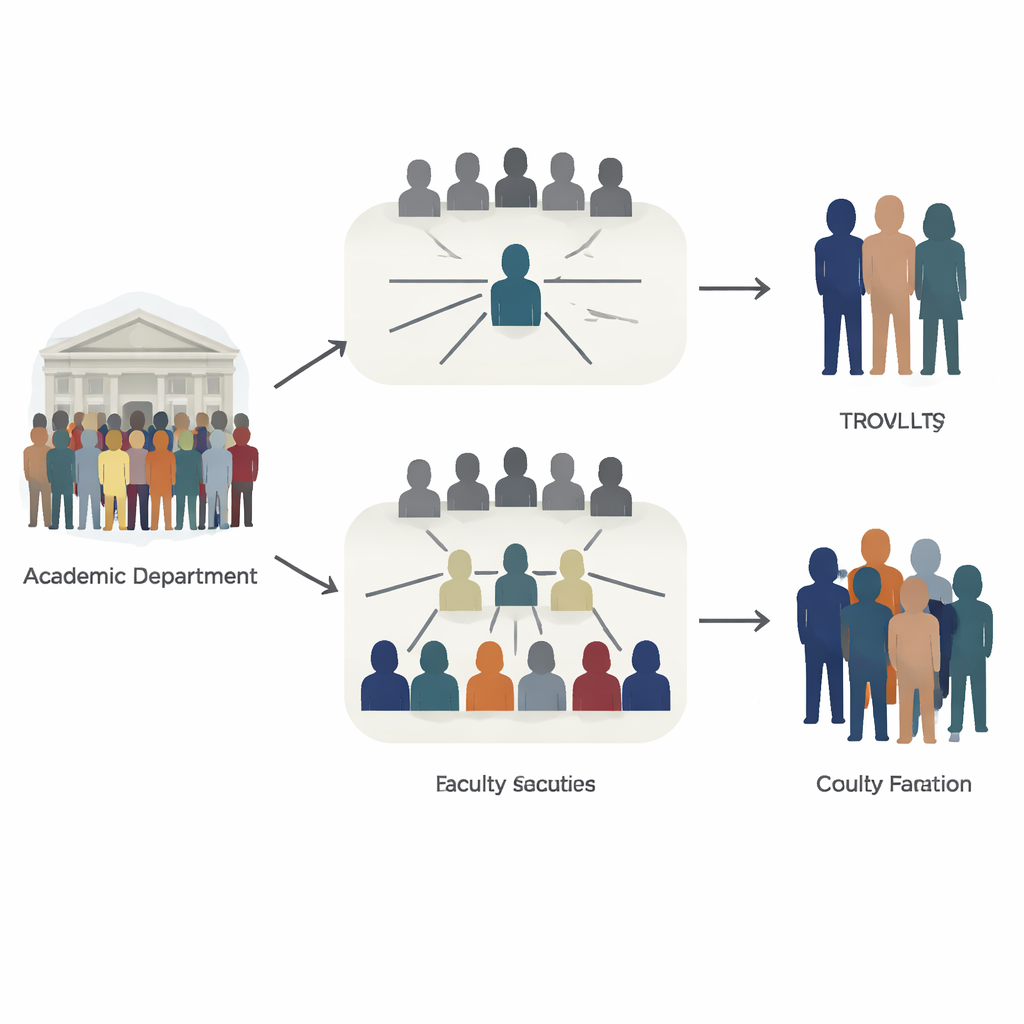
The authors draw on “choice architecture,” the idea that small tweaks in how options are presented can nudge people toward different decisions. In hiring and promotion, committees can evaluate candidates either separately (one person at a time) or jointly (several candidates considered in the same cycle). Psychological research suggests that when evaluators must compare options directly, they rely more on concrete evidence—such as prior performance—and less on quick, stereotype-driven impressions. The team wondered whether this principle, mostly tested in lab and marketing settings, could reduce racial inequities in real, high-stakes academic promotions.
What Professors Expected Would Help
Before examining real promotion records, the researchers surveyed 285 professors who had served on promotion and tenure committees. These are the key gatekeepers whose judgments shape academic careers. They were asked which mode of evaluation they believed would best support underrepresented minority faculty. Surprisingly, only about one in six thought evaluating multiple candidates together would help Black and Hispanic colleagues. In contrast, nearly half believed that reviewing candidates one by one would be better, or they favored separate evaluations over joint ones. In other words, the gut instincts of experienced faculty ran counter to what decision-making theory would predict.
A Natural Experiment in University Promotions
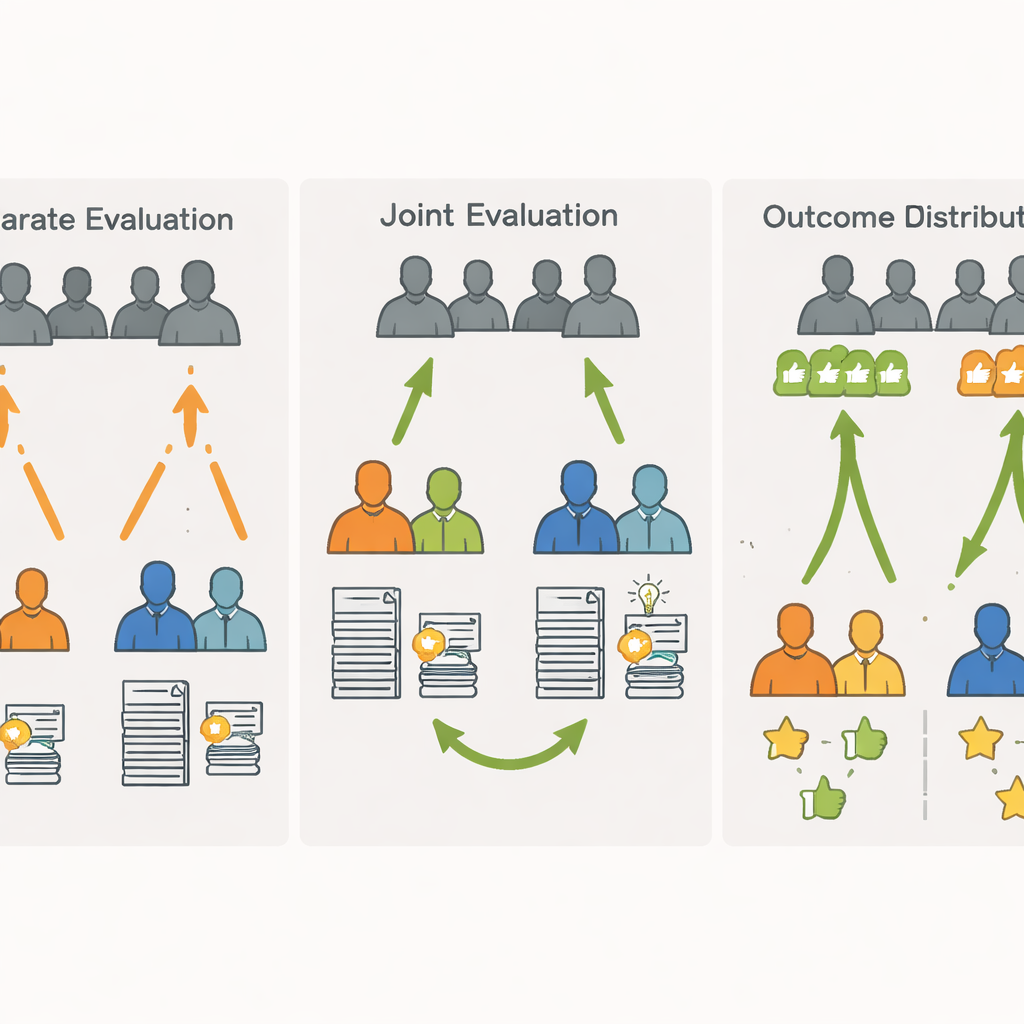
To test these beliefs against reality, the authors analyzed 1,804 promotion and tenure decisions from six U.S. universities over seven years. Some departments happened to have only one candidate coming up for promotion in a given year (separate evaluation), while others reviewed two or more candidates for the same rank in the same department during the same cycle (joint evaluation). Because promotion timing is mostly set by institutional rules—such as tenure clocks—and not chosen by candidates or committees, this created a quasi-experimental setting that closely mimics random assignment. The researchers also accounted for many possible confounding factors, including research productivity, grant records, discipline, institution, gender, academic rank, years in rank, and department size.
What Actually Happened in the Vote Room
The main yardstick was the share of negative votes each candidate received from colleagues in their home department. When candidates were evaluated separately, Black and Hispanic faculty received more “no” votes than their White and Asian peers with similar records, echoing prior evidence of a racial double standard. When candidates were evaluated jointly, the racial gap narrowed: underrepresented candidates received about 9% fewer negative votes than they did under separate evaluation, even after controlling for scholarly achievements and context. Statistical modeling showed that this modest shift translated into a meaningful payoff—an estimated 16.2% increase in the likelihood that a Black or Hispanic candidate would ultimately receive a positive decision from the university provost, who makes the final call on promotions.
Implications for Fairness and Everyday Practice
These findings reveal that simply evaluating multiple candidates at once can act as an “evaluation nudge” toward fairness, without changing who sits on committees or introducing controversial, identity-targeted policies. By encouraging direct comparison of candidates’ accomplishments, joint evaluation appears to dampen the influence of negative stereotypes and shifting standards that otherwise disadvantage Black and Hispanic faculty. At the same time, the study highlights a disconnect: most decision makers believe separate evaluations are better for equity, even though the data show the opposite. The authors suggest that universities can reduce racial inequities by allowing or encouraging joint consideration of promotion cases, using example cases to simulate side-by-side comparisons when true joint evaluation is impossible, and training committees about how these subtle design choices can shape who gets to thrive in academia.
Citation: Masters-Waage, T.C., Madera, J.M., Edema-Sillo, E. et al. Evaluating multiple candidates simultaneously reduces racial disparities in promotion and tenure. Nat Commun 17, 3080 (2026). https://doi.org/10.1038/s41467-026-69937-5
Keywords: academic promotion, racial disparities, choice architecture, joint evaluation, faculty diversity