Clear Sky Science · en
Cancer-associated SF3B1 mutation suppresses DNA repair by disrupting the organization of nuclear actin network
How Cells Keep Their DNA in Shape
Every day, the DNA in our cells is nicked, cut, and stressed by radiation, chemicals, and normal metabolism. Healthy cells are usually very good at patching this damage. But in many cancers, that repair system is partly broken. This study uncovers a surprising new reason why: a single, common mutation in a splicing protein derails an internal support network inside the cell nucleus, slowing DNA repair and helping cancer grow.
A Hidden Weak Point in Cancer Cells
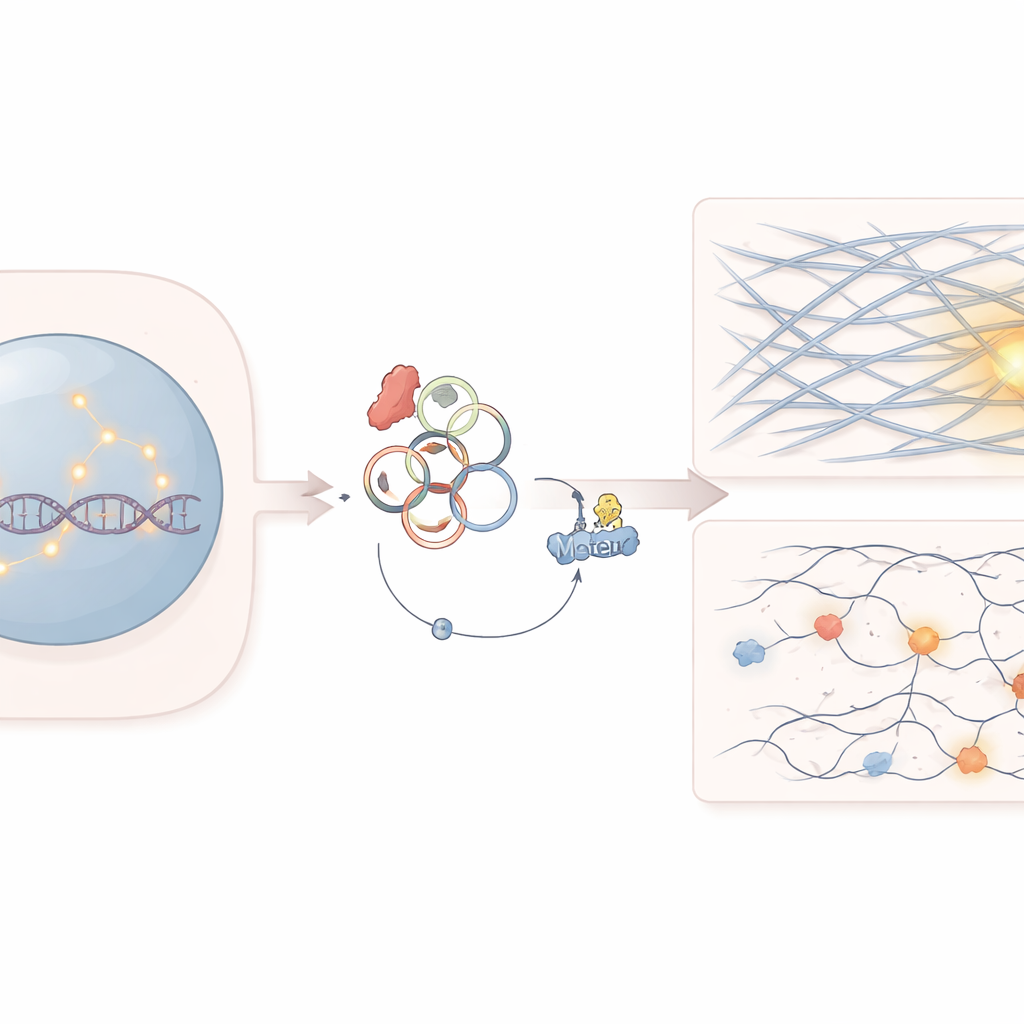
The work centers on a gene called SF3B1, which helps process RNA messages in cells. Mutations in SF3B1 are common in several blood cancers and solid tumors. Doctors already knew that these mutations make cancer cells unusually sensitive to certain drugs that target DNA repair, such as PARP inhibitors. However, why these cells struggle with repairing broken DNA, especially harder-to-fix breaks that arise in densely packed regions of the genome, was not fully understood.
The Role of Circular RNA and a Motor Protein
The researchers discovered that the SF3B1 mutation changes the way some RNA molecules are stitched together, boosting the production of a circular RNA called circATP9B. Unlike typical linear RNA, circular RNAs form closed loops and can act as sponges or decoys for proteins. Here, circATP9B binds to a motor protein named MYH9, which normally helps organize actin filaments—the same kind of structural fibers better known for shaping cells and powering muscle contraction. The team showed that circATP9B encourages MYH9 to be tagged and broken down, reducing its levels without changing its gene expression.
Breaking the Nuclear Road Network
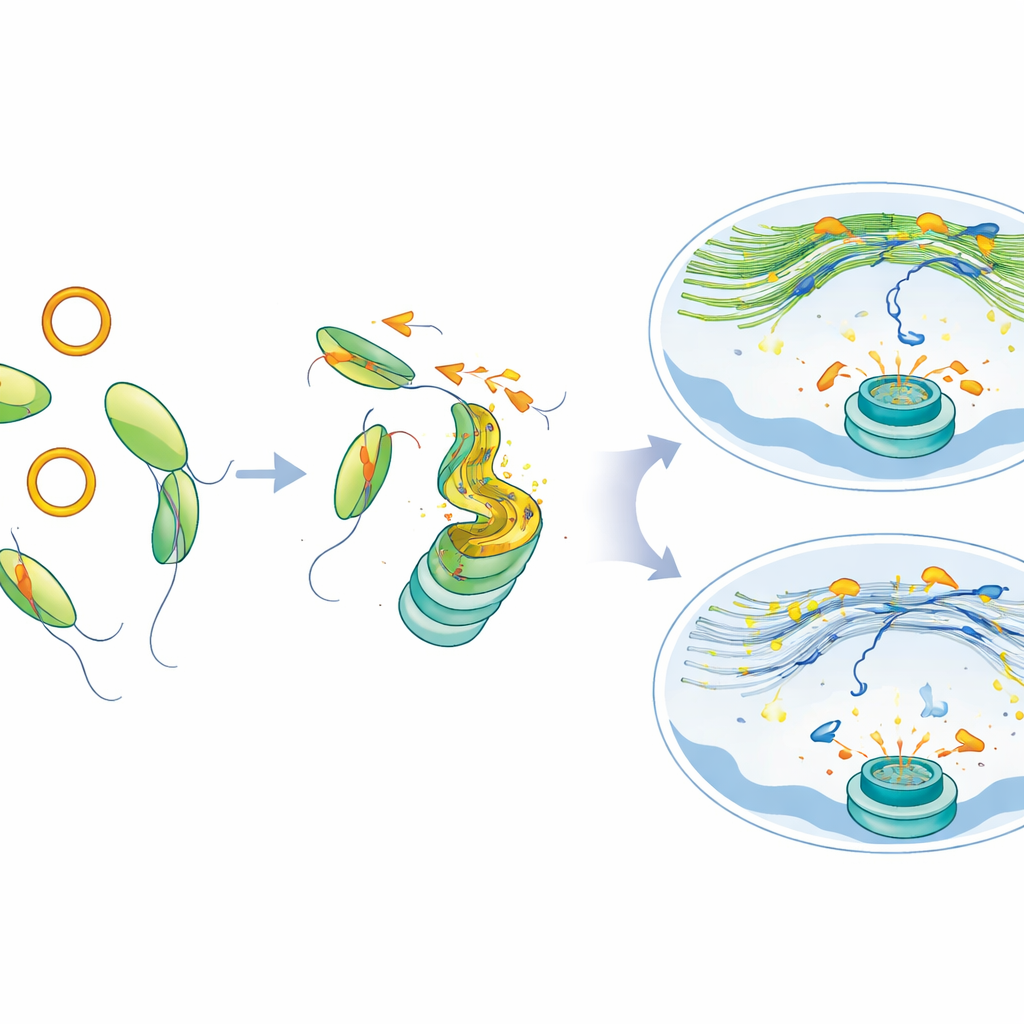
Inside the nucleus, actin can assemble into fine filaments that act like tracks. After DNA is damaged, broken pieces, especially in tightly packed “heterochromatin,” must move along these tracks to safer zones where accurate repair can occur. Using live-cell imaging, the scientists watched glowing markers that highlight DNA breaks and nuclear actin. When MYH9 was reduced, the normally rich web of nuclear actin filaments failed to form properly after radiation. As a result, the broken DNA spots moved more slowly, traveled shorter distances, and clustered less efficiently, particularly for the repair pathway that relies on copying intact DNA as a template. These sluggish, isolated breaks stayed unresolved for many hours.
From Faulty Repair to Treatment Opportunity
Cells lacking MYH9, or cells forced to produce excess circATP9B, accumulated persistent damage marks and tiny extra nuclei—signs of chromosomes breaking apart. These cells also became more vulnerable to PARP inhibitors, both in dishes and in mouse tumor models, meaning that interfering with this pathway leaves cancer cells especially exposed when DNA repair drugs are used. Importantly, when the researchers restored MYH9 or reduced circATP9B, the nuclear actin network recovered, DNA breaks moved and clustered more normally, and repair improved even in cells carrying the SF3B1 mutation.
What This Means for Patients
In simple terms, this study reveals that a common cancer mutation can sabotage the cell’s internal “railway system” for DNA repair. The SF3B1 mutation boosts a circular RNA, circATP9B, which in turn destroys the MYH9 motor protein that helps organize actin tracks in the nucleus. Without solid tracks, broken DNA cannot be efficiently brought together and fixed, leaving cancer cells genetically unstable but also more dependent on remaining repair routes. This vulnerability helps explain why tumors with SF3B1 mutations respond well to PARP inhibitors and suggests that measuring or targeting circATP9B and MYH9 could one day help tailor DNA-damaging therapies for cancer patients.
Citation: Qian, R., Zhao, Z., Sun, X. et al. Cancer-associated SF3B1 mutation suppresses DNA repair by disrupting the organization of nuclear actin network. Cell Death Dis 17, 334 (2026). https://doi.org/10.1038/s41419-026-08569-5
Keywords: DNA repair, circular RNA, nuclear actin, SF3B1 mutation, cancer therapy