Clear Sky Science · en
Interactive workshops on improving dental students’ understanding of environmentally sustainable dentistry: a quality improvement project
Why Greener Dentistry Matters
Most of us visit the dentist without thinking about what it costs the planet. Yet dental care, from the lights in the surgery to the piles of single-use plastics, quietly adds to climate change. This article describes how one dental school tested a new kind of teaching to help future dentists understand their environmental footprint and feel confident making dentistry cleaner and greener.
The Hidden Footprint of a Dental Visit
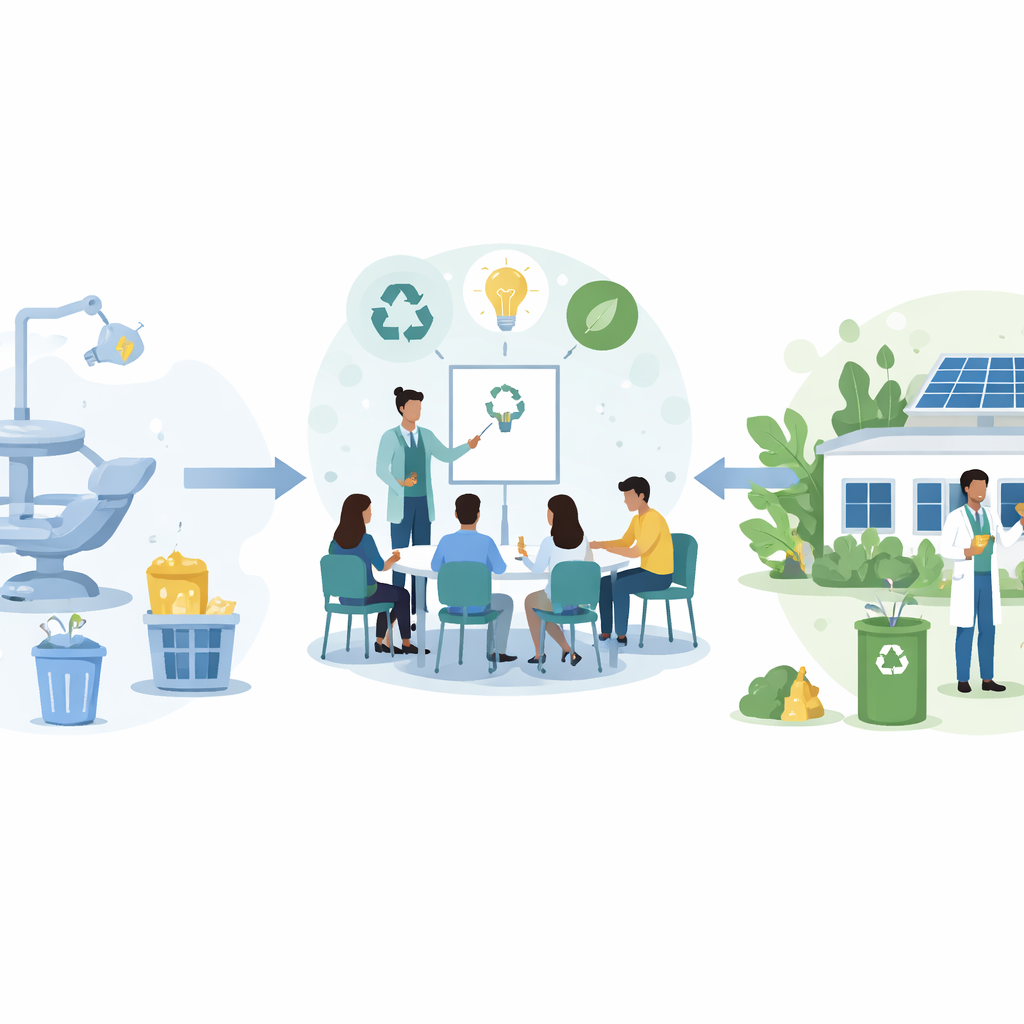
Healthcare as a whole is responsible for an estimated 5% of global greenhouse gas emissions, and dentistry plays a noticeable part. Travel to and from appointments, energy-hungry equipment and buildings, and large volumes of waste all contribute. A typical UK dental practice produces hundreds of kilograms of carbon dioxide equivalents per dentist each month. Professional bodies now say that understanding this impact, and how to reduce it, should be part of every dentist’s training, but many dental schools still provide little or no structured teaching on environmental sustainability.
Designing a New Kind of Class
To address this gap, staff at Queen Mary University of London created a two-part workshop series for third-year dental students and second-year dental hygiene and therapy students. Instead of relying only on lectures, they blended short talks with group activities and a real-world style assignment. The first workshop introduced basic ideas about climate change, the main sources of emissions in dentistry, and how to think about benefits and costs for people, the planet and finances. Students then broke into clinical groups, each given a specific sustainability challenge such as cutting laboratory waste, reducing protective equipment use, promoting cycling or walking to clinic, or saving water and energy. With guidance from teachers, industry partners and hospital staff, they began turning broad concerns into practical project ideas.
From Ideas to Action-Focused Projects
Over the next three weeks, students developed their ideas into concrete proposals, supported by access to experts and protected time in their timetable. In the second workshop, each group presented its solution in a short video to a panel of senior clinicians and sustainability specialists. The judges rated the projects on clarity, creativity, environmental impact, feasibility, audience engagement and how well real stakeholders had been involved. Proposals ranged from awareness campaigns to changes in clinic equipment and water use. One winning idea, the use of simple tap attachments to cut water flow, was strong enough that the hospital’s sustainability team invited students to help bring it into real-life practice.
Measuring Confidence and Knowledge
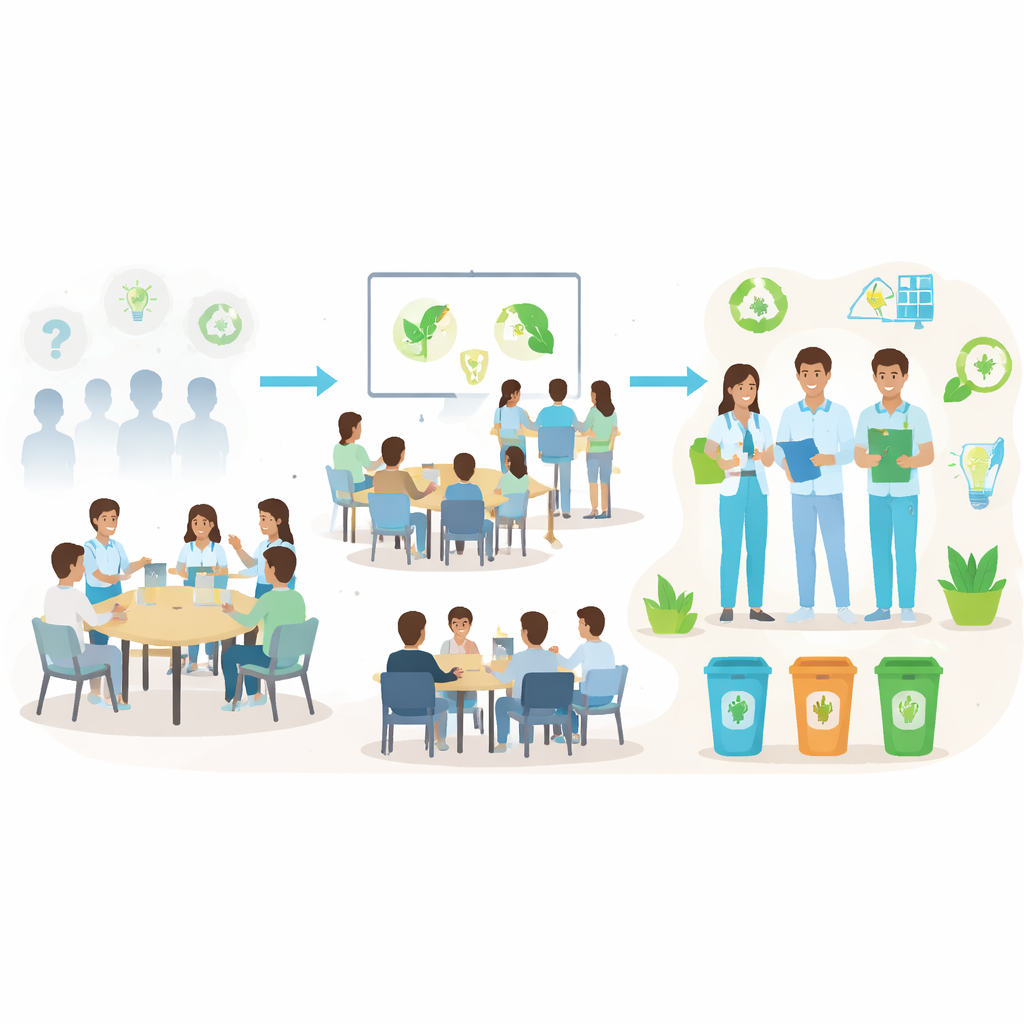
To see whether this teaching actually helped, the team asked students to complete online questionnaires before and after the workshops. Students rated how confident they felt in four areas: spotting where environmental harm could be reduced in their work, speaking up about greener practices, putting sustainability steps into action, and balancing these steps with high-quality patient care. They also answered six multiple-choice questions about key facts, such as which parts of dentistry produce the most emissions. Average confidence scores rose sharply across all four areas after the workshops, and knowledge scores also improved, though they still suggested plenty of room to grow. Students rated both workshops and the assignment as useful for learning, though they enjoyed the workload-heavy project less than the interactive sessions themselves and suggested shorter presentations and smaller groups in future.
What This Means for Future Dental Care
The project shows that well-designed, interactive workshops can quickly boost dental students’ comfort and basic understanding of environmentally sustainable practice. While a short course cannot by itself make someone an expert or guarantee long-term behaviour change, it can start to build the habits, confidence and teamwork skills needed for greener clinics. The authors argue that such teaching should be woven into dental training from early years onward, helping tomorrow’s dentists protect both their patients’ oral health and the wider environment.
Citation: Mai, F., Parkinson, E., Mumford, F. et al. Interactive workshops on improving dental students’ understanding of environmentally sustainable dentistry: a quality improvement project. BDJ Open 12, 38 (2026). https://doi.org/10.1038/s41405-026-00427-y
Keywords: sustainable dentistry, dental education, climate-conscious healthcare, student workshops, healthcare carbon footprint