Clear Sky Science · en
The anti-obesity effect of namodenoson, an A3 adenosine receptor agonist
Why a Cancer Drug Might Help With Weight
Obesity raises the risk of diabetes, heart disease, fatty liver, and some cancers, yet many effective weight-loss drugs today come with troublesome side effects or must be injected. This study explores whether namodenoson—an experimental pill already in trials for liver cancer and fatty liver disease—might also help reduce body fat. By testing the drug on fat cells in the lab and in mice fed a high-fat diet, the researchers asked a simple question: can a medicine designed for one problem safely pull double duty against obesity?
A New Target on Fat Cells
Namodenoson acts on a molecule on cell surfaces called the A3 adenosine receptor, which is found at high levels on cancer and inflammatory cells, but at lower levels on healthy tissues. Earlier work suggested that namodenoson can calm harmful inflammation and boost a protective hormone called adiponectin, which supports healthy metabolism, blood vessels, and nerves. Because adiponectin levels are often low in obesity and type 2 diabetes, the team wondered whether stimulating this pathway in fat tissue could slow the growth of fat cells and the build-up of fat inside them.
What Happened in Fat Cells in the Lab
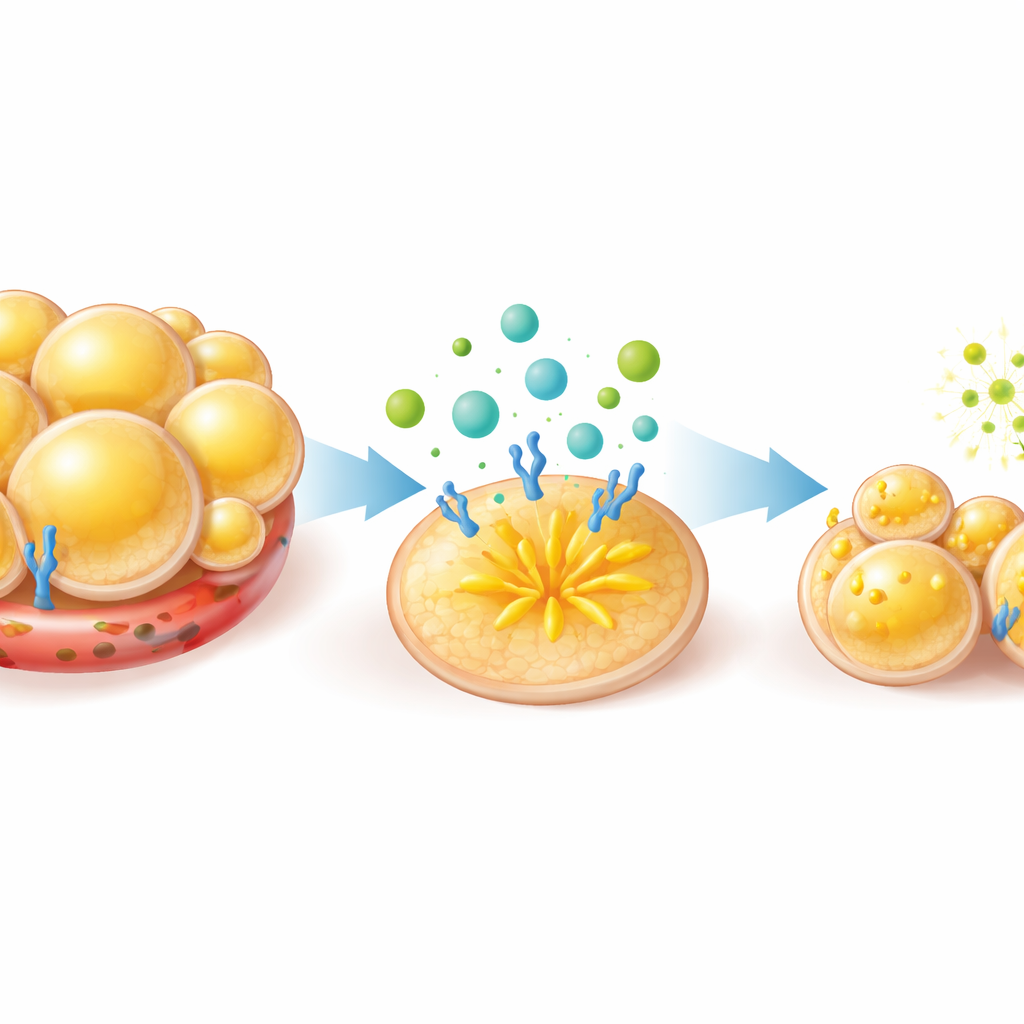
To test this idea, the scientists used a standard mouse fat cell model called 3T3-L1. They exposed these cells to very low doses of namodenoson and measured how quickly the cells multiplied and how many oily droplets they stored. Compared with untreated cells, those receiving namodenoson divided less and accumulated fewer lipid droplets, and the effect grew stronger with higher doses. When the team examined key signaling proteins inside the cells, they saw that namodenoson dialed down several growth- and inflammation-related switches, while at the same time raising levels of adiponectin. This pattern suggests that the drug nudges fat cells toward a less inflammatory, less storage-heavy state.
Testing the Drug in Obese Mice
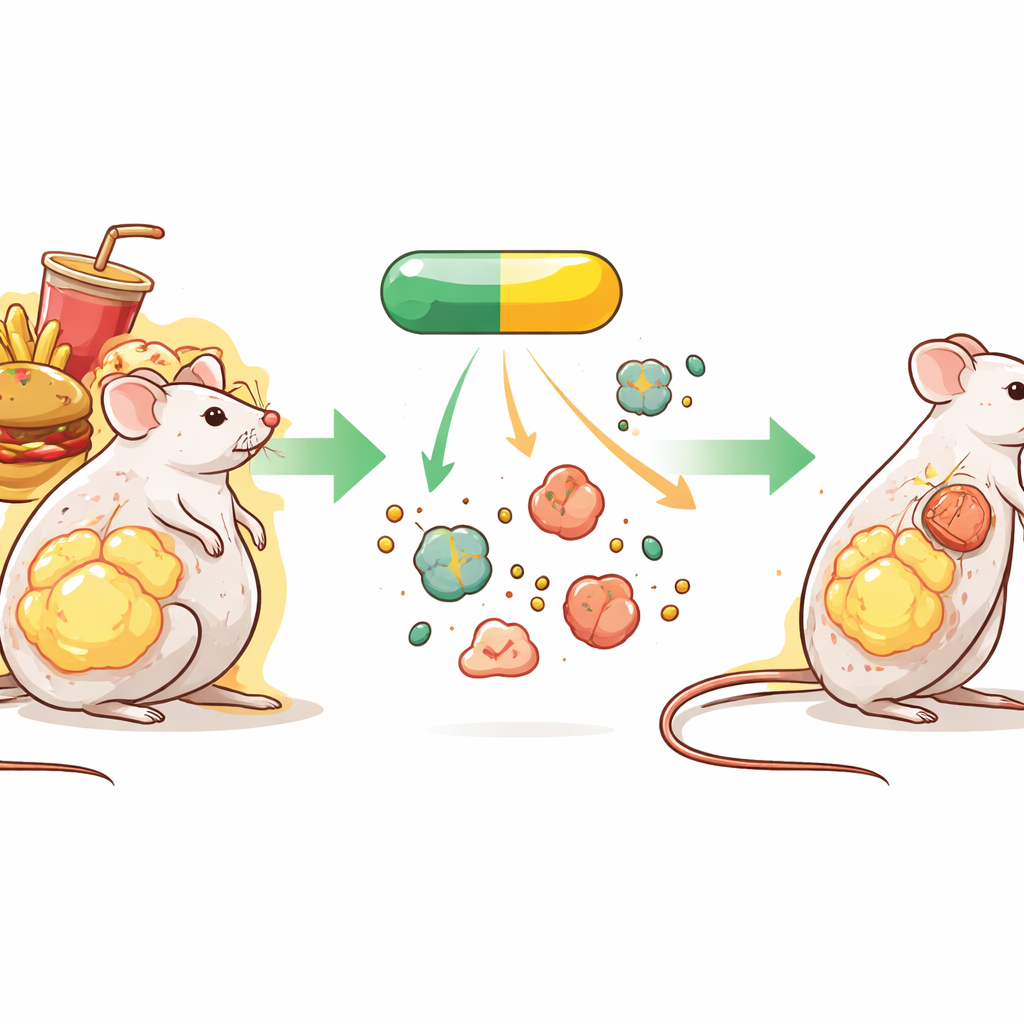
The researchers next moved to a mouse model that mimics diet-related obesity. Young male mice were fed either a high-fat or a standard “lean” diet for 12 weeks, long enough for the high-fat group to become markedly heavier. At that point, some of the mice on each diet began receiving daily oral namodenoson, while others remained untreated. Over the following four weeks, high-fat-fed mice that received the drug weighed about 6% less than their high-fat-fed counterparts that did not, a difference that was statistically significant. In contrast, among mice on the lean diet, namodenoson had no meaningful effect on body weight, suggesting its impact may be more pronounced when excess fat and metabolic stress are present.
Clues From the Body’s Own Protective Hormones
How might the same pill help in obesity, fatty liver disease, and possibly even protect the heart and brain? The authors point to adiponectin as a central player. Prior animal studies and a phase 2 clinical trial in people with fatty liver disease showed that namodenoson raises adiponectin levels in the bloodstream, in parallel with improvements in liver health and modest weight loss. Other research links activation of the A3 receptor to dampening a powerful inflammatory pathway and a cytokine called TNF-α, changes that in turn can further boost adiponectin. In this study, the drug lowered several proteins that usually promote fat cell growth and inflammation, while adiponectin rose, reinforcing the idea that shifting this hormone’s balance could underlie many of namodenoson’s beneficial effects.
What This Could Mean for Future Treatments
Put together, the cell and mouse data, along with earlier animal and human findings, suggest that namodenoson may modestly curb weight gain by slowing the growth of fat cells, reducing fat storage, and raising a naturally protective hormone. Unlike many current weight-loss drugs that target appetite signals and can cause unpleasant side effects, namodenoson is a once-daily pill that has so far shown a favorable safety profile in clinical trials for liver disease and cancer. While much more research is needed in larger and longer human studies focused specifically on obesity, this work raises the possibility that a drug originally developed for liver cancer could one day become part of a safer, more metabolism-friendly toolbox for managing excess weight.
Citation: Fishman, P., Itzhak, I., Safadi, R. et al. The anti-obesity effect of namodenoson, an A3 adenosine receptor agonist. Int J Obes 50, 869–872 (2026). https://doi.org/10.1038/s41366-026-02017-2
Keywords: obesity, namodenoson, adiponectin, fat cells, weight loss drug