Clear Sky Science · en
Moral dimensions of wicked problems in higher education teaching and learning. A scoping review
Why tangled problems in universities matter to all of us
Universities do more than deliver lectures and award degrees. They are training grounds for the people who will face climate change, social inequality, and health crises. This paper looks at a special kind of challenge called “wicked problems” in higher education—issues that are messy, hard to solve, and packed with moral questions about fairness, responsibility, and justice. By examining how such problems show up in teaching and assessment, the authors ask whether today’s universities are really preparing students to navigate a world where there are no simple answers.
What makes a problem truly wicked
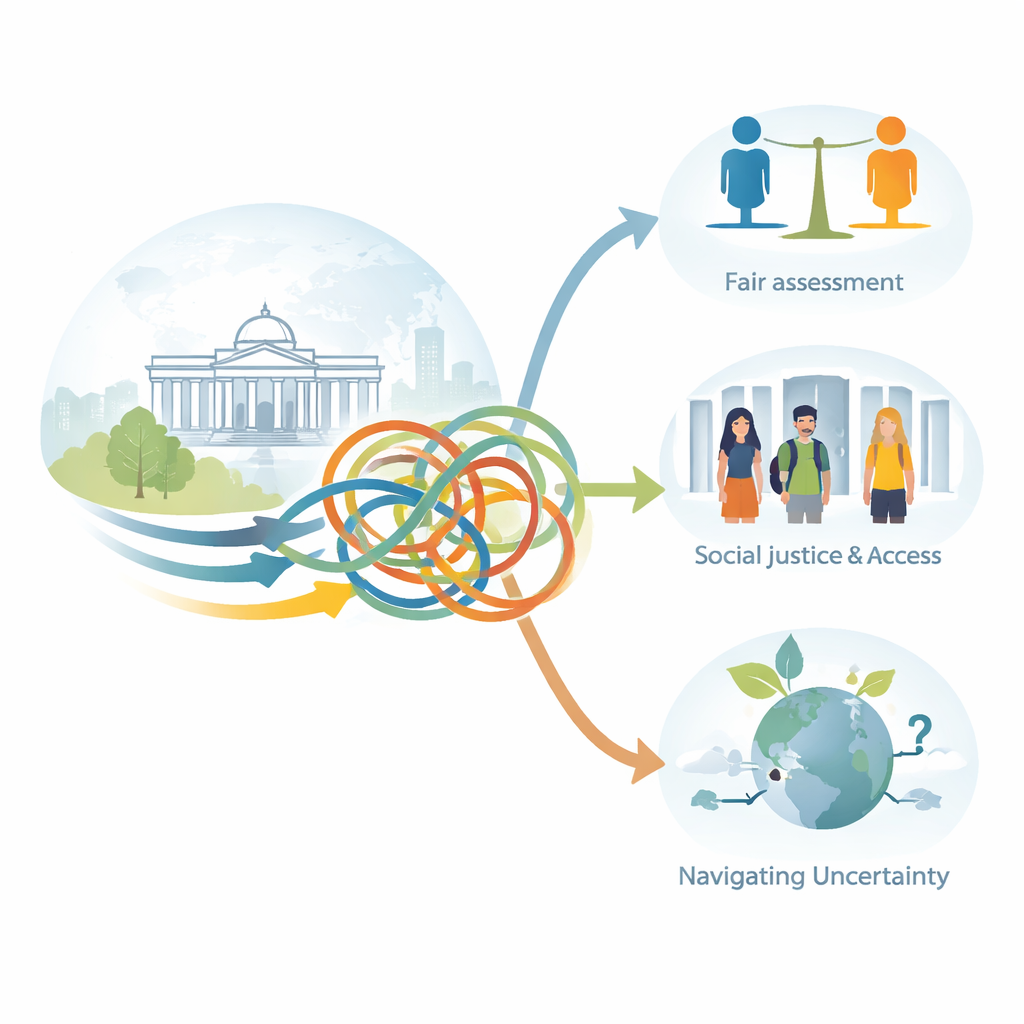
Wicked problems are not just difficult; they are complex, uncertain, and value-laden. The authors describe how such problems have no clear end point, no single right solution, and no way to test fixes in a safe “laboratory” before they affect real people. Climate change is a classic example: actions meant to help the planet can have unequal effects across countries and communities, and what seems like a solution to one group can feel like a new problem to another. In education, wickedness shows up wherever competing values collide—such as balancing excellence with inclusion, or individual achievement with social responsibility. The paper uses the term “moral wicked problems” to highlight cases where questions of justice, responsibility, and power are central, not just an afterthought.
How these problems show up in university life
The review identifies four main areas where moral wicked problems surface in higher education. First is assessment: exams, grades, and feedback may look neutral, but they are shaped by hidden choices about what counts as fair, comparable, and worthwhile. Small changes in grading rules can benefit some students and disadvantage others, raising questions about equity and trust. Second is access and social justice: gaps in who gets in, who feels they belong, and who succeeds are tied to race, class, migration, and other structural factors. Third is ecological responsibility: activities like international field trips can offer powerful learning experiences but also carry heavy environmental costs, forcing educators to weigh educational benefits against carbon footprints. Fourth is uncertainty in teaching during global crises—such as pandemics—when course design, technology, and student well-being all pull in different directions.
New ways of teaching for complex times
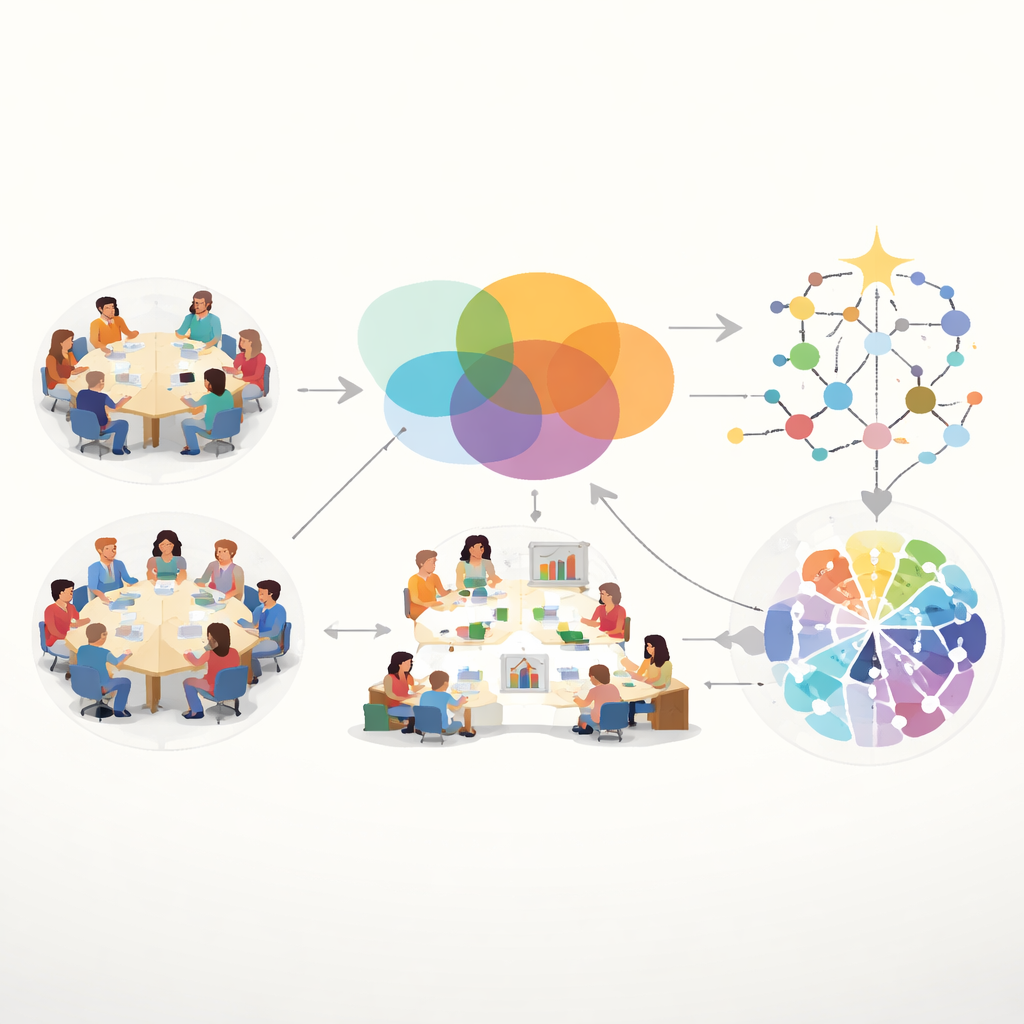
Across the ten studies reviewed, the authors find that educators are experimenting with teaching formats that mirror the complexity of wicked problems themselves. Instead of relying on one-way lectures, they use project-based learning, design thinking, and transdisciplinary teamwork, often involving partners from communities, local government, or civil society. Students work on real-world issues such as sustainable cities, public health, or degree gaps between student groups. They may use tools like computer simulations of human–environment systems, co-designed field trips that factor in carbon impact and inclusion, or global online projects centered on design justice. In these settings, teachers act less as all-knowing experts and more as facilitators who openly acknowledge uncertainty and invite students to question underlying values and power structures.
Why ethics and learning belong together
A central message of the review is that how we think about wicked problems shapes how we teach them. When complexity, uncertainty, and clashing values are taken seriously, teaching must go beyond transferring facts. It needs to cultivate reflexivity (examining one’s own assumptions), dialogue across differences, and the courage to act responsibly when outcomes are unclear. The reviewed courses show glimpses of this: students help design curricula, reflect on their own positions in systems of privilege and inequality, and practice making decisions that affect people and environments. Yet explicit, systematic approaches to the moral side of wicked problems are still rare and scattered.
What this means for the future of higher education
For a general reader, the takeaway is that universities cannot prepare people for today’s world by treating ethics as a separate add-on. The authors argue that moral wicked problems—such as fair assessment, equal access, ecological responsibility, and teaching under uncertainty—should be woven directly into how subjects are taught and how programs are designed. Doing so would help students learn not only to analyze complex issues but also to navigate the value conflicts at their core. The paper calls for more research and more deliberate teaching models that link disciplines, include diverse voices, and make room for honest discussion about justice and responsibility. In short, it urges universities to become places where future professionals learn to live with, and act wisely within, a world of tangled problems.
Citation: Schmitz, D., Lorenz, L. & Ortloff, JH. Moral dimensions of wicked problems in higher education teaching and learning. A scoping review. Humanit Soc Sci Commun 13, 556 (2026). https://doi.org/10.1057/s41599-026-07394-7
Keywords: wicked problems, higher education, social justice, transdisciplinary teaching, ethical learning