Clear Sky Science · en
Comparing virtual reality acceptance in education: the divergent experiences of teachers and students in China and Africa
Why virtual reality in classrooms matters
Imagine learning chemistry by safely stepping inside a virtual lab, or exploring history by walking through a digital ancient city. This study looks at how ready university teachers and students in China and several African countries are to embrace such virtual reality tools in their classrooms, and what personal and cultural factors help or hold them back.
Different classrooms, different levels of enthusiasm
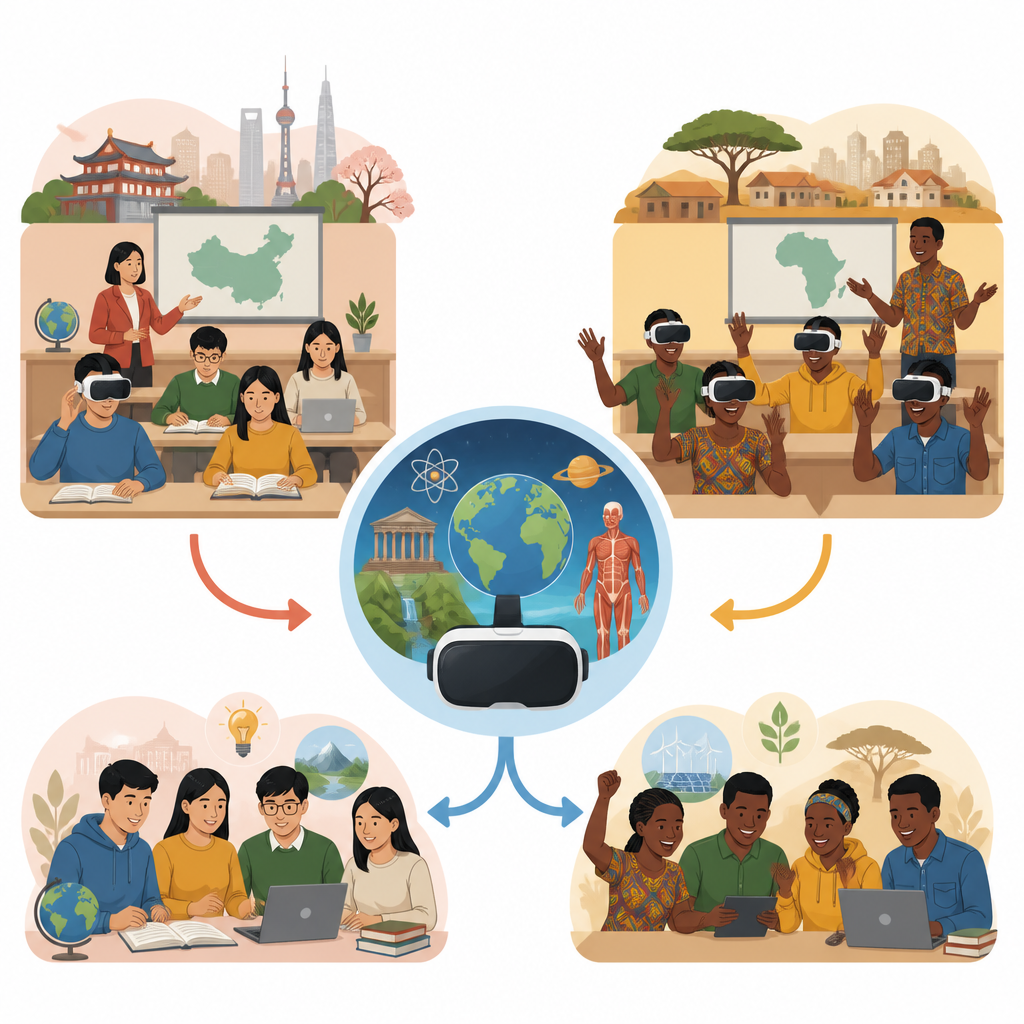
The researchers surveyed 339 people from universities in China and African countries including Tanzania, Ethiopia and Kenya. They wanted to know how useful and easy people thought virtual reality would be, how positive their feelings were toward using it and how likely they were to try it. The study also compared teachers and students to see whether their views lined up. Overall, African respondents showed higher enthusiasm for using virtual reality in education than Chinese respondents, and students in both regions were more open to it than teachers.
How beliefs shape the choice to use new tools
To make sense of these patterns, the authors used a well known model from technology research that links a person’s beliefs and feelings to their future actions. According to this view, people are more likely to try a new tool if they think it will help them do better work and if they expect it to be simple to use. These beliefs then feed into their general attitude, which in turn affects whether they intend to use the tool. The study’s analysis showed that this chain holds up in virtual reality classrooms: those who saw virtual reality as both helpful and manageable felt more positive about it and were more willing to use it.
The power of being curious and adventurous
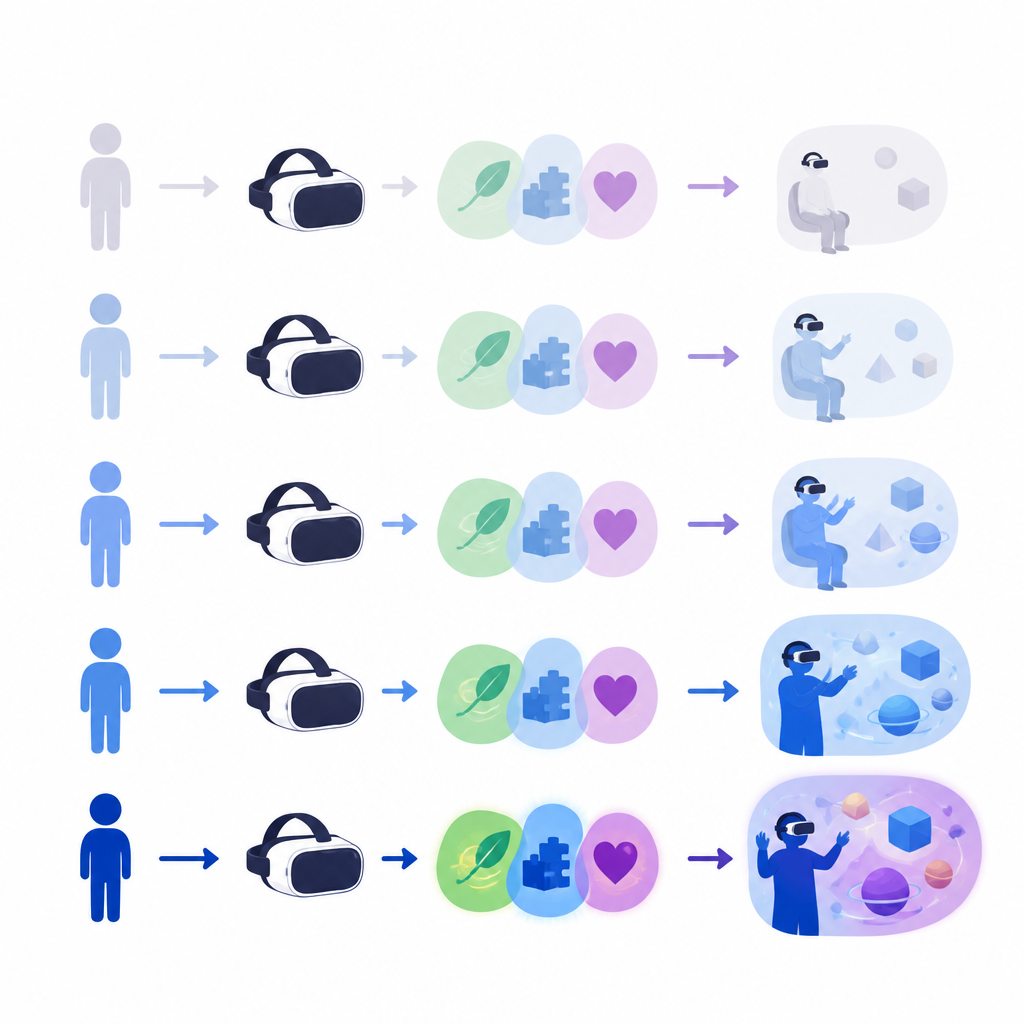
A central focus of the work was personal innovativeness, meaning how curious and adventurous people are about trying new technologies. The authors treated this trait both as a starting point that shapes people’s early impressions of virtual reality and as a factor that changes how strongly those impressions turn into action. They found that more innovative individuals were more likely to see virtual reality as useful and easy, and also reported the strongest intention to use it. For these people, once they formed good impressions of the technology, they were especially likely to move from interest to planned use.
Culture, role and support systems all matter
The cross regional comparison suggests that acceptance is not simply higher in places with more advanced equipment. African respondents, who often face greater limits in traditional teaching resources, may see virtual reality as a bigger step forward and therefore value it more. At the same time, teachers in both regions were less accepting than students. Teachers tend to weigh issues such as how well virtual reality fits their syllabus, how much time it takes to prepare lessons and whether they will receive training and technical support. Without clear examples and institutional backing, even teachers who find the technology interesting may hesitate to bring it into regular classes.
What the findings mean for future learning
In plain terms, the study finds that people’s openness to new ideas, their day to day teaching or learning role and their local circumstances all work together to shape whether virtual reality becomes a normal part of higher education. Students, especially those who enjoy experimenting with technology, are eager to use it. Teachers can be won over, but they need practical help, suitable course materials and proof that virtual reality truly improves learning rather than just adding novelty. Understanding these human factors can guide universities and policymakers as they decide where to invest, how to design training and how to introduce virtual reality in ways that genuinely enrich classroom experience rather than simply adding another gadget.
Citation: Ji, Y., Indieka, A.S., Sun, L. et al. Comparing virtual reality acceptance in education: the divergent experiences of teachers and students in China and Africa. Humanit Soc Sci Commun 13, 728 (2026). https://doi.org/10.1057/s41599-026-07158-3
Keywords: virtual reality in education, technology acceptance, higher education, cross cultural comparison, teacher student attitudes