Clear Sky Science · en
Fan identification and narrative transportation as determinants of perceived value of webtoon-based merchandise
Why Fans Buy More Than Just Stories
Webtoons, the vertical comics read on phones, have exploded into a global pastime and a booming source of merchandise, from plush dolls to phone cases. This study asks a simple question with big implications for creators and companies: when readers buy webtoon goods, are they mainly paying for the story that swept them away, or for the feeling of being a devoted fan?
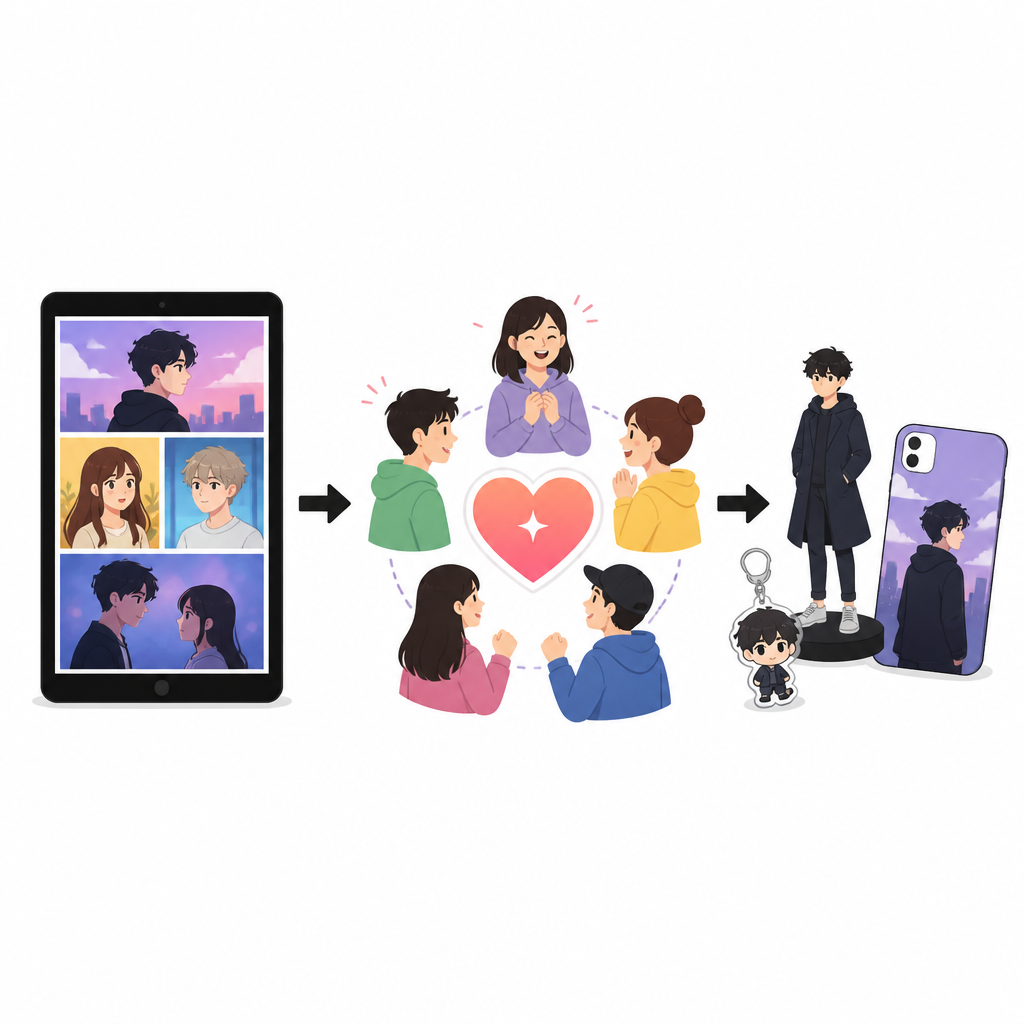
From Online Stories to Real-World Stuff
Licensed merchandise has long been a money maker in sports and big film franchises, but research has rarely examined it in newer, mobile-first story formats like webtoons. The authors argue that webtoons are different because they blend deep, ongoing stories with tight-knit fandoms that form on platforms and social media. To explore this mix, they focus on how readers judge the value of webtoon-based goods, not just whether they intend to buy them. They draw on two ideas from social science: social identity theory, which explains how people define themselves through group membership, and narrative transportation theory, which describes how people mentally “enter” a story world.
What the Researchers Measured
The team surveyed nearly 300 South Korean readers who had recently followed a specific webtoon and knew about related merchandise. For each person, they asked about features of the webtoon itself and about the reader’s own habits. On the content side, they measured how strongly readers connected with particular characters, how rich and detailed they felt the story world was, and how closely the plot felt to real life. On the fan side, they asked about general webtoon expertise, how often readers interacted with others about webtoons, and how routinely they kept up with episodes. They also gauged two key psychological experiences: fan identification, or how strongly someone saw themselves as a fan of a given webtoon, and narrative transportation, or how absorbed they felt when reading it. Finally, they asked how much emotional and personal value the reader saw in owning physical webtoon goods.
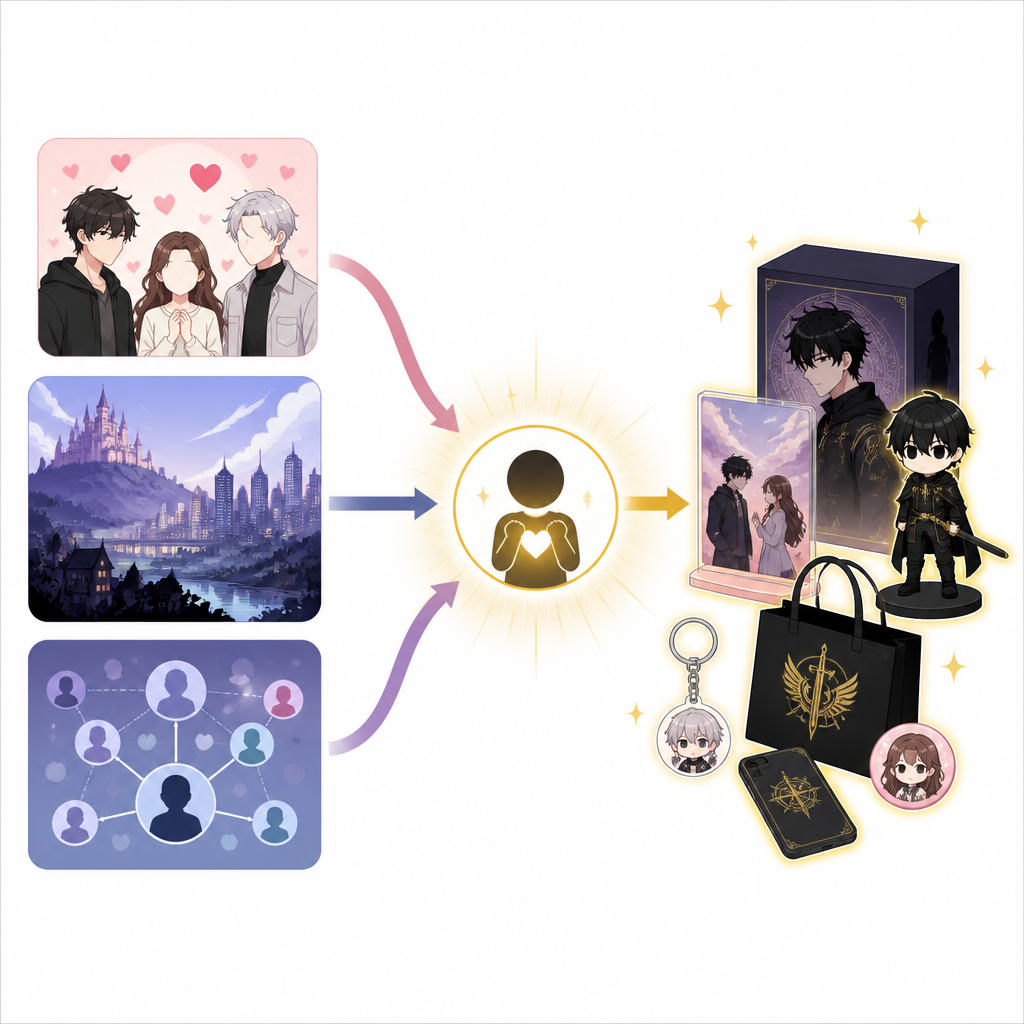
What Really Drives the Value of Goods
The analysis shows a clear pattern. Readers who strongly identified with specific characters, who felt the setting was rich and appealing, and who were active in social interactions around the webtoon tended to report both higher fan identification and stronger narrative transportation. People who regularly followed updates also felt more like fans, and those with deeper overall knowledge of webtoons were more easily drawn into stories. Surprisingly, however, seeing one’s own life mirrored in the story did not make readers feel more like fans or more transported. Most striking of all, only fan identification was strongly linked to seeing merchandise as valuable. Being swept up in the plot did not, by itself, make the goods feel worth having.
Why Story Immersion Is Not Enough
This finding suggests that, in the world of webtoons, loving a story and loving it as a fan are not the same thing. Webtoons are often read in short bursts on the move, which may limit the kind of long, uninterrupted immersion that powers narrative influence in novels or films. Instead, quick emotional hooks such as standout characters, vivid settings, and ongoing online chatter seem to matter more for how people come to see themselves as fans. Once that fan identity is in place, merchandise takes on extra meaning: it is no longer just a product, but a badge of belonging, a way to carry part of the webtoon world into everyday life.
What This Means for Creators and Fans
For webtoon platforms, artists, and brands, the study’s takeaway is clear: the strongest driver of perceived value in webtoon merchandise is not how deeply readers disappear into the story, but how strongly they feel like members of a fan community. Goods that highlight popular characters and recognizable elements of the story world, and that connect to active online fandoms, are likely to feel more valuable than items that simply retell the plot. For everyday readers and fans, the research offers a mirror: when they line up for a limited-edition figure or a themed phone case, they are often buying a symbol of who they are as fans, not just a souvenir of a story they enjoy.
Citation: Ha, S., Kim, S. Fan identification and narrative transportation as determinants of perceived value of webtoon-based merchandise. Humanit Soc Sci Commun 13, 669 (2026). https://doi.org/10.1057/s41599-026-06961-2
Keywords: webtoon merchandise, fandom, fan identification, narrative transportation, licensed goods