Clear Sky Science · en
Eliciting empathy and anticipated guilt to promote pro-environmental actions: the impact of narrative and psychological distance in stories about climate-change impacts on animals
Why stories about animals and climate matter
Most of us care about animals, whether it is a favorite wild species or a pet at home. This study asks a simple question with big stakes: can stories about animals harmed by climate change move people to feel with them and then act to protect the environment? By looking at how narrative messages stir empathy, sadness, anger, and anticipated guilt, the authors explore ways to turn concern for wildlife into everyday choices that help the planet.
How tales of struggling animals touch our feelings
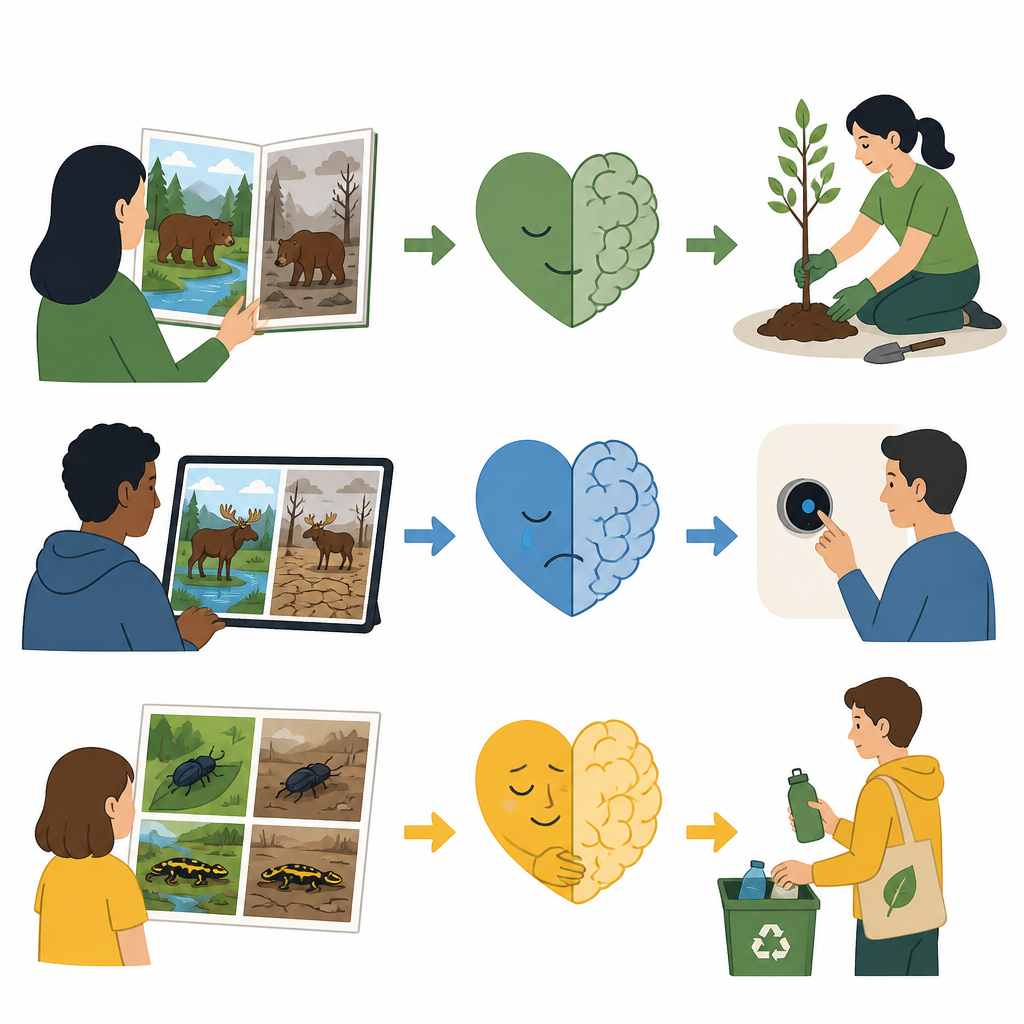
The researchers start from the idea that stories are powerful because they pull us into another being’s world. Instead of presenting dry facts about climate change, narrative messages describe the life of an individual animal, such as a moose, brown bear, beetle, or salamander, whose habitat and food are disrupted by warming temperatures. Past work shows that people can empathize with animals much as they do with humans, especially when animals are shown as innocent victims. This project tested whether such stories make readers feel closer to the animals and more responsible for what happens to them.
Testing what kind of stories work best
In the first study, 229 university students read one of several short texts about an animal affected by climate change. Some texts were vivid stories that followed the animal’s point of view, told in either first person (“I”) or third person (“she”). Others were non-narrative pieces that simply listed facts about the species and climate impacts. The animals were chosen to be either more similar to humans (large mammals) or less similar (a beetle or salamander). The key question was how much empathy readers reported feeling for the featured animal after reading.
What the first study revealed about empathy
The results showed that story format matters more than the exact way it is told. Narrative messages led to higher empathy than the fact-based texts, no matter whether the story used “I” or “she.” Surprisingly, readers felt similar levels of empathy for mammals and for the beetle or salamander. In other words, once an animal was portrayed as a victim of climate change, its size, closeness to humans, or perceived cuteness did not strongly change people’s compassion. This suggests that well-crafted stories can help audiences care about a wide range of species, not just the ones that resemble us.
From feeling for animals to wanting to act
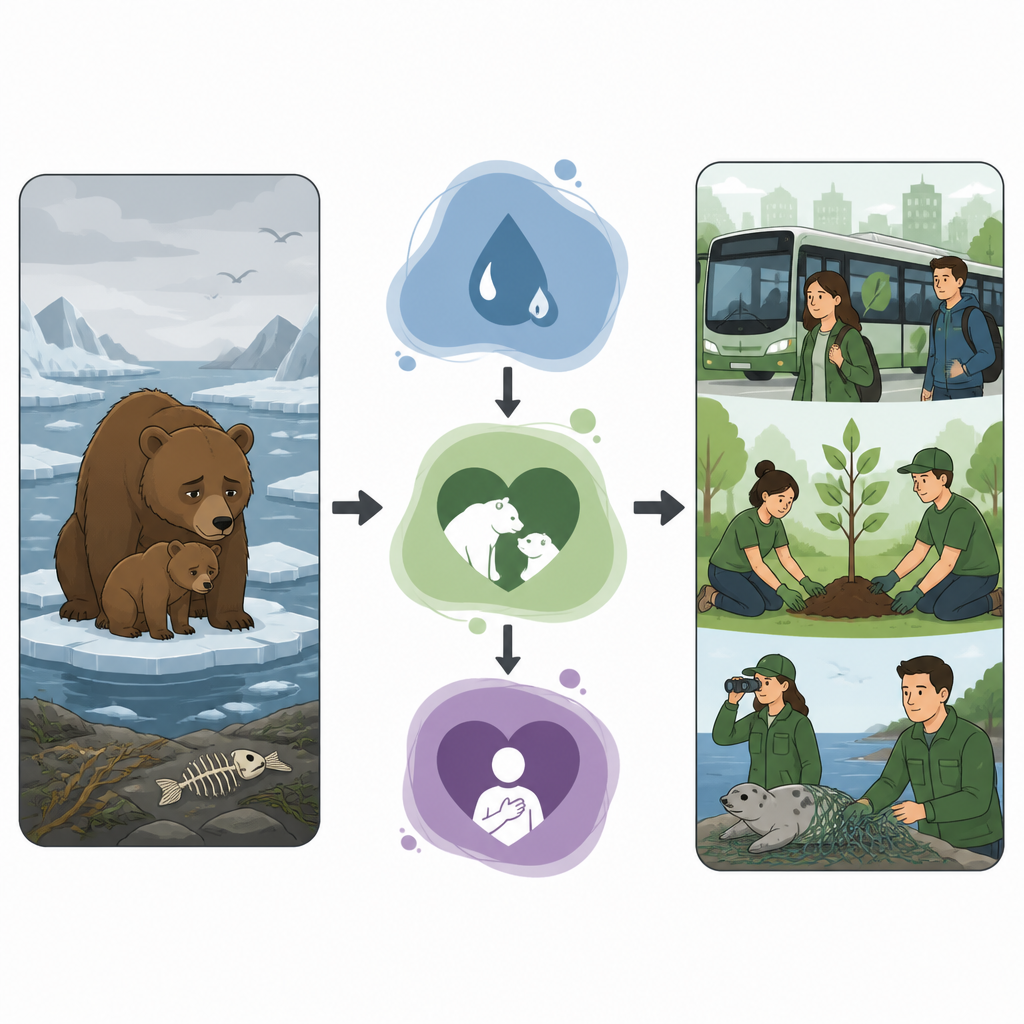
The second study shifted from empathy alone to what people intend to do. A broader adult sample read either narrative or non-narrative messages about the same four animals and then reported their emotions and how likely they were to take specific pro-environmental actions, such as conserving energy or supporting wildlife protection. Here, the stories did not reliably raise empathy more than factual messages, likely because this group was, on average, less naturally empathic. Yet across both formats, people who felt stronger empathy were more likely to anticipate feeling guilty if they failed to act, and that anticipated guilt, in turn, was linked to higher intentions to behave in environmentally friendly ways.
The emotional chain from stories to change
The researchers also looked at other feelings sparked by the messages. Stories tended to increase sadness and anger about the animals’ suffering. Sadness, but not anger, was tied to anticipated guilt and then to a desire to take action. Together, the findings point to an emotional chain: caring about an animal’s plight can lead people to imagine how bad they would feel if they did nothing, which nudges them toward choices that reduce harm. For communicators, the lesson is to use rich, respectful stories about animals, highlight their vulnerability to climate change, and pair that emotional pull with clear, doable steps, helping readers turn empathy and quiet guilt into real-world efforts to protect wildlife and the environment.
Citation: Yan, Z., Arpan, L. & Raney, A. Eliciting empathy and anticipated guilt to promote pro-environmental actions: the impact of narrative and psychological distance in stories about climate-change impacts on animals. Humanit Soc Sci Commun 13, 633 (2026). https://doi.org/10.1057/s41599-026-06938-1
Keywords: climate change communication, animal empathy, narrative persuasion, anticipated guilt, pro-environmental behavior