Clear Sky Science · en
Does the Belt and Road Initiative strengthen climate adaptation in participating countries? Global evidence and heterogeneous effects
Why this global project matters for everyday life
As climate change brings more deadly heatwaves, floods, and droughts, many poorer countries struggle to protect their people and economies. At the same time, the Belt and Road Initiative (BRI) has become one of the largest international programs for building roads, ports, power plants, and digital networks. This study asks a simple but urgent question: does joining the BRI actually help countries become better prepared for a warming world, or does it leave some even more exposed?
A massive building effort under the climate spotlight
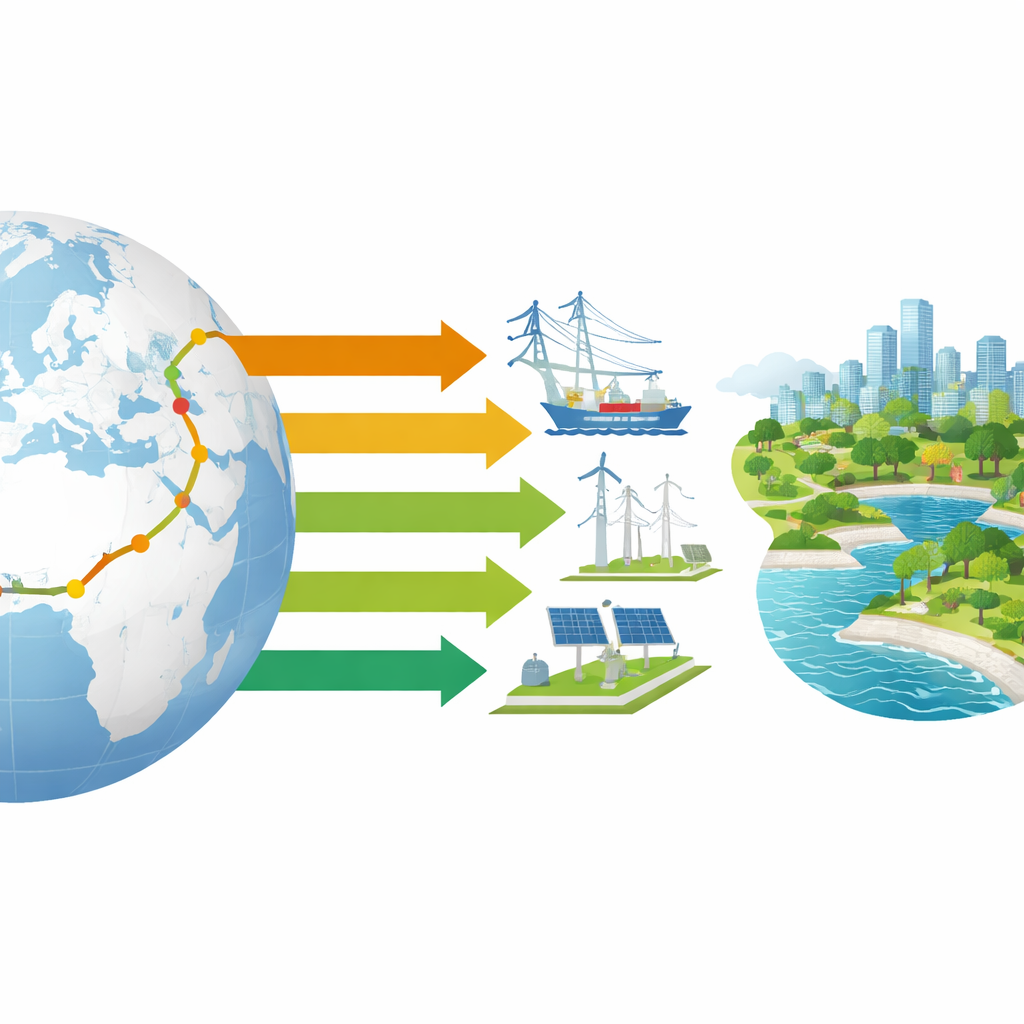
Launched by China in 2013, the BRI channels huge sums into transport links, energy projects, and industrial zones across Asia, Africa, Europe, and beyond. Supporters argue that better infrastructure and access to finance can make societies more resilient to storms, rising seas, and shifting rainfall. Critics warn that new highways, ports, and fossil-fuel projects can fuel pollution, damage ecosystems, and push poor countries deeper into debt, leaving fewer resources for climate protection. Until now, however, there has been little systematic evidence about whether BRI participation actually improves countries’ ability to cope with climate risks.
Measuring who is ready for a changing climate
To tackle this question, the authors analyzed data for 161 countries between 1995 and 2022, including 127 that eventually joined the BRI. They used an international index that scores each country on climate “vulnerability” (how exposed and sensitive it is to climate hazards) and “readiness” (how well its economy, institutions, and society can turn resources into real protection on the ground). Using a statistical approach that tracks what happens before and after countries sign BRI agreements—while comparing them to countries that never joined—the study isolates the effect of BRI participation from broader global trends.
Who gains the most from joining
The results show that, on average, joining the BRI modestly but clearly improves a country’s overall adaptation score. These findings remain when the authors run multiple robustness checks, such as reshuffling which countries are treated in a “placebo” exercise or trimming periods affected by major global events like the financial crisis or the Paris Agreement. Yet the benefits are far from evenly shared. Wealthy and upper‑middle‑income countries see the strongest gains, as do Asian countries and those with high greenhouse gas emissions. Poorer and many African countries, by contrast, show little measurable improvement over the study period, suggesting that they cannot yet fully harness the opportunities that the BRI offers.
How the initiative helps—and where it falls short
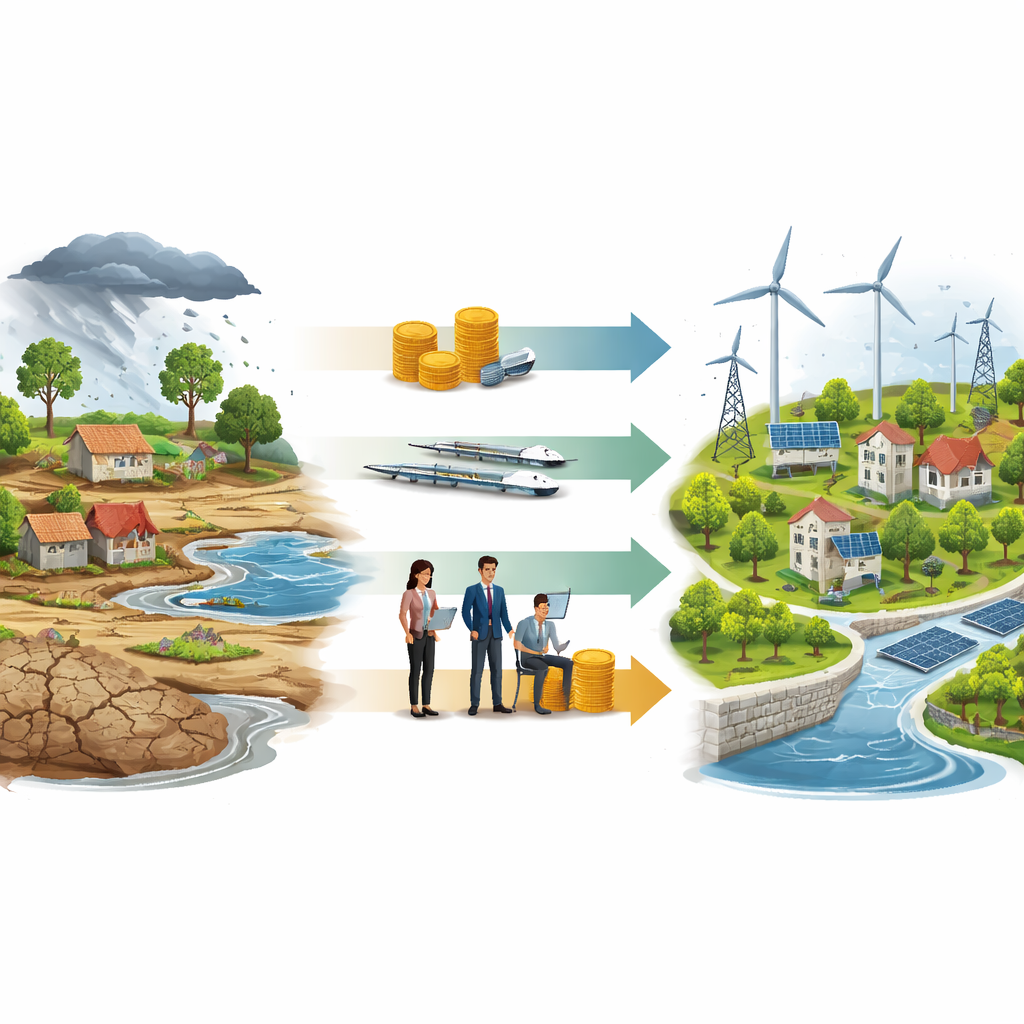
Digging deeper, the authors find that the BRI does not significantly change a country’s basic climate vulnerability, which depends on slow‑moving factors like geography, land use, and long‑standing infrastructure gaps. Instead, the gains come mainly from higher “readiness”: better access to finance, improved transport and energy systems, and stronger human capital through training and technology transfer. Economic and social readiness improve the most, while governance readiness—how well public institutions plan, regulate, and coordinate climate action—shows little change. This pattern suggests that the BRI is currently better at building hard assets and skills than at reshaping the rules and institutions that guide long‑term climate planning.
What this means for a fairer climate future
For a lay reader, the headline message is that the Belt and Road Initiative can help countries prepare for climate change, but mainly where money, skills, and institutions are already relatively strong. In richer and high‑emitting countries, new investments and technology flows translate into more robust systems and communities. In many low‑income partners, however, weak local capacity and debt pressures blunt these benefits, and underlying vulnerabilities remain stubbornly high. The authors argue that if the BRI is to support a more just and inclusive climate future, it must shift more attention and funding toward helping poorer countries absorb new technologies, strengthen local institutions, and reward projects that truly reduce vulnerability rather than simply adding more infrastructure.
Citation: Wang, F., Liu, F., Zhou, Q. et al. Does the Belt and Road Initiative strengthen climate adaptation in participating countries? Global evidence and heterogeneous effects. Humanit Soc Sci Commun 13, 603 (2026). https://doi.org/10.1057/s41599-026-06859-z
Keywords: Belt and Road Initiative, climate adaptation, climate readiness, infrastructure investment, global development