Clear Sky Science · en
Same neighborhood, different green intentions: the effect of hukou origin on Chinese citizens’ pro-environmental behaviors
Why Where You Grew Up Still Matters in the City
Many Chinese cities now bring together people who grew up in villages and people who grew up in towns, all living side by side in the same apartment blocks. Yet, this study shows that childhood roots still quietly shape how willing city residents are to protect their shared environment. By following how China’s household registration system, or hukou, has sorted people into “rural” and “urban” from birth, the researchers uncover why neighbors with the same postal code can have very different green habits and levels of community involvement.
City Life, Old Labels, and New Environmental Demands
China’s rapid urbanization has crowded hundreds of millions into cities that struggle with smog, wastewater, and energy-hungry buildings. At the same time, the government now expects ordinary residents to sort trash, save resources, and even report polluters. For decades, however, the hukou system divided people into rural and urban groups with very different access to schools, public services, and community organizations. These early-life divides did not disappear when rural residents later gained urban registration. The study asks a simple but powerful question: once people have the same legal city status, do their rural or urban origins still shape how they behave toward the environment?
Tracking Green Actions Across Everyday Life
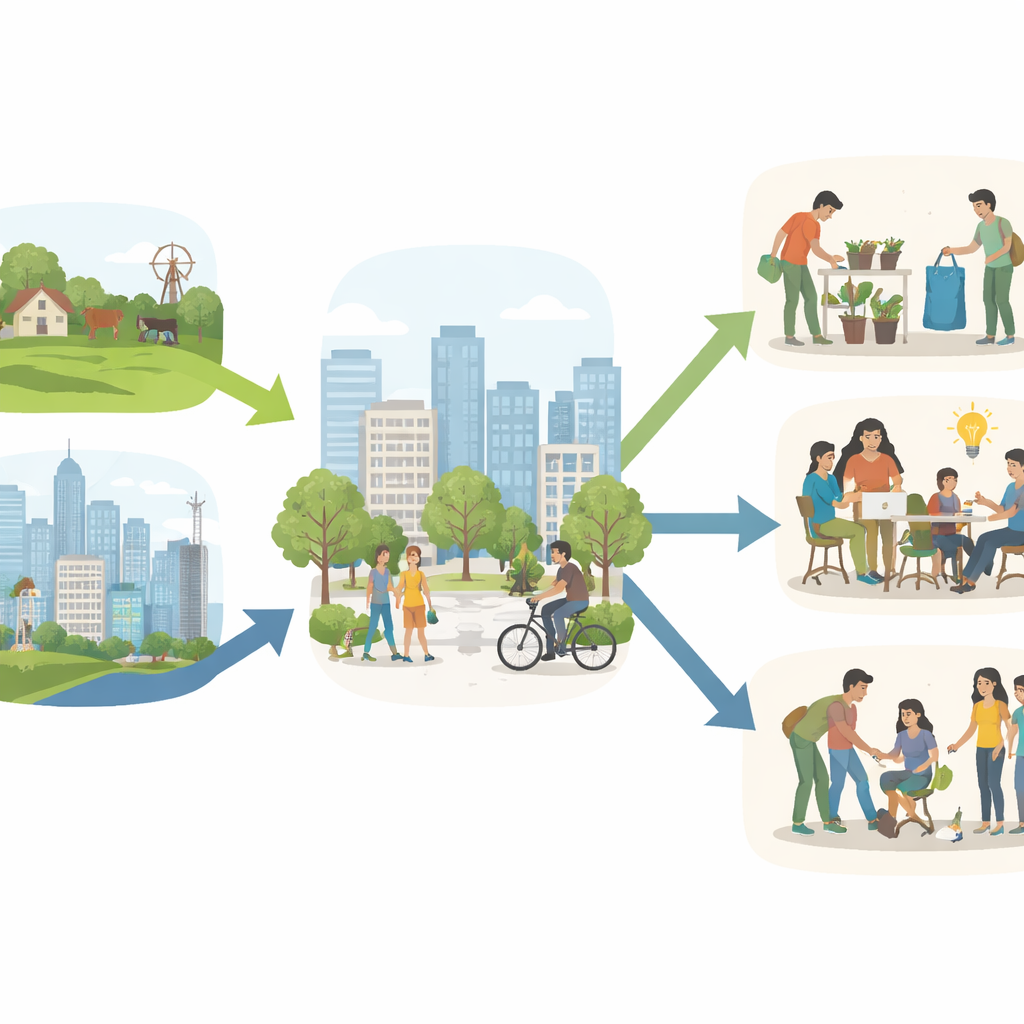
The authors draw on a large national survey, the China General Social Survey, focusing on adults who currently hold urban registration and live in their registered cities. They separate people who were born with urban hukou from those who converted from rural hukou later in life. They then compare four types of behavior: joining environmental clubs or groups, taking part in environmental activities like petitions or protests, choosing greener products, and sorting or recycling household waste. They also look at how much people say they value nature, how worried they are about environmental damage, and how much responsibility they think falls on individuals, groups, companies, or government.
Same Concerns, Different Ways of Acting Green
The central finding is a split pattern. City residents who started life with rural hukou are significantly less likely to join environmental organizations, but they are as likely—or sometimes more likely—to take individual environmental actions, such as filing complaints or participating in one-off activities. Surprisingly, the two groups do not differ much in how strongly they say they care about the environment or how willing they claim to pay higher costs to protect it. In other words, the gap shows up not in feelings or opinions, but in the form that action takes: organized, group-based efforts versus more personal, one-by-one responses.
How Community Ties and Sense of Duty Steer Behavior
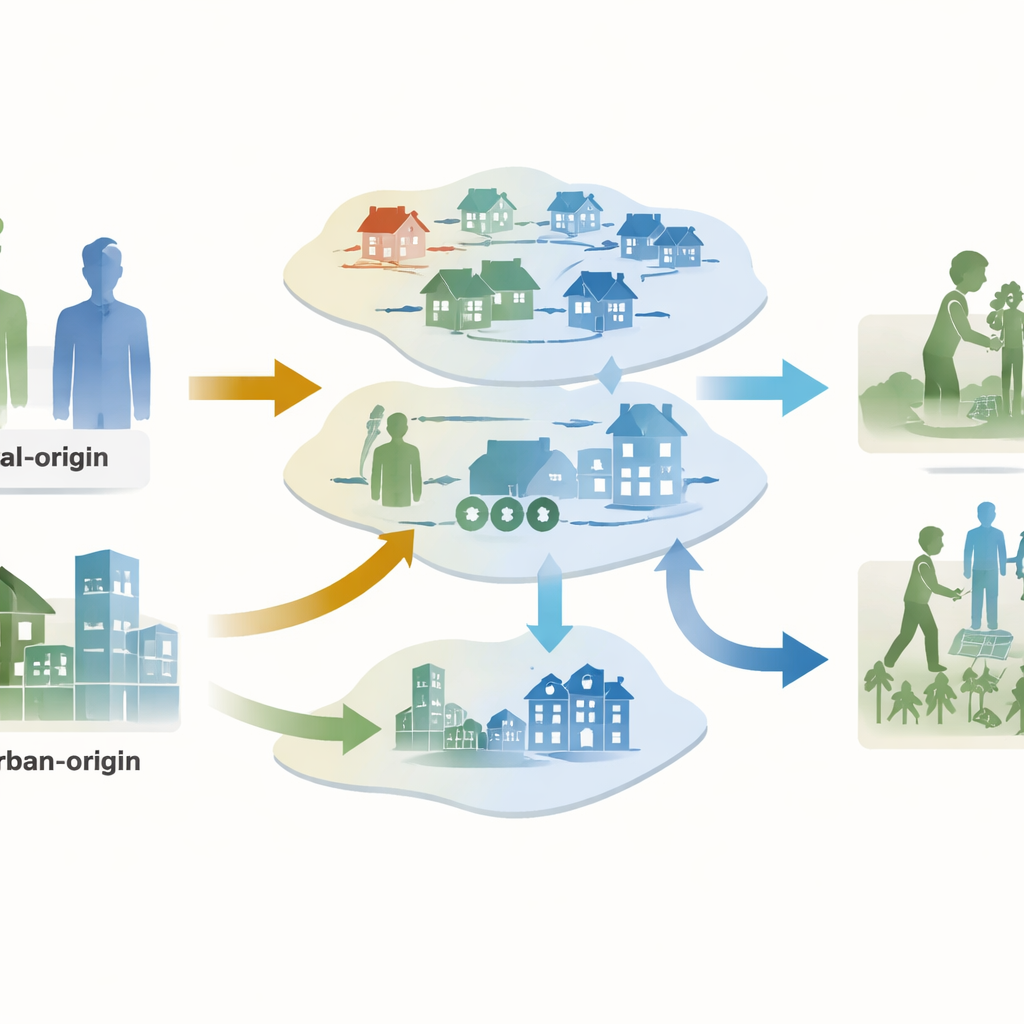
To explain this divide, the study looks at two invisible forces: social attachment and the sense of duty. Rural-origin residents tend to have weaker day-to-day ties with neighbors and local networks in their cities, even after gaining urban registration. This makes it harder for them to feel fully part of community groups, including environmental clubs. At the same time, they are more likely to believe that ordinary individuals—not organizations—should shoulder the main responsibility for environmental protection. This combination of looser local roots and stronger emphasis on personal duty nudges them toward acting alone instead of joining organized efforts. The researchers find that these two pathways explain a large share of the lower club participation among rural-origin residents.
When Policy Reforms and City Size Change the Story
The study also shows that not all rural-origin city dwellers behave the same way. Those who earned urban hukou through education or jobs (merit-based migrants) tend to be more engaged overall than those whose status changed mainly because their villages were absorbed into cities (policy-based migrants). People who gained urban hukou more recently, after major reforms in 2014, are more active both in organizations and in personal green actions, suggesting that newer policies and better public services can soften old divides. City size matters too: in non-megacities, rural-origin residents often show stronger green consumption and participation; in huge metropolises, they are more active in environmental campaigns but lag behind in everyday green purchases and recycling, likely because of higher costs and more fragile community ties.
What This Means for Greener and Fairer Cities
For a general reader, the message is that building sustainable cities is not just about technology or regulations; it is also about how deeply people feel they belong where they live, and whether they see environmental care as a shared project or a lonely task. The hukou label from childhood still shapes those feelings long after people move and change documents. The authors argue that city governments should not treat “the public” as a single, uniform group. Instead, they should design environmental programs that help newer residents build neighborhood ties, turn individual efforts into visible community gains, and lower the barriers to joining local organizations. In doing so, cities can tap the strong personal responsibility many migrants already feel, while gradually weaving them into the collective fabric needed for lasting environmental change.
Citation: Zhou, L., She, Z. Same neighborhood, different green intentions: the effect of hukou origin on Chinese citizens’ pro-environmental behaviors. Humanit Soc Sci Commun 13, 524 (2026). https://doi.org/10.1057/s41599-026-06838-4
Keywords: hukou system, urbanization in China, pro-environmental behavior, social integration, environmental governance