Clear Sky Science · en
(Mis)using grounded theory in translation and interpreting studies: a meta-method review
Why this research matters beyond academia
When we read about scientific or social research, we usually assume that the methods behind the findings are solid. But what happens when a widely used research approach is applied loosely or incorrectly? This article looks at exactly that problem in the world of translation and interpreting studies, where a popular method called grounded theory is often cited—but, as the authors show, much less often used in the way it was intended. Their analysis offers a cautionary tale about how research fashions can spread, and why good methods still depend on careful practice.
A method meant to let ideas grow from the ground up
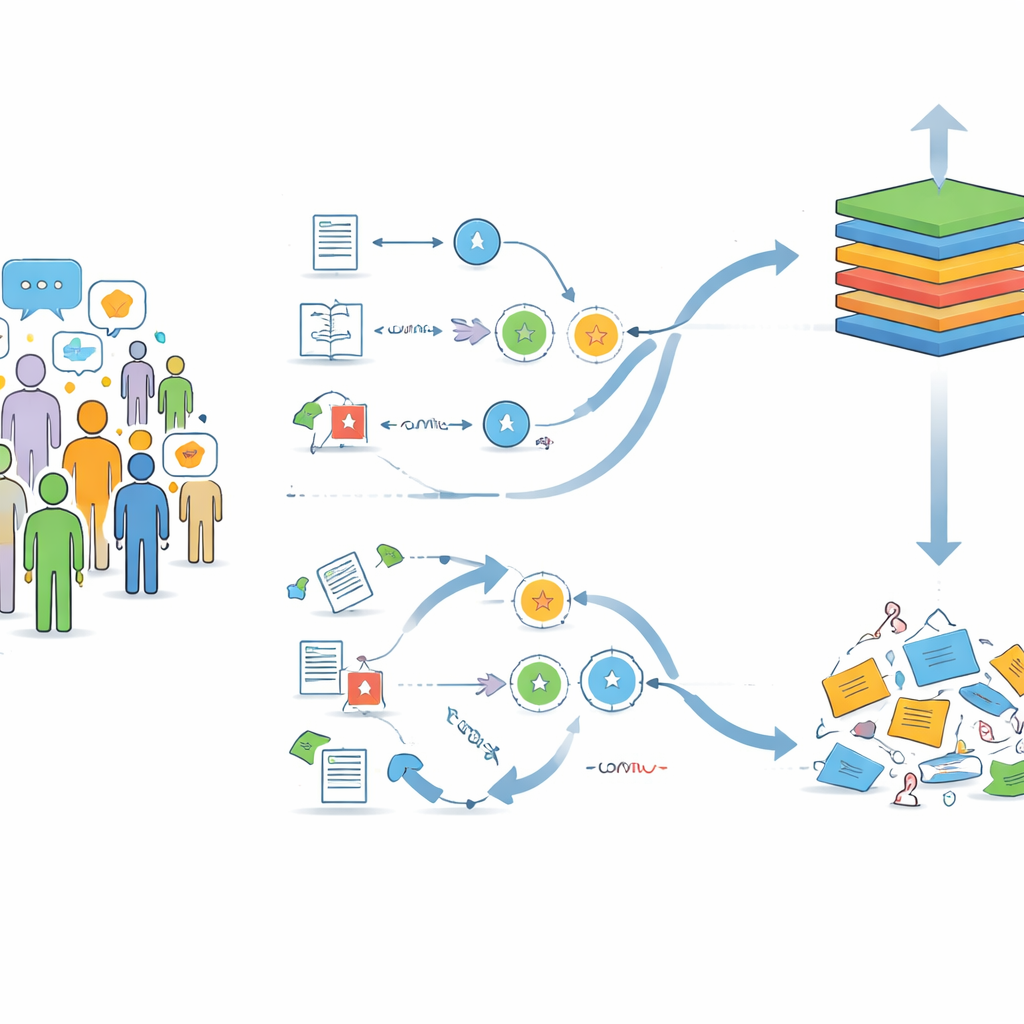
Grounded theory was created in the 1960s as a way of building new theories directly from detailed observations, interviews, and other rich data, rather than testing ready-made ideas. Over time, several schools of grounded theory have emerged, but they share some core features: collecting and analysing data in cycles instead of in a straight line, constantly comparing pieces of information, taking careful analytic notes, choosing new participants based on what early findings suggest, and finally linking any new theory back to what is already known. Because translation and interpreting research often deals with complex human experiences—such as why people volunteer as translators, how interpreters make decisions, or how readers respond to a text—this approach should, in principle, be a natural fit.
Taking stock of how the method is really used
To see how grounded theory is actually being applied in translation and interpreting studies, the authors conducted a systematic review of published research between 2004 and 2023. They searched major international databases in several languages, including a large Chinese database, to avoid a narrow, English-only view. From thousands of records they filtered down to 35 journal articles that clearly claimed to use grounded theory and that reported at least something about how they collected and analysed their data. The studies came from 13 countries and a mixture of specialist translation journals and outlets in other disciplines, reflecting the highly interdisciplinary nature of this field.

Where practice falls short of promise
Looking closely at each of the 35 studies, the authors checked whether they followed six key features of grounded theory: collecting and analysing data at the same time, using systematic coding procedures, constantly comparing data and ideas, writing analytic notes, choosing participants in response to emerging findings, and finally placing the new theory in conversation with existing research. None of the studies met all six criteria. Most relied on one or two elements at best, such as basic coding, while skipping others entirely. Many used one-off interview samples chosen in advance instead of allowing evolving insights to guide who was interviewed next. Very few described taking analytic notes, and most did not clearly show how they moved from raw observations to more abstract concepts. In many cases, the end result was a set of organised descriptions rather than a true explanatory theory.
Why this gap matters for knowledge building
These patterns echo similar reviews in fields like nursing, education, and software engineering, where grounded theory is also popular but often loosely applied. When researchers use the label without following its main principles, several things happen. Data collection becomes a straight line instead of a responsive, exploratory process. Findings stay close to surface description rather than pushing toward deeper explanations. Readers cannot easily judge how strong the claims are, because the path from evidence to conclusions is only vaguely described. Over time, this weakens confidence in qualitative research and can make journals and reviewers sceptical of studies that genuinely try to build theory from the ground up.
Pressing the reset button on careful method use
In plain terms, the article concludes that grounded theory in translation and interpreting research is frequently talked about but rarely fully practised. The authors do not argue that these studies are worthless, but they warn that many fall short of what the method promises: well-developed, data-based theories that help us understand how translators and interpreters work and why. They call for a practical reset: if researchers claim to use grounded theory, they should follow its main steps throughout the project and describe them clearly in their papers. Doing so would not only improve the quality of research in translation and interpreting but also strengthen its influence on other fields that look to this area for insight.
Citation: Niu, Y., Wang, Y. (Mis)using grounded theory in translation and interpreting studies: a meta-method review. Humanit Soc Sci Commun 13, 460 (2026). https://doi.org/10.1057/s41599-026-06812-0
Keywords: grounded theory, translation studies, interpreting research, qualitative methods, research rigour