Clear Sky Science · en
Rural households’ perceptions of land value capture from a justice perspective: empirical evidence from China’s rural land marketization reform
Why this story about land and fairness matters
Across the world, villages are changing as land is bought, sold, and repurposed. In China, a major experiment is under way to let rural communities trade certain kinds of land more freely, with the promise of boosting incomes and easing poverty. This article looks at how ordinary rural households feel about who gains and who loses when land becomes a market asset, and what they see as fair or unfair in this process. Their views reveal not just economic trends, but deeper questions about justice between city and countryside, young and old, and different kinds of rural communities. 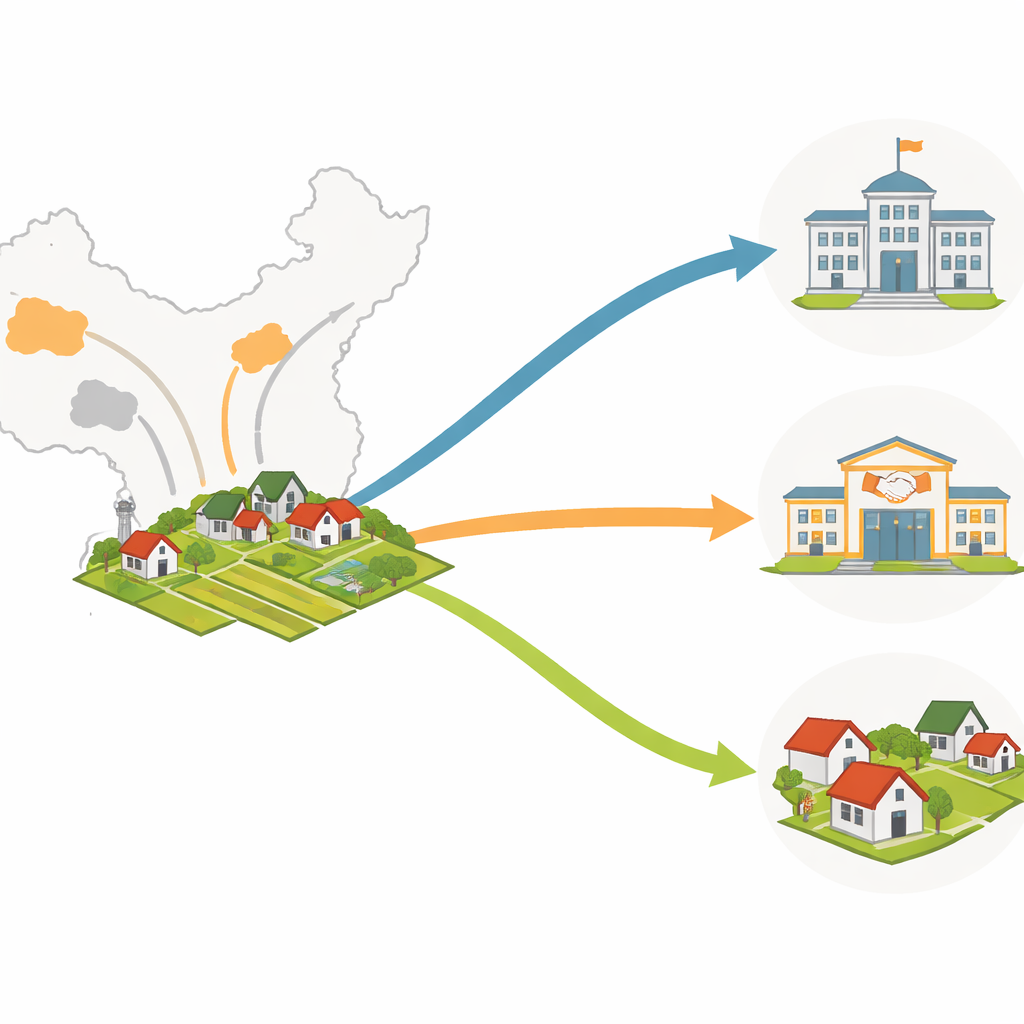
How land became a new kind of asset
For decades, China managed land mainly through government plans: rural land was collectively owned and strictly separated from state‑owned urban land. Rapid urban growth relied on taking rural land cheaply, often leaving villagers feeling short‑changed. To fix problems such as unclear land rights, low compensation, and unused fields, the government launched a pilot reform in 2015. In 33 selected counties and districts, rural collectives were allowed to lease out or transfer the use rights of non‑farm construction land—such as sites for small factories or services—on similar terms to urban land. Ownership stayed collective, but the right to use land for business could now be traded in the market, and villages were supposed to share more of the resulting value with individual households.
Looking at land through the lens of fairness
The researchers studied this reform not just as an economic change, but as a question of justice. They focused on what they call land value capture: in simple terms, who gets how much of the money created when land enters the market. They broke fairness into three parts. First is procedural fairness: whether rules are clear, villagers are consulted, and decisions are checked to prevent abuse. Second is fairness of relative gains: whether households feel their share is reasonable compared with the government, village collectives, and other villagers. Third is fairness of absolute gains: whether the total amount they receive feels enough compared with what urban land earns and what they need for a decent life. These ideas guided interviews with 130 rural residents involved in 430 land deals across five pilot areas that ranged from coastal districts to inland, remote counties. 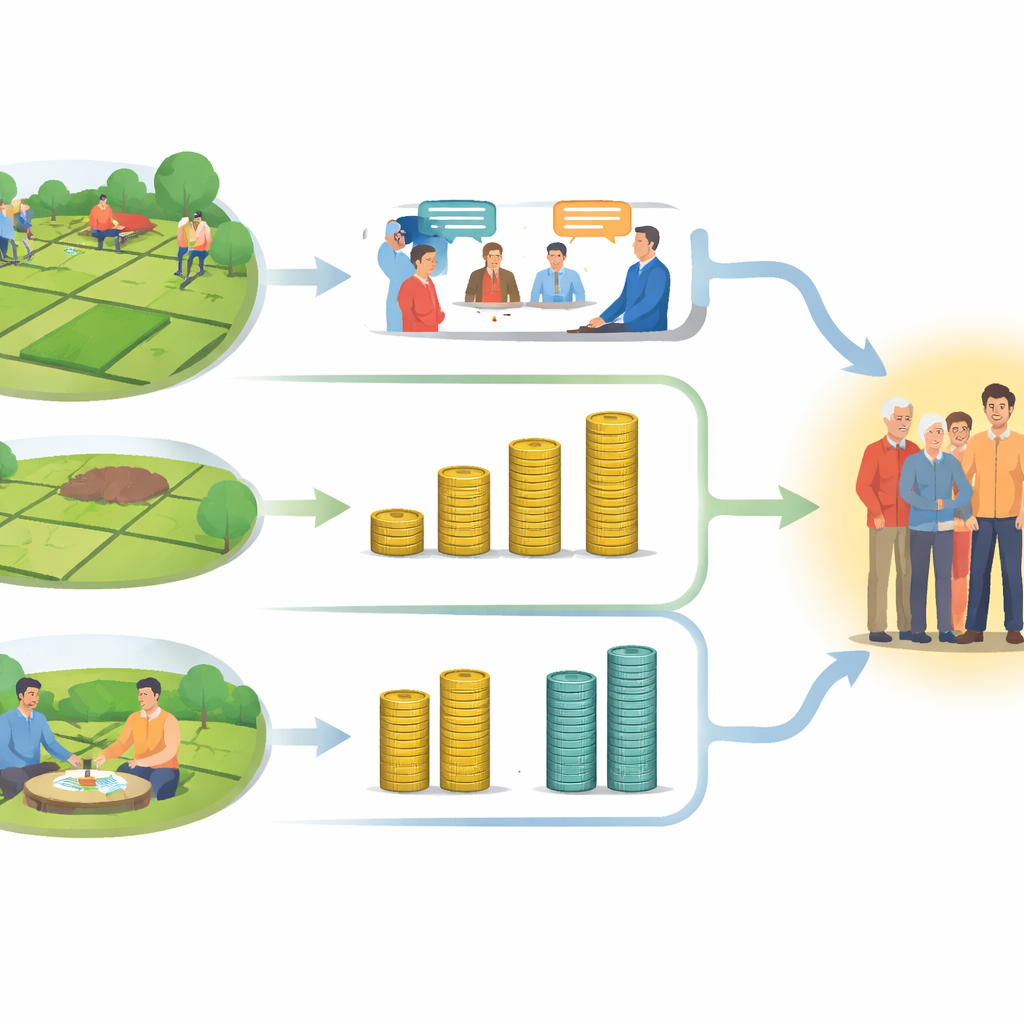
What villagers say about rules, shares, and real money
Many interviewees said the new procedures looked fair on paper. They described village meetings, voting rules that required broad agreement, and oversight of collective funds. Most also felt that the percentage of land value going to households had improved compared with the old expropriation system: in some places households received most of the net proceeds, while local governments took a smaller cut than before. Yet when villagers talked about the actual sums they received, a different picture emerged. More than half judged their absolute gains as unfair or very unfair. They pointed to a stark gap between the prices paid for rural land and the much higher prices for nearby urban land, and to strict limits on how buyers may use rural land, which depress demand. In very rural or inland regions, potential investors often showed little interest at all, leaving communities with weak bargaining power and modest payouts.
Whose experiences are better or worse
The study reveals strong contrasts across different groups and places. Households that depend mainly on farming, older residents, and people without social insurance tended to be more critical. For them, land remains a vital safety net, and small annual dividends from collective deals do not feel secure enough. By contrast, younger or salary‑dependent villagers, and those already covered by pensions or other insurance, were more accepting, as they rely less on land to survive. Geography also matters. Coastal and urban‑adjacent villages, where rural business land can fetch prices close to urban levels, reported more satisfaction and clearer benefits. Inland and remote areas, where land is less attractive to investors, saw little improvement and often feared that the reform would widen existing regional gaps. Institutional details played a role too: in "group‑led" settings, where small basic units negotiated and shared profits directly, villagers felt better about their gains than in more centralized "village‑led" arrangements.
What this means for the future of rural China
Overall, rural households see the new land policy as a mixed bag. They appreciate clearer rules and a fairer split of land income between state, collectives, and individuals. But many still feel short‑changed by the low overall value of rural land compared with urban plots, especially in poorer regions. This gap in absolute gains dominates their sense of justice. The authors warn that, unless regional differences in land value and opportunity are addressed, market‑based land reforms may end up deepening inequalities between rich coastal zones and struggling inland areas. In other words, better procedures and a larger slice of the pie can only go so far if the pie itself remains much smaller in the countryside than in the city.
Citation: Wang, W., van Noorloos, F. Rural households’ perceptions of land value capture from a justice perspective: empirical evidence from China’s rural land marketization reform. Humanit Soc Sci Commun 13, 600 (2026). https://doi.org/10.1057/s41599-026-06791-2
Keywords: rural land marketization, land value capture, China land reform, rural justice, urban–rural inequality