Clear Sky Science · en
The role of sustainable strategic orientation in reaching sustainable development: evidence for high and middle-income countries
Why Growth and Sustainability Matter Together
In everyday news we often hear that countries must grow their economies and also become more sustainable—but it is rarely clear how these two goals fit together. This study looks closely at that tension for 46 high- and middle‑income countries. It asks a simple but powerful question: does more economic growth always help societies move toward the goals of the UN 2030 Agenda, or is there a point where growth starts to hold sustainability back—and can long‑term, deliberate sustainability strategies change that story?
A New Way to Track Real Effort
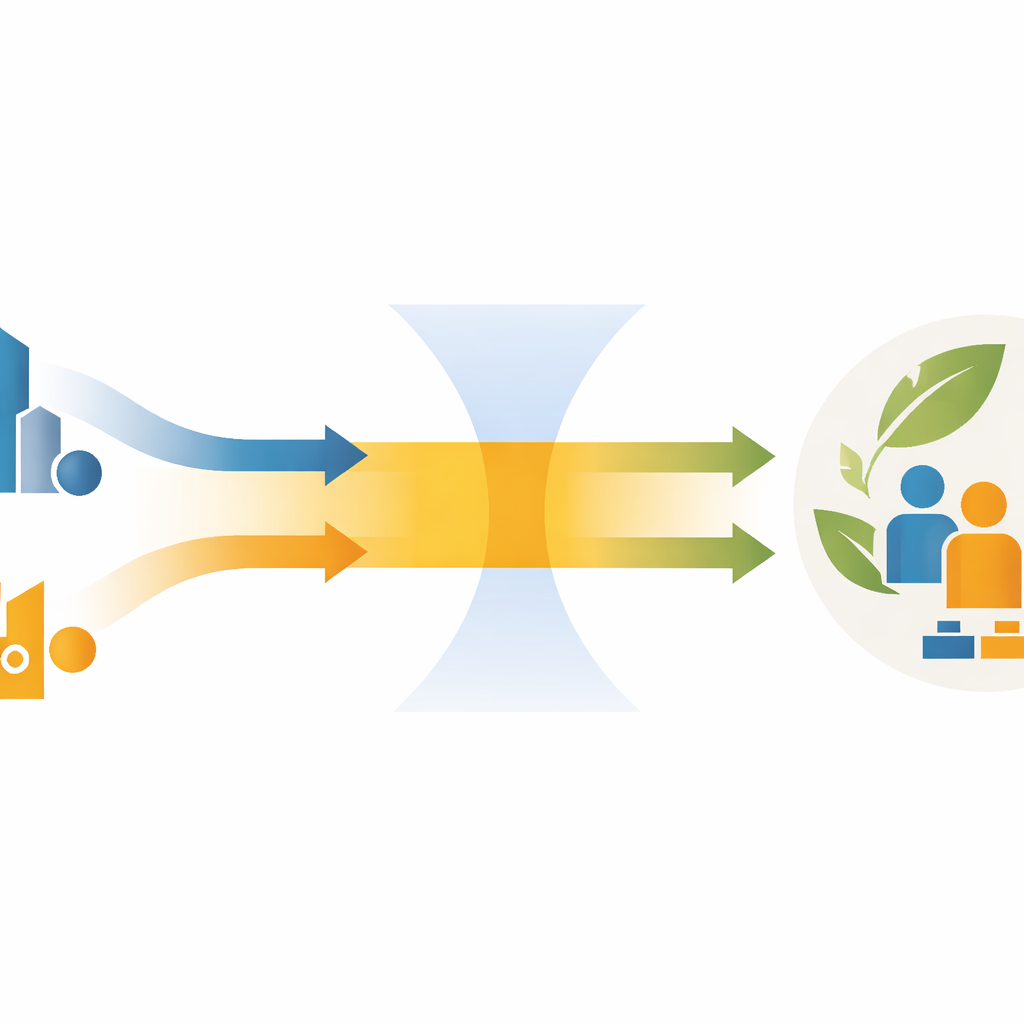
Most global scoreboards on the Sustainable Development Goals boil each country’s performance down to a single number or ranking each year. That is useful, but it hides something crucial: how much sustained effort a country is actually making over time. To fill this gap, the authors design a new measure called Sustainable Strategic Orientation (SSO). Instead of looking only at current levels of health, education, or environmental protection, SSO looks at whether key indicators are moving in the right direction, and whether they keep improving over several years in a row. In other words, it tries to capture whether a country is following a consistent, long‑term course toward sustainability, rather than just benefiting from short‑lived improvements or statistical quirks.
Following Countries Along Their Paths
Building this new indicator is not straightforward. Global data on the Sustainable Development Goals are patchy and often missing, especially for poorer countries. The authors therefore work with the most widely used international dataset and carefully trim it down to a core of 28 indicators covering 13 of the 17 goals, for the years 2010 to 2017, and for 46 countries with reliable information. They combine this sustainability data with economic information on income per person. Then they adapt a well‑known idea from environmental economics: the inverted U‑shaped curve, where an outcome first improves with income, then worsens beyond a certain level. Here, that curve is used not for pollution, but for overall sustainable development.
When Growth Helps—and When It Hurts
The analysis confirms that for both high‑ and middle‑income countries, economic growth and sustainable development move together only up to a point. At lower and middle ranges of income, rising prosperity is linked with better results on health, education, infrastructure, and some environmental goals. But beyond an income threshold, further growth brings smaller benefits and can even undermine overall sustainability, for example by driving resource use and emissions faster than societies can manage them. The exact turning point differs by income group: wealthier countries approach it at a higher income level than less wealthy ones. Some middle‑income countries in the sample already appear to be on the downward side of the curve, choosing to push growth even at the expense of their broader sustainable development progress.
Strategy That Shifts the Balance
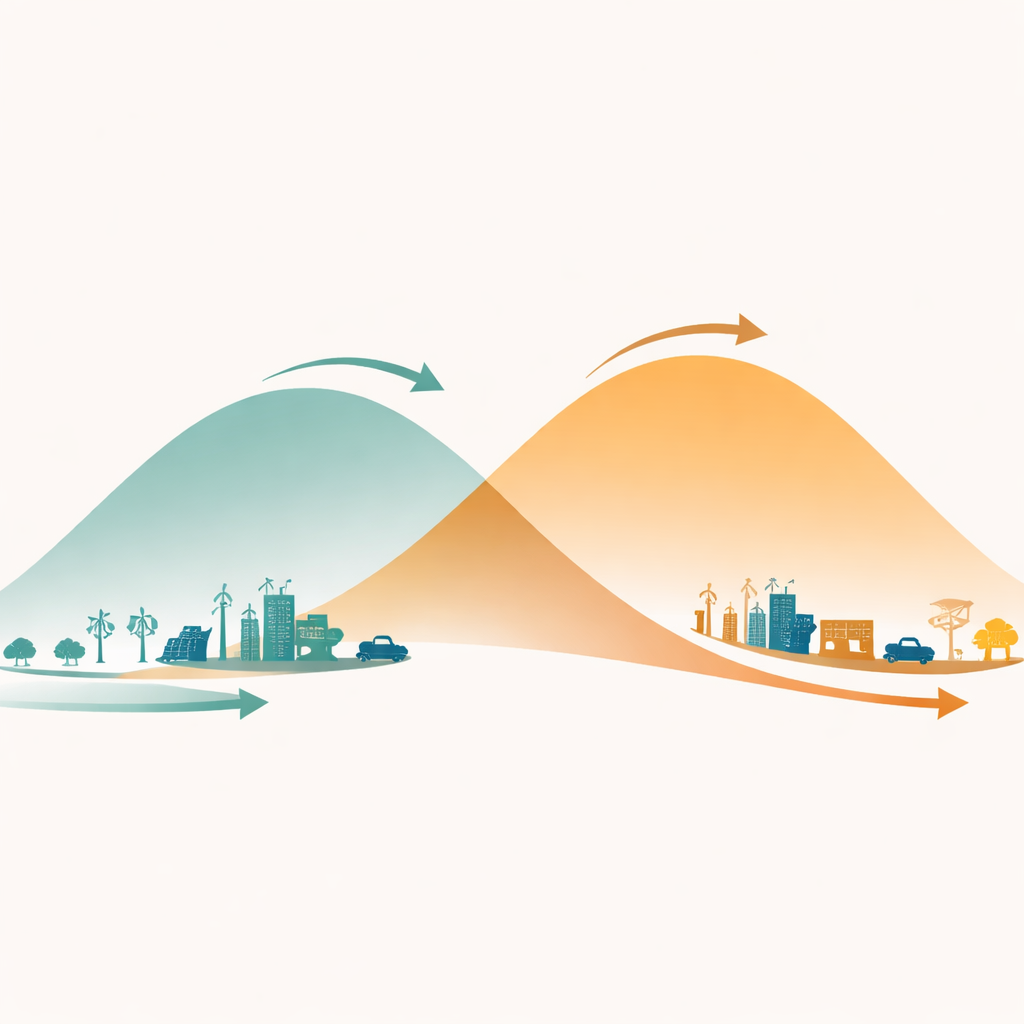
Adding the new SSO measure into the picture shows that long‑term strategic effort really does change how growth and sustainability interact—but in different ways for richer and poorer nations. In high‑income economies, stronger, deliberate efforts toward sustainability push the turning point of the curve leftward. This means that these societies reach the stage where extra growth no longer helps, and may even hinder sustainability, at somewhat lower income levels if they are serious about social and environmental goals. The implication is that advanced countries may need to accept slower or more modest economic expansion in order to secure fairer, greener outcomes. In middle‑income countries, by contrast, a stronger strategic orientation pushes the turning point to the right. Here, well‑designed sustainability policies seem to allow these countries to keep growing for longer while still improving their overall development path—an encouraging signal for nations trying to escape the “middle‑income trap” without repeating the environmental mistakes of today’s rich countries.
What This Means for the Future
For non‑specialists, the core message is clear: economic growth is not an endless shortcut to a better, more sustainable world. It helps up to a certain point and then begins to clash with goals like healthy ecosystems, reduced inequality, and resilient societies. The study shows that what governments choose to do—how consistently they invest in people, protect nature, and plan for the long term—can bend that curve. In wealthier countries, this strategic effort points toward a future that favors quality of life and environmental balance over ever‑rising production. In middle‑income countries, it offers a way to combine rising prosperity with smarter, greener development. Yet the study also finds that current strategic efforts are still modest. With the 2030 deadline approaching and multiple global crises unfolding, the authors argue that countries and international institutions must greatly strengthen their long‑term commitment if they want growth and sustainability to reinforce, rather than undermine, one another.
Citation: Álvarez-Herranz, A., Buendía-Martínez, I. & Villanueva-Montero, E. The role of sustainable strategic orientation in reaching sustainable development: evidence for high and middle-income countries. Humanit Soc Sci Commun 13, 509 (2026). https://doi.org/10.1057/s41599-026-06735-w
Keywords: sustainable development goals, economic growth, middle-income countries, sustainability policy, strategic orientation