Clear Sky Science · en
Understanding COVID-19 attributions: the moderating role of global orientations on prosocial and pro-environmental responses across 35 cultures
Why this pandemic story still matters
The COVID‑19 pandemic did more than threaten our health; it forced people everywhere to ask hard questions about blame and responsibility. Do we fault individuals for getting sick, or do we see the outbreak as the result of wider environmental and global forces? This large international study shows that the way we answer those questions quietly shapes how kindly we treat infected people and how willing we are to protect the planet—offering lessons that reach far beyond COVID‑19.
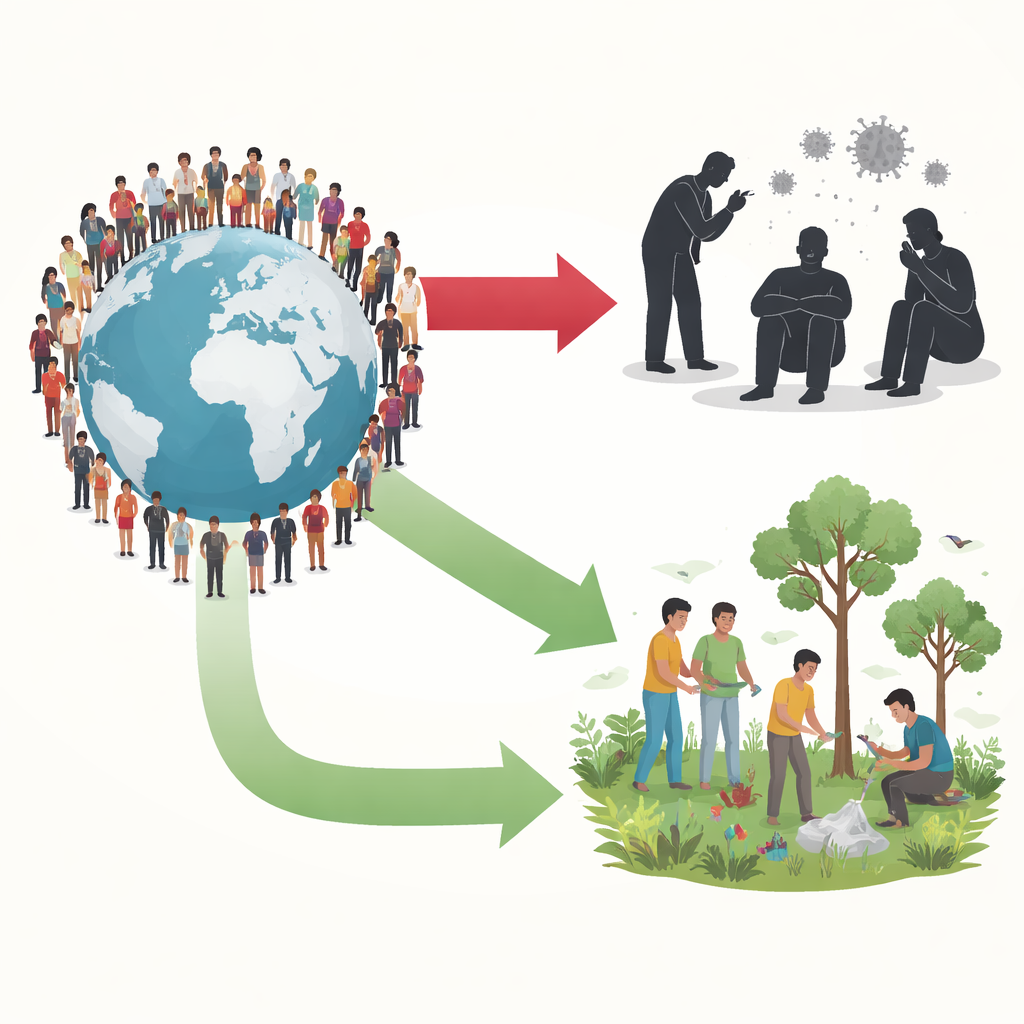
Two ways of explaining the virus
The researchers focused on two simple kinds of explanations for COVID‑19. One is personal attribution: the belief that people who catch the virus are mainly responsible for their own infection, for example by not taking enough precautions. The other is environmental attribution: the idea that broader conditions such as pollution, climate, and human disturbance of ecosystems helped drive the pandemic. These attributions are not just abstract opinions. They can powerfully steer our emotions and behavior—either toward blame and avoidance, or toward concern and action.
How a global mindset changes our reactions
The team also looked at people’s “global orientations,” or how they psychologically relate to an increasingly interconnected world. Multicultural acquisition describes a welcoming stance toward other cultures and a desire to learn from them. Ethnic protection reflects a more defensive stance, prioritizing one’s own group and guarding it from outside influence. Earlier work had linked these outlooks to xenophobia and cooperation; here, the authors asked how they might interact with COVID‑19 explanations to affect stigma, volunteering, and environmental behavior.
What 18,000 people across 35 societies revealed
Using carefully translated online surveys in 35 countries and regions, the researchers gathered data from more than 18,000 adults early in the pandemic. They measured how strongly participants endorsed personal versus environmental explanations for COVID‑19, their feelings of stigma toward infected people, their willingness to volunteer in COVID‑19‑related efforts, and their attitudes and behaviors toward the environment. Environmental behavior was tracked in two ways: self‑reports about everyday habits such as recycling, and a concrete choice within the survey—whether to spend extra unpaid time answering questions about climate and environmental issues.
Blame fuels stigma, while environment focus fuels green action
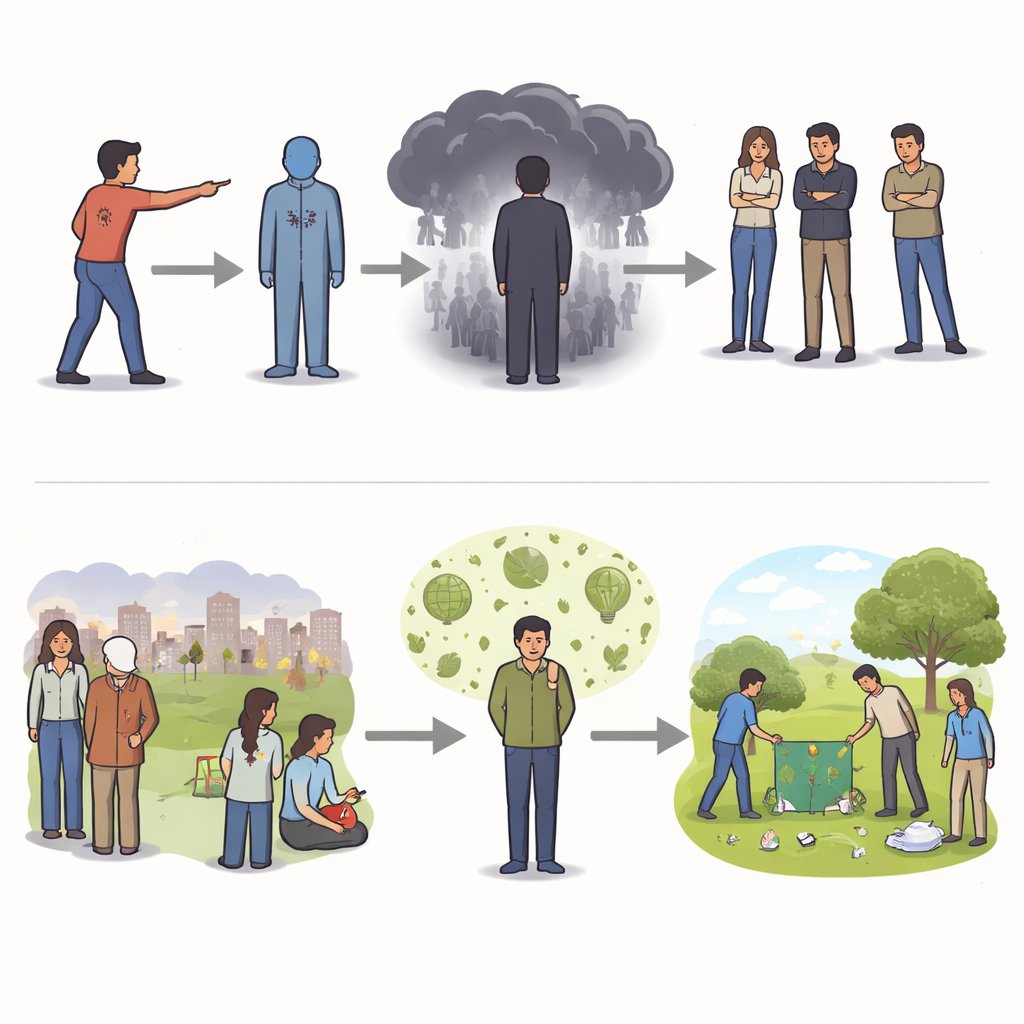
The analyses showed a clear chain linking personal blame to reduced willingness to help. People who believed COVID‑19 patients were largely at fault for their illness were more likely to stigmatize them—seeing them as tainted and to be avoided. That stigma, in turn, was tied to lower willingness to volunteer in pandemic‑related activities that involved contact with affected communities. A global, outward‑looking mindset softened this pattern: those high in multicultural acquisition showed a weaker link between blame and stigma, and a smaller drop in volunteer willingness. In contrast, a protective stance toward one’s own group intensified the blame‑to‑stigma pathway and made people even less inclined to volunteer.
Defensive attitudes can still drive care for the planet
A different picture emerged for environmental explanations. People who saw COVID‑19 as rooted in environmental conditions were more likely to hold strong pro‑environmental attitudes—and those attitudes translated into both greener self‑reported habits and a greater willingness to spend real time supporting environmental research. Surprisingly, the defensive global stance of ethnic protection actually strengthened this positive pathway: for these individuals, connecting the pandemic to environmental threats seemed to heighten concern for the long‑term well‑being of their own community, nudging them toward more sustainable behavior. Multicultural acquisition, in contrast, did not significantly change how environmental explanations fed into green attitudes and actions.
What this means for future crises
Together, these findings suggest that how we explain a crisis quietly shapes who we care about and what we are willing to do. Blaming individuals for infection tends to sharpen stigma and dampen helping, especially among those wary of globalization, whereas emphasizing environmental roots of the pandemic can motivate concrete action to protect the planet—even among people mainly focused on shielding their own group. For future health emergencies and environmental campaigns, the message is clear: shifting public narratives away from individual blame and toward shared environmental responsibility may reduce social harm while unlocking broader support for sustainable change.
Citation: Au, A.K.Y., Hui, B.P.H., Ng, T.K. et al. Understanding COVID-19 attributions: the moderating role of global orientations on prosocial and pro-environmental responses across 35 cultures. Humanit Soc Sci Commun 13, 422 (2026). https://doi.org/10.1057/s41599-026-06709-y
Keywords: COVID-19 stigma, globalization attitudes, volunteering, environmental behavior, cross-cultural psychology