Clear Sky Science · en
Conjoint analysis of key determinants of consumer purchase intentions for profile picture non-fungible tokens
Why digital profile pictures matter
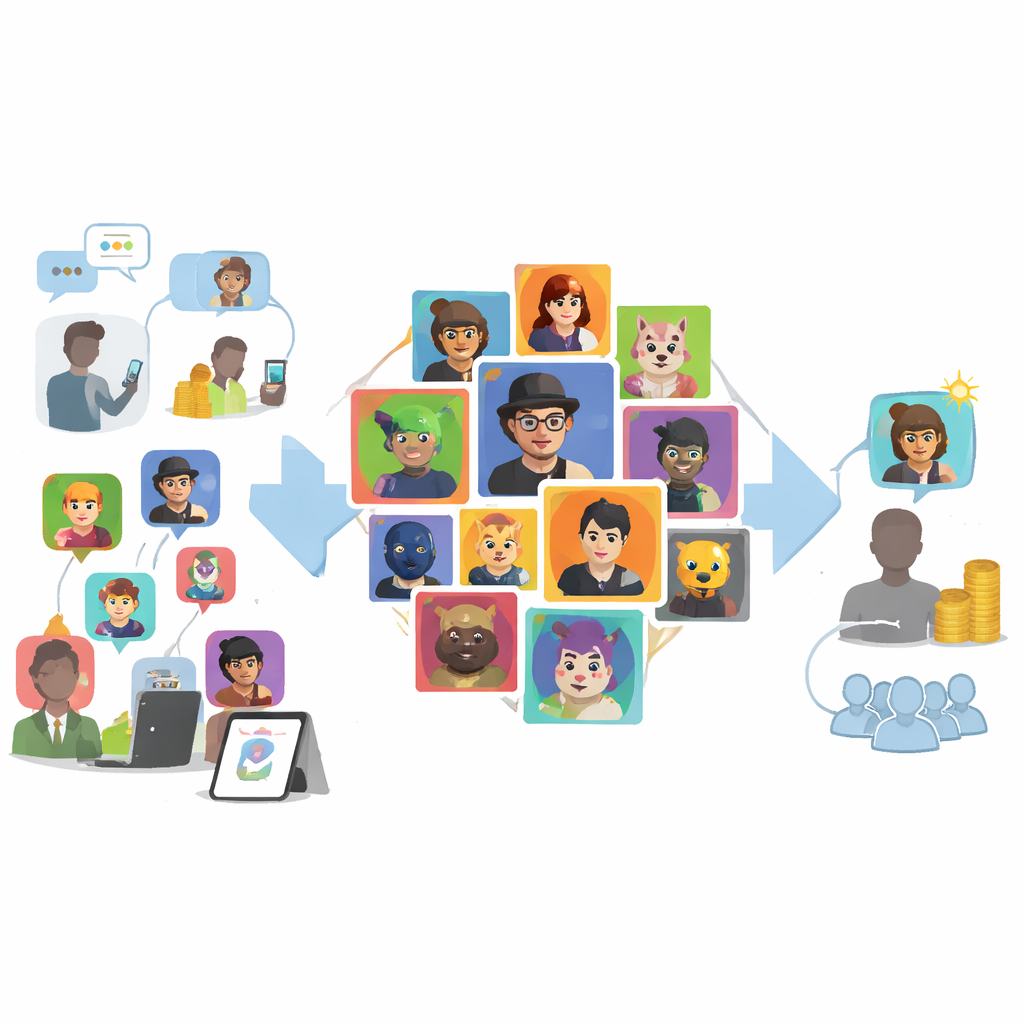
All over social media, people are swapping ordinary photos for cartoon-style avatars tied to non-fungible tokens, or NFTs. These profile picture NFTs (often called PFP NFTs) can cost hundreds or even thousands of dollars, raising a basic question any curious reader might ask: what convinces someone to pay real money for a tiny square image? This study digs into that puzzle, using survey-based experiments to uncover which features of an NFT project actually drive people’s desire to buy and how much extra they are willing to pay for them.
The rise and reset of the NFT boom
After a frenzy of trading in 2021–2022, the NFT market cooled sharply, with global sales and growth projections revised downward. The authors argue this is less a collapse than a maturing phase: speculative projects are being weeded out, and attention is shifting toward NFTs that offer real, lasting value. Within the broader NFT universe, profile picture collections—10,000-piece sets of algorithmically generated avatars that serve as online “faces”—have been among the most visible. Well-known examples such as CryptoPunks and Bored Ape Yacht Club showed how these images can become digital status symbols, community badges, and even building blocks for new businesses when owners are allowed to use the artwork commercially.
What the researchers set out to test
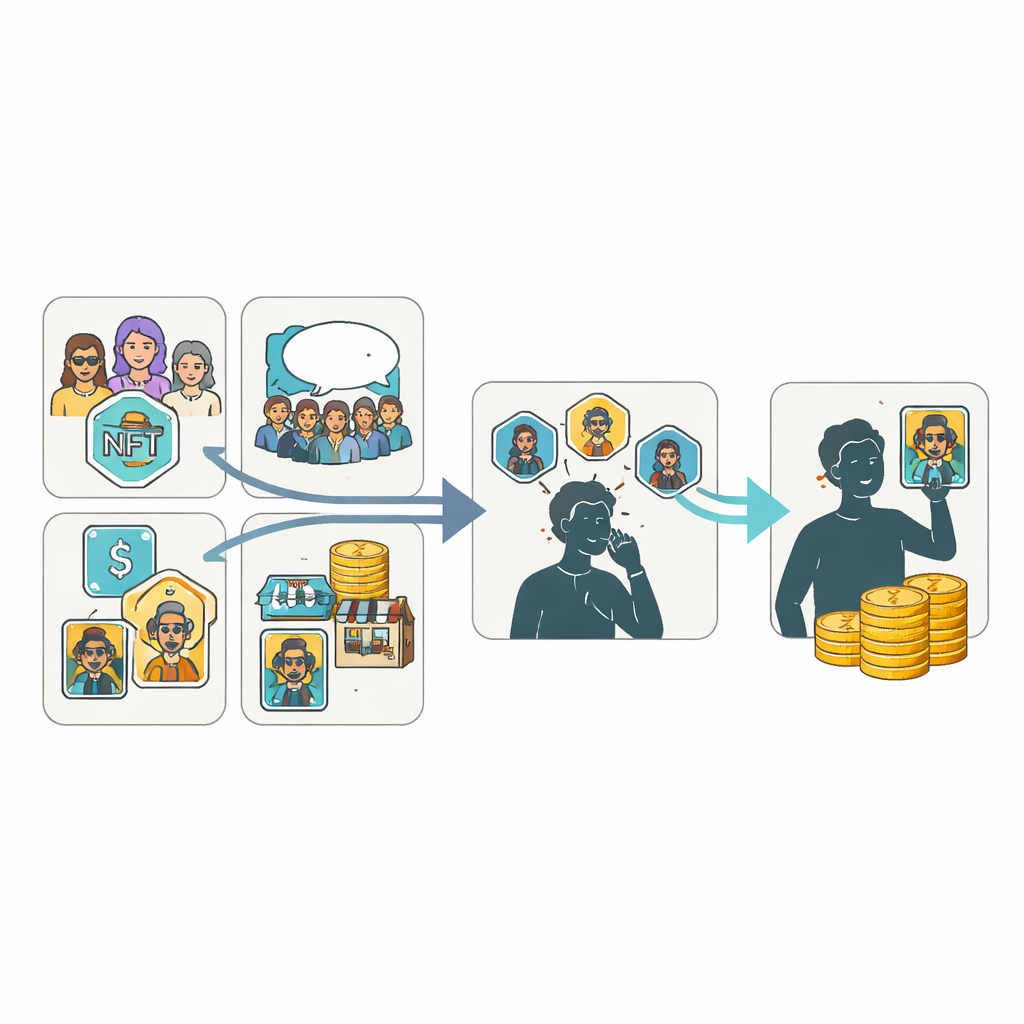
The study focuses on why people would choose one PFP NFT over another. Drawing on earlier work in consumer psychology, the authors concentrate on three kinds of value: economic (is it a good investment?), functional (what can I do with it?), and social (what does it say about me and my group?). From interviews and market scanning, they distilled six key traits common in NFT marketing: the project’s floor price (the cheapest entry point), the size of its online community, how many celebrities hold its tokens, whether owners can use the image commercially or only personally, whether holders receive free drops from future projects, and what kinds of perks—online, offline, or economic—come with ownership. They then used conjoint analysis, a technique that presents people with different bundles of features and asks them to choose, to see which combinations were most appealing.
How the study was carried out
The team surveyed 156 adults in South Korea, most of whom already had experience with cryptocurrency or NFTs. Each participant evaluated hypothetical NFT offerings that varied across the six traits. To analyze their choices, the authors used a “mixed logit” statistical model, which can capture differences in taste from person to person rather than assuming everyone values each feature the same way. From this, they estimated not only which traits mattered on average, but also how much extra money, in Korean won, people were effectively willing to pay for a change in each trait—such as more celebrities endorsing the project or broader rights to use the image.
What really moves buyers
The clearest result was social: the number of celebrities involved in a project was the single most powerful driver of interest. Each additional celebrity holder was linked to a substantial jump in how much people were willing to pay, and this trait carried the highest relative importance in their decisions. The size of the online community came next; larger communities made NFTs more attractive and boosted perceived value. By contrast, the floor price mattered in a straightforward way during the experiment: with limited information about long-term prospects, participants gravitated toward the cheaper option. Commercial rights to the image also mattered: people were willing to pay a notable premium if ownership allowed them to create and profit from spin-off content, from merchandise to media projects. Surprisingly, extra perks such as free future NFT drops, exclusive events, or token rewards did not significantly sway purchase intentions, perhaps because their future value was too uncertain or hard to judge.
What this means for the future of NFT projects
Beyond the numbers, the findings suggest that profile picture NFTs function less like simple collectibles and more like tickets into a social club with potential business upside. Buyers appear to be paying for in-group identity: standing alongside admired celebrities and belonging to a large, active community. At the same time, they value the chance to turn that digital face into an asset they can reuse, remix, and monetize. For creators and brands, this implies that simply promising speculative gains or one-off perks may not be enough. Projects that build genuine communities, attract visible early adopters, and grant owners meaningful rights over their digital identities are more likely to endure as the market shifts from hype to long-term utility.
Citation: Baek, Y., Kim, J., Lee, D. et al. Conjoint analysis of key determinants of consumer purchase intentions for profile picture non-fungible tokens. Humanit Soc Sci Commun 13, 405 (2026). https://doi.org/10.1057/s41599-026-06694-2
Keywords: NFTs, digital identity, celebrity endorsement, online communities, consumer behavior