Clear Sky Science · en
Science learning theories in informal settings: a conceptual review
Learning Science Beyond the Classroom Walls
Most of what we learn about the world does not happen at a school desk. It unfolds while visiting zoos, wandering through parks, exploring museums, or simply walking city streets. This article surveys how science learning happens in these everyday places and explains how public spaces can be deliberately shaped to spark curiosity, deepen understanding, and support more sustainable ways of living together on our planet.
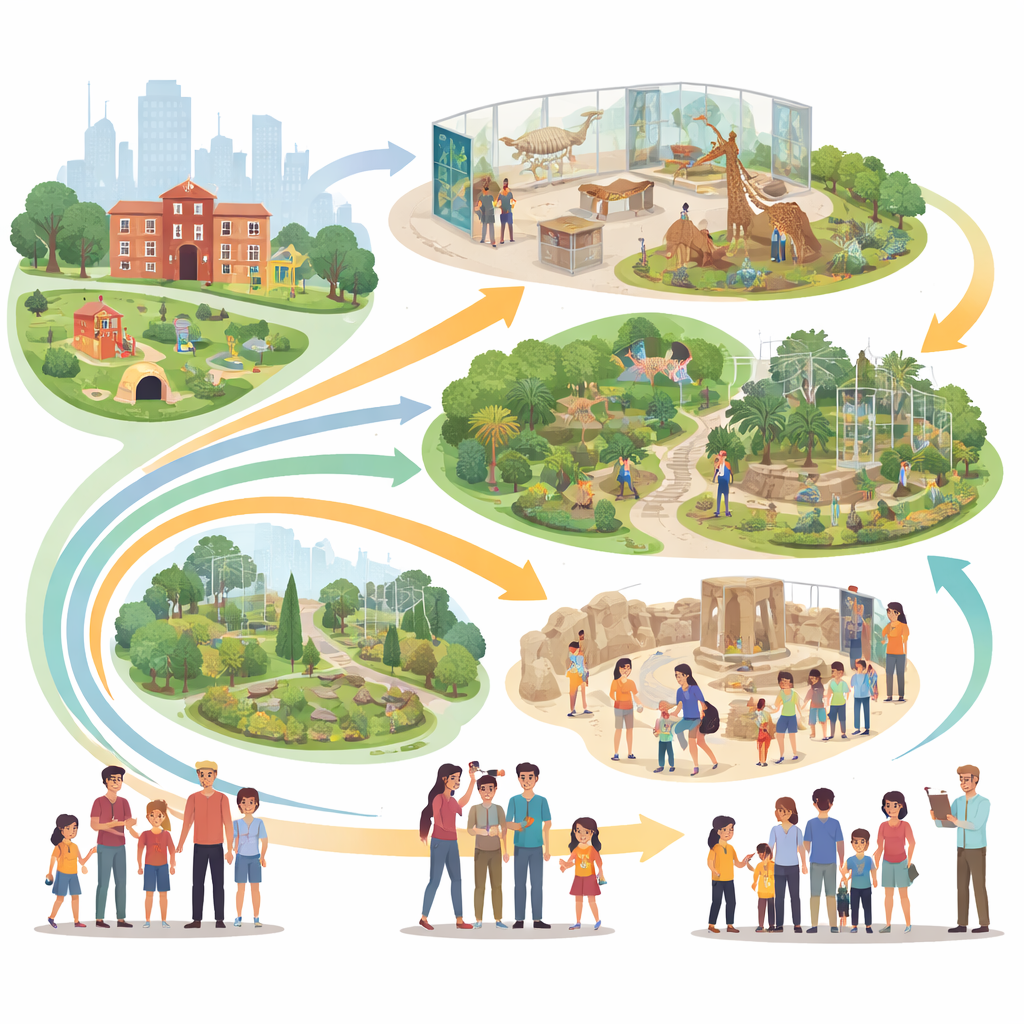
Everyday Places as Learning Landscapes
The paper begins by widening our idea of where science learning occurs. Beyond formal lessons, people pick up scientific ideas in museums, aquariums, botanical gardens, archaeological sites, nature reserves, and urban parks. These “museal” spaces are not just storage rooms for objects; they are carefully arranged environments that present pieces of nature and culture in ways that invite visitors to look closer, wonder, and reflect. Through displays, trails, and interactive features, these places act as mediators between expert knowledge and the public, subtly encouraging new ways of seeing animals, landscapes, and human history.
Moving Past the Formal–Informal Box
Traditional categories divide learning into formal (school), non-formal (organized but outside school) and informal (everyday life). The author argues that this three-way split is too rigid. In reality, people move through overlapping “activity contexts” during their day: home, work, leisure, digital spaces, and public environments. In each context, both deliberate and unconscious learning take place. Experiences in a museum visit may be partly planned by educators yet still driven by the visitor’s own curiosity and social interactions. Seeing learning as a continuum grounded in context helps researchers and designers pay attention to how time, place, and social relationships shape what visitors actually take away.
Thirteen Ways to Think About Out-of-School Learning
The core of the article is a map of thirteen theoretical perspectives that explain how science learning unfolds in informal settings. One group highlights places: contextual learning focuses on how physical surroundings interact with visitors’ motivations and social backgrounds; environmental interpretation emphasizes guided encounters with parks and heritage sites that foster appreciation and protection; place-based education turns local environments into laboratories for solving community problems; and “third space” ideas examine hybrid zones that blend school knowledge with everyday life. These approaches treat landscapes, buildings, and artifacts not as neutral backdrops but as active ingredients in learning.
A second group centers on people. Perspectives on interest development describe how momentary curiosity can grow into long-term passion when supported over time. Identity-based views explore how visitors arrive with roles—such as explorer, parent, or hobbyist—that shape what they notice and value during a visit. Experiential learning approaches underscore the power of concrete experiences, reflection, emotion, and bodily engagement, arguing that meaningful encounters with exhibits or nature can transform how people think, feel, and act.
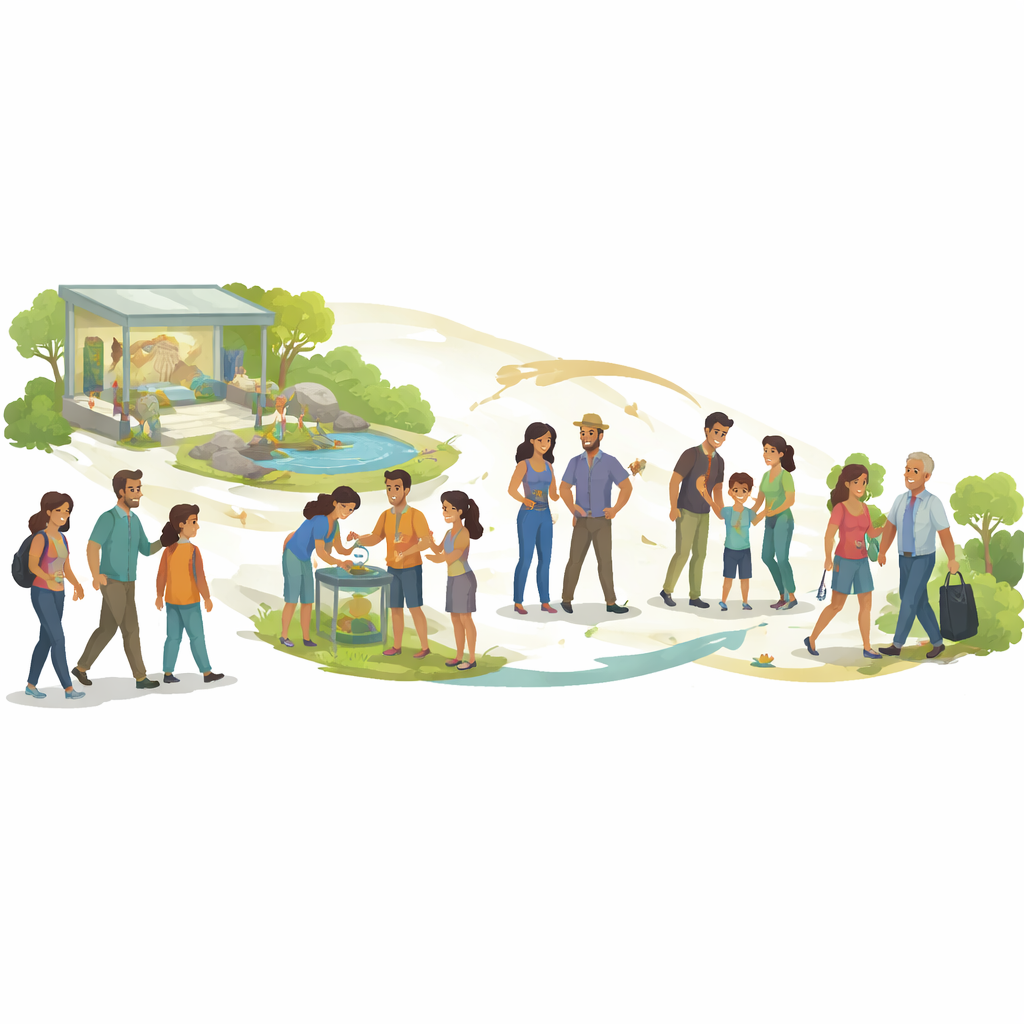
Learning Through Culture, Conversation, and Walking
The third set of perspectives focuses on culture and social relationships. Ideas about communities of practice and social learning look at how people pick up scientific ways of thinking by participating in shared activities, observing others, and gradually taking on more central roles. Family, conversational, and narrative learning perspectives emphasize that talk—questions, stories, comparisons to prior experiences—is itself a form of learning, especially for multi-generational groups in museums. Finally, the “pedagogy of walking,” grounded in Indigenous worldviews, shows how moving through land, reading subtle signs in the environment, and storytelling about what one sees weave people into more-than-human communities and cultivate care for local ecosystems.
Designing Cities as Everyday Science Classrooms
Bringing these perspectives together, the article concludes that science learning outside school is experiential, social, and inseparable from its surroundings. There is no single model or method that fits all informal settings; instead, rich learning emerges when people, places, and cultures are carefully intertwined. The author offers practical suggestions: design public spaces and exhibits that invite exploration and conversation, collaborate with local communities and environmental interpreters, support families as learning partners, and create opportunities for intergenerational outdoor activities such as walks and hands-on projects. In this view, parks, museums, streets, and gardens can form an urban learning network where science is encountered everywhere, helping cities become more inclusive, knowledgeable, and environmentally aware communities.
Citation: Valladares, L. Science learning theories in informal settings: a conceptual review. Humanit Soc Sci Commun 13, 424 (2026). https://doi.org/10.1057/s41599-026-06496-6
Keywords: informal science learning, museums and public spaces, place-based education, family and community learning, pedagogy of walking