Clear Sky Science · en
Myricetin alleviates testosterone-induced benign prostatic hyperplasia by attenuating inflammation, oxidative stress, apoptosis and androgen signaling
Why this matters for men's health
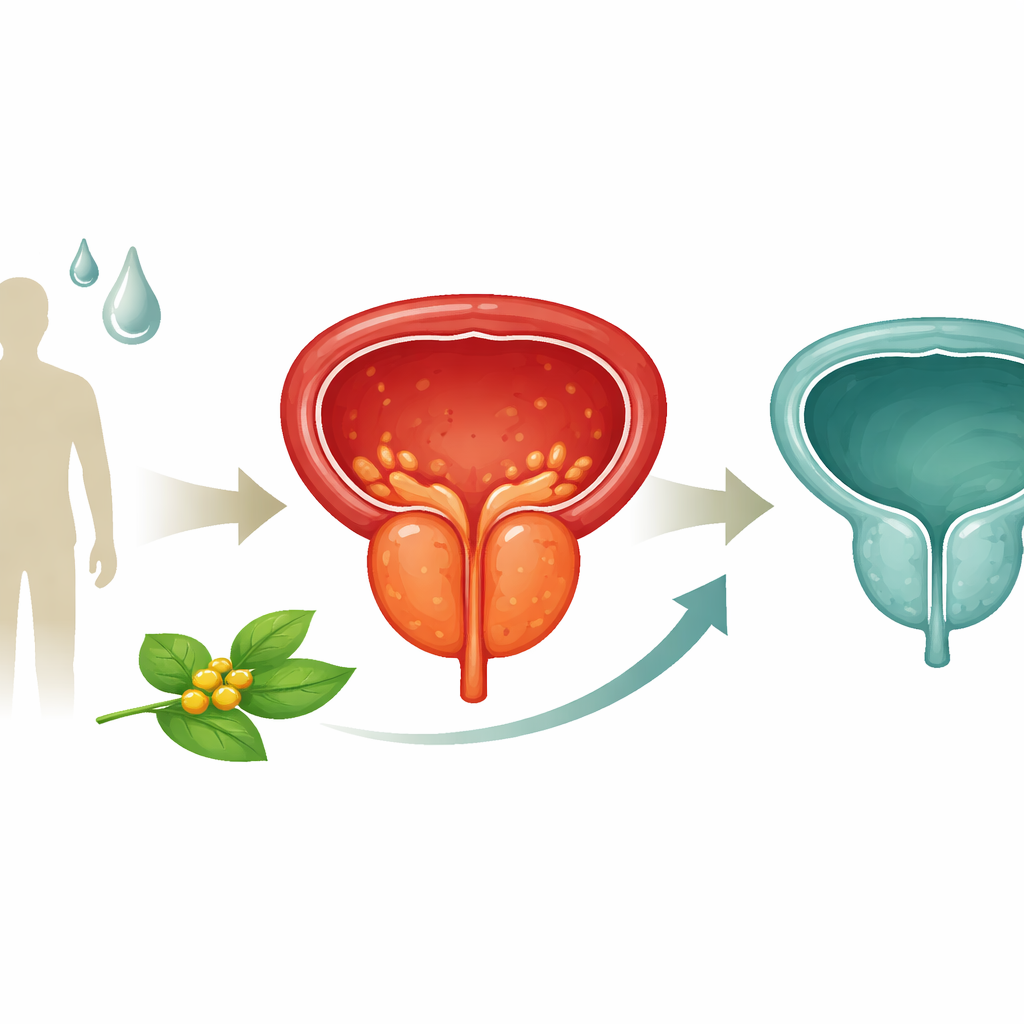
As men age, many develop benign prostatic hyperplasia (BPH), a non-cancerous enlargement of the prostate that can make urination difficult and disturb sleep. Current drugs can shrink the gland but often bring bothersome side effects such as fatigue or sexual problems. This study explores whether myricetin—a natural compound found in berries, vegetables, and herbs—might offer a gentler way to protect the prostate by calming inflammation, reducing cellular stress, and rebalancing male hormones in an animal model of BPH.
A common problem and a natural candidate
BPH affects roughly half to three-quarters of men over 50 and becomes even more common with age. As hormone levels shift, especially the balance between testosterone and its stronger relative dihydrotestosterone (DHT), prostate cells can start to grow too quickly and die too slowly, causing the gland to swell. At the same time, low-grade inflammation and oxidative stress—chemical damage driven by reactive molecules—can further push the tissue toward overgrowth. Myricetin is a plant flavonoid already known for its antioxidant, anti-inflammatory, and anti-cancer actions in laboratory studies. The researchers reasoned that these overlapping benefits might make it a promising candidate to counter several drivers of BPH at once.
Testing myricetin in a rat model of prostate enlargement
To probe this idea, the team used forty male rats and triggered BPH by repeatedly giving them testosterone, which reliably enlarges the prostate and mimics key aspects of the human condition. One group of rats served as healthy controls, another received testosterone alone, a third received testosterone plus daily myricetin injections, and a fourth group received testosterone plus finasteride, a standard BPH drug that blocks DHT production. After 28 days, the researchers examined the animals’ prostates under the microscope, measured gland weight, analyzed blood hormone levels, and tested prostate tissue for chemical markers of oxidative stress, inflammation, cell growth, cell death, and new blood vessel formation.
Less swelling, calmer chemistry inside the gland
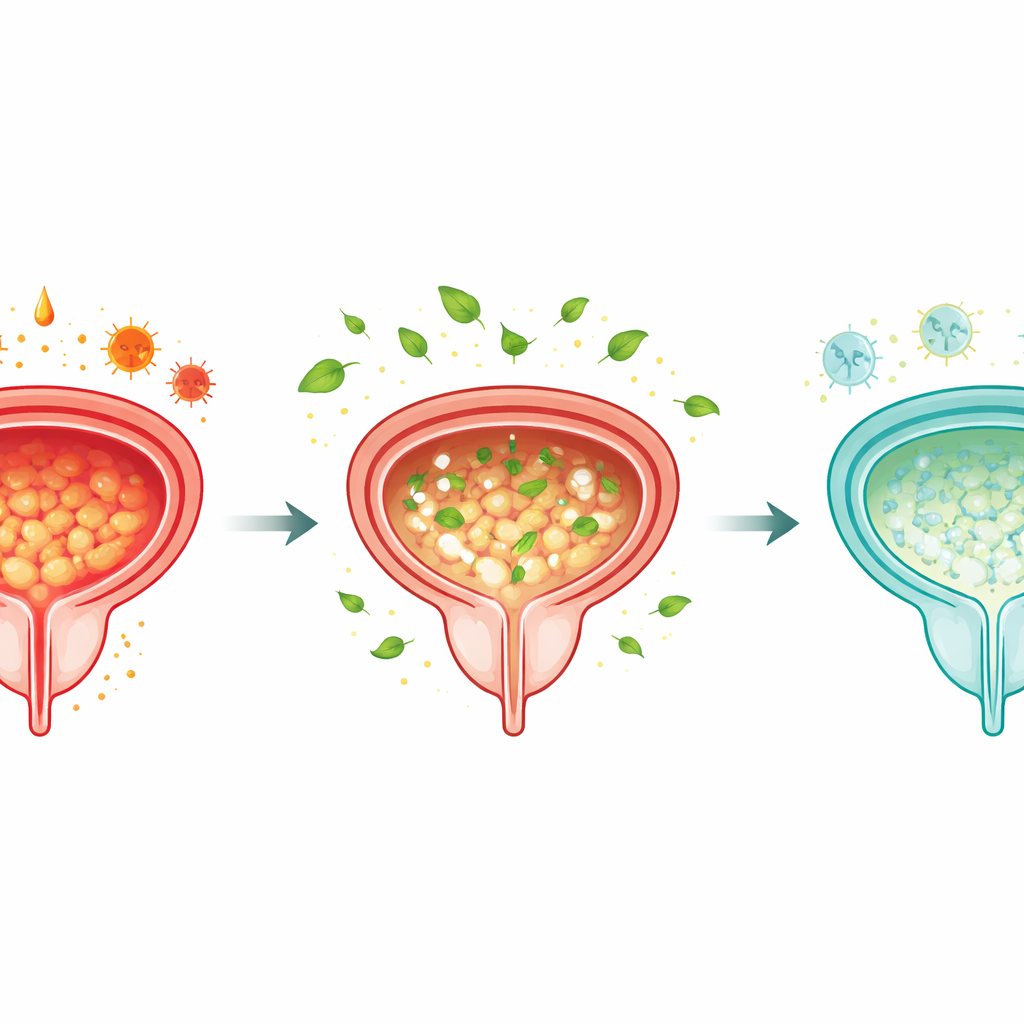
Rats given testosterone alone developed clear signs of BPH: their prostates became heavier, the lining of the gland thickened, and cells formed crowded folds. Chemical tests showed more oxidative damage, lower antioxidant capacity, and higher levels of inflammatory messengers. In contrast, rats treated with myricetin had smaller prostates and more normal gland structure, similar to animals that received finasteride. Myricetin lowered a key damage by-product of oxidation while boosting the tissue’s overall antioxidant capacity, something finasteride did not do. It also reduced inflammatory molecules in the prostate, suggesting a quieter, less irritated environment that is less likely to drive tissue overgrowth.
Rebalancing hormones and cell life cycles
Beyond these chemical shifts, myricetin appeared to influence how hormones and growth signals act inside the prostate. The treatment reduced blood levels of DHT and decreased the activity of the gene for 5-alpha reductase, the enzyme that converts testosterone into DHT, as well as the gene for the androgen receptor that senses DHT. Inside the gland, myricetin nudged the balance of cell life and death toward a healthier state: it raised levels of a pro-death protein (Bax), lowered levels of a pro-survival protein (Bcl-2), and increased the ratio between them, consistent with more orderly removal of excess cells. It also reduced markers of cell proliferation and new blood vessel growth, both of which tend to be elevated in enlarged prostates.
What this could mean for future treatments
Taken together, the findings suggest that myricetin can protect against testosterone-driven prostate enlargement in rats by acting on several fronts at once: easing inflammation and oxidative stress, dialing down DHT-related signaling, slowing excessive cell growth, encouraging appropriate cell death, and limiting new blood vessel formation. While these results are encouraging, they come from an animal model, and questions remain about how well myricetin is absorbed, what doses are safe and effective in humans, and which molecular targets are most important. The work nonetheless points to myricetin and similar plant-derived compounds as promising leads for more holistic BPH treatments that might complement or one day offer alternatives to current hormone-blocking drugs.
Citation: Alomari, G., Al-Trad, B., Qar, J. et al. Myricetin alleviates testosterone-induced benign prostatic hyperplasia by attenuating inflammation, oxidative stress, apoptosis and androgen signaling. Sci Rep 16, 11651 (2026). https://doi.org/10.1038/s41598-026-47374-0
Keywords: benign prostatic hyperplasia, myricetin, prostate health, natural compounds, androgen signaling