Clear Sky Science · en
The prevalence of mental health disorders and stress coping strategies among forced migrants from Ukraine and Russia
Why this research matters to everyday life
Wars and political crackdowns do not only move borders on a map—they uproot millions of lives. This study looks at how two such groups, Ukrainian women fleeing war and Russians escaping political repression, are coping emotionally after resettling abroad. By examining what harms their mental health and which ways of dealing with stress help or hurt, the research offers clues for how host countries, communities, and migrants themselves can better protect well-being in times of upheaval.
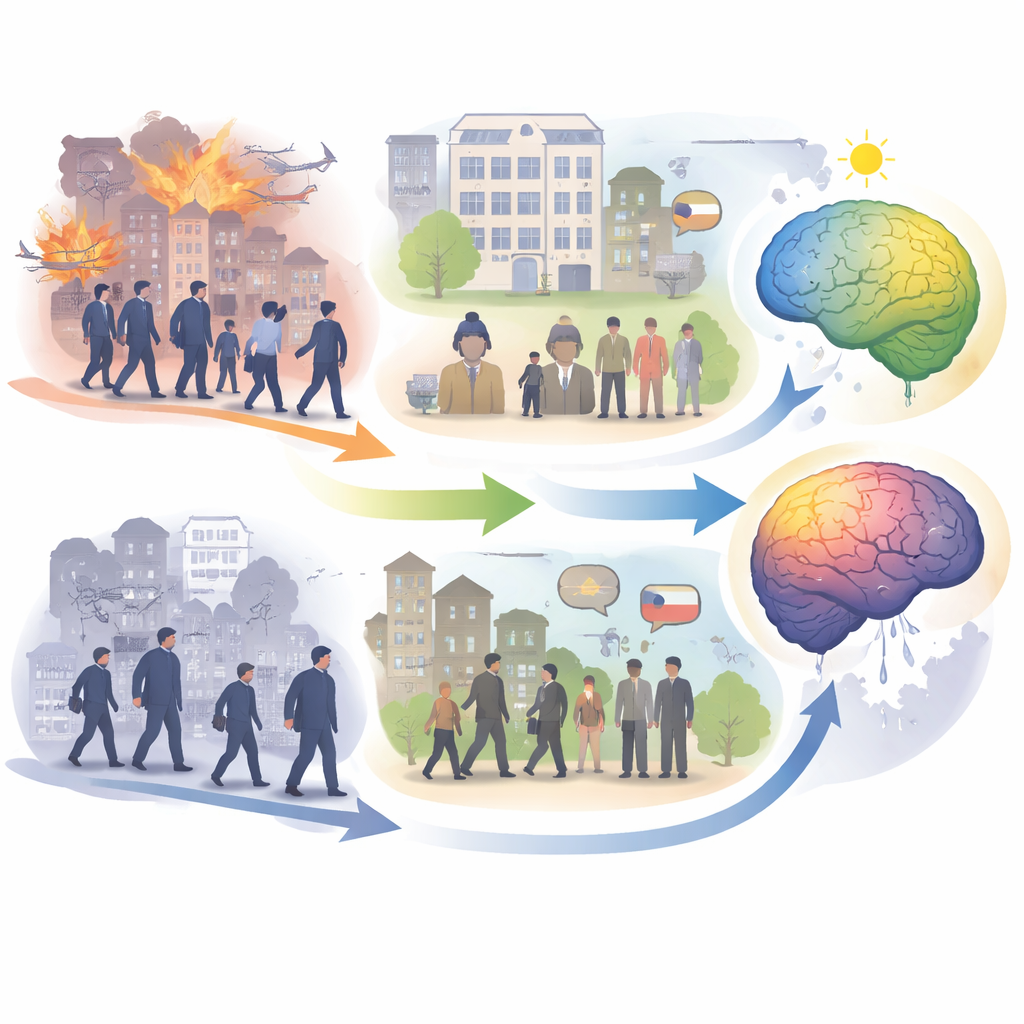
Two paths out of the same conflict
The study focuses on 200 Ukrainian women who fled to Poland and 164 people who left Russia for several European countries after the full-scale invasion of Ukraine. Ukrainians in the study are almost all mothers who escaped air raids and direct danger, while many Russians left to avoid arrest, repression, or forced military service. Both groups had lived in urban areas and were highly educated, and many had enjoyed a good standard of living before leaving. Yet their situations in their new homes differed: Russian migrants were more likely to work in jobs matching their qualifications, live in rented or owned housing, and encounter friendlier attitudes from the local population, while Ukrainian women were more often underemployed and faced cooler or even negative reactions.
How life after arrival shapes the mind
Researchers measured symptoms of anxiety, depression, and everyday stress using standard psychological questionnaires. Ukrainian women reported particularly high levels of mental health problems: about half had strong signs of anxiety and over half showed strong signs of depression. Russian migrants also showed a heavy burden—about four in ten screened in the same worrying ranges—but their average scores were lower than those of the Ukrainian group. For both communities, nearly everyone reported high perceived stress, underscoring how leaving home under pressure can lead to long-lasting emotional strain.
Ways of coping: fighting, feeling, or giving up
The study also asked how people try to handle their worries. Coping styles were grouped into three broad types: problem-focused actions (such as mobilizing to solve practical issues or asking others for advice), emotion-focused tactics (such as distraction, self-comfort, prayer, or using alcohol or sedatives), and resignation (giving up or feeling there is nothing to be done). Both groups used emotion-focused approaches most often. However, Ukrainian women relied more on emotion-focused and resignation strategies, while Russians more frequently used problem-focused approaches. Seeking professional psychological help was relatively common in both groups—around 40% of Ukrainians and a third of Russians had consulted a mental health professional.
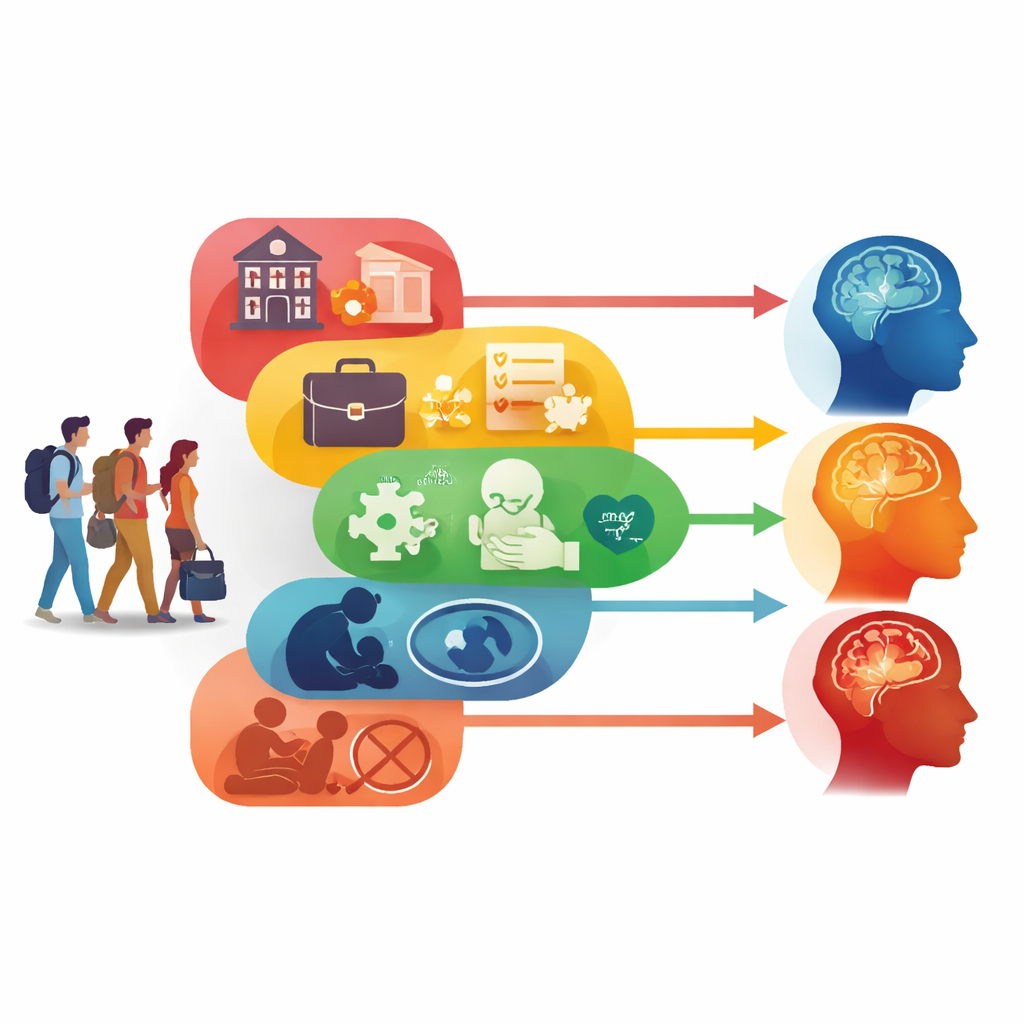
What worsens or protects mental health
By linking people’s answers statistically, the researchers identified which factors were most strongly tied to poor mental health. For Ukrainian women, negative attitudes from the host society, needing to move within the host country, higher education (which may heighten feelings of lost status), and relying on emotion-focused or avoidant coping were all connected with more anxiety, depression, and stress. For Russians, poorer self-rated quality of life, being stuck in jobs below their qualifications, negative reactions from locals, and similar emotion-focused or resignation-based coping strategies were linked to worse mental health. In both groups, practical hardships and a sense of not being accepted or valued in the new society weighed heavily on emotional well-being.
What this means for migrants and host societies
Overall, the study suggests that what happens after arriving in a new country can be as important for mental health as the dangers left behind. Difficult living conditions, discrimination, and feeling forced to endure rather than improve one’s situation were all tied to higher levels of emotional suffering. In contrast, better quality of life, fair work, and welcoming attitudes from local communities appeared to ease distress. While the study cannot prove cause and effect, it points to clear targets for action: social policies that reduce underemployment, programs that foster positive contact between locals and newcomers, and support that encourages active, problem-solving approaches to challenges. Together, these efforts could make the difference between long-term psychological harm and the chance to rebuild a stable, hopeful life after forced migration.
Citation: Długosz, P., Yuzva, L. The prevalence of mental health disorders and stress coping strategies among forced migrants from Ukraine and Russia. Sci Rep 16, 11699 (2026). https://doi.org/10.1038/s41598-026-47201-6
Keywords: forced migration, refugee mental health, coping with stress, Ukrainian refugees, Russian political migrants