Clear Sky Science · en
Pelvic floor morphofunctional characteristics in female rugby players beyond the tackle. Pelvic floor muscles in high-impact sports
Why this topic matters to active women
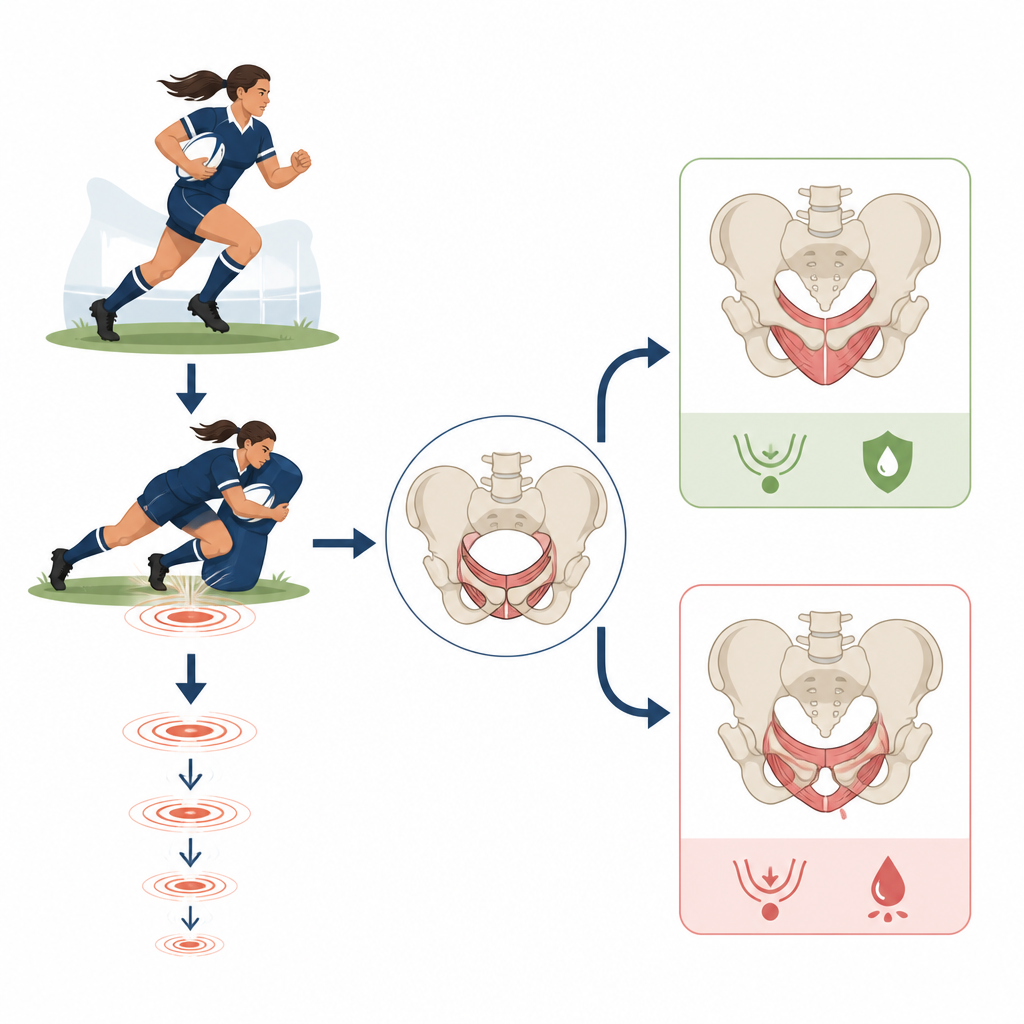
More women than ever are playing intense contact sports like rugby. Along with the thrill of competition, however, comes a quieter issue that many athletes rarely talk about: leaking urine during hard effort. This study looks inside the bodies of female rugby players to see how repeated impacts and heavy physical loads may be shaping the hidden muscles at the base of the pelvis, and how that might relate to stress urinary incontinence, or leaking with running, jumping, or tackling.
The hidden hammock of support
The pelvic floor is a group of muscles and connective tissues that form a kind of hammock, helping to support the bladder, uterus, and bowel. When we cough, sprint, or change direction, pressure inside the abdomen rises and these muscles should tighten to keep us dry. Traditionally, problems like stress urinary incontinence have been linked to pregnancy, birth, or aging. Yet, growing evidence shows that young, fit women who have never given birth, especially those in high impact sports, are also affected. Rugby is one of these sports, with frequent sprints, tackles, and collisions that repeatedly load the pelvis.
How the researchers studied rugby players
In this cross sectional study, 27 female rugby players between 18 and 35 years old, all without previous births and with several years of regular training, took part in a single detailed testing session. The team combined three tools: internal examination by a pelvic health physiotherapist to rate muscle strength, ultrasound imaging placed on the perineum to measure the size and angle of the opening in the pelvic floor, and a small vaginal probe to record electrical signals from the muscles while lying down and while standing. The players also filled in a questionnaire about urinary leakage, allowing the researchers to compare those who frequently leaked with those who did not.
What they found about pelvic shape and position
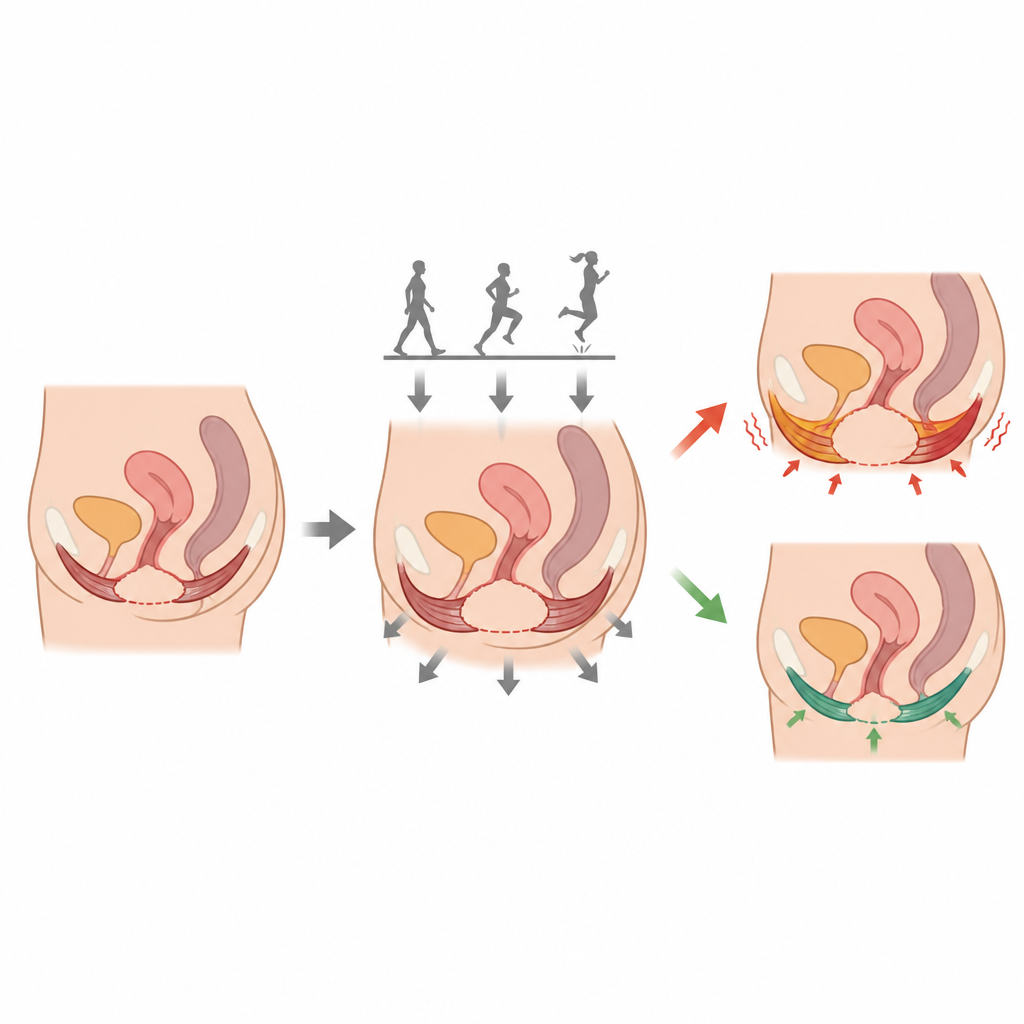
One key measurement was the front to back diameter of the opening in the pelvic floor, called the levator hiatus. In many of these rugby players, this opening was as large as values usually seen in late pregnancy or soon after birth. It also became larger when the women moved from lying down to standing, reflecting the extra pull of gravity and daily load. About four in ten players reported stress urinary incontinence, and in this group the opening tended to increase more when standing, suggesting that posture and impact may matter more for those already experiencing leakage.
Muscle effort and the cost of staying dry
The electrical recordings told a complementary story. Overall, muscle activity at rest was higher when the players were standing compared to lying down, as the pelvic floor had to work harder against body weight and internal pressure. Players with a smaller pelvic opening produced stronger muscle signals during voluntary contractions and sustained holds, hinting at a more efficient system. In contrast, those with a wider opening showed about 40 percent lower muscle amplitude during tasks, yet incontinent players had to recruit a higher percentage of their available capacity just to perform the same actions, especially during standing efforts. This pattern suggests that when structural support is reduced, the muscles must work relatively harder, which could lead to earlier fatigue over long training sessions or matches.
What this means for women who play hard
The study does not prove that rugby causes these pelvic changes, nor that all athletes will develop incontinence. It does show that in women exposed to repeated high impacts, pelvic health depends on a balance between the shape and support of the pelvic tissues and the way the muscles activate in different positions. Some players show pelvic openings similar to those in pregnancy, paired with higher effort just to maintain control. For coaches, clinicians, and athletes, this underlines the value of specific pelvic floor assessment and training as part of regular conditioning, aiming not only to reduce leakage but also to preserve comfort and confidence in high impact sport.
Citation: Rodríguez-López, E.S., Ojedo-Martín, C., Del-Fresno-González, J. et al. Pelvic floor morphofunctional characteristics in female rugby players beyond the tackle. Pelvic floor muscles in high-impact sports. Sci Rep 16, 15447 (2026). https://doi.org/10.1038/s41598-026-46795-1
Keywords: pelvic floor, female athletes, rugby, stress urinary incontinence, high impact sport