Clear Sky Science · en
Tampa scale for kinesiophobia in individuals with knee osteoarthritis: a cross-sectional psychometric evaluation using item-level and exploratory factor analyses
Why fear of movement matters in knee pain
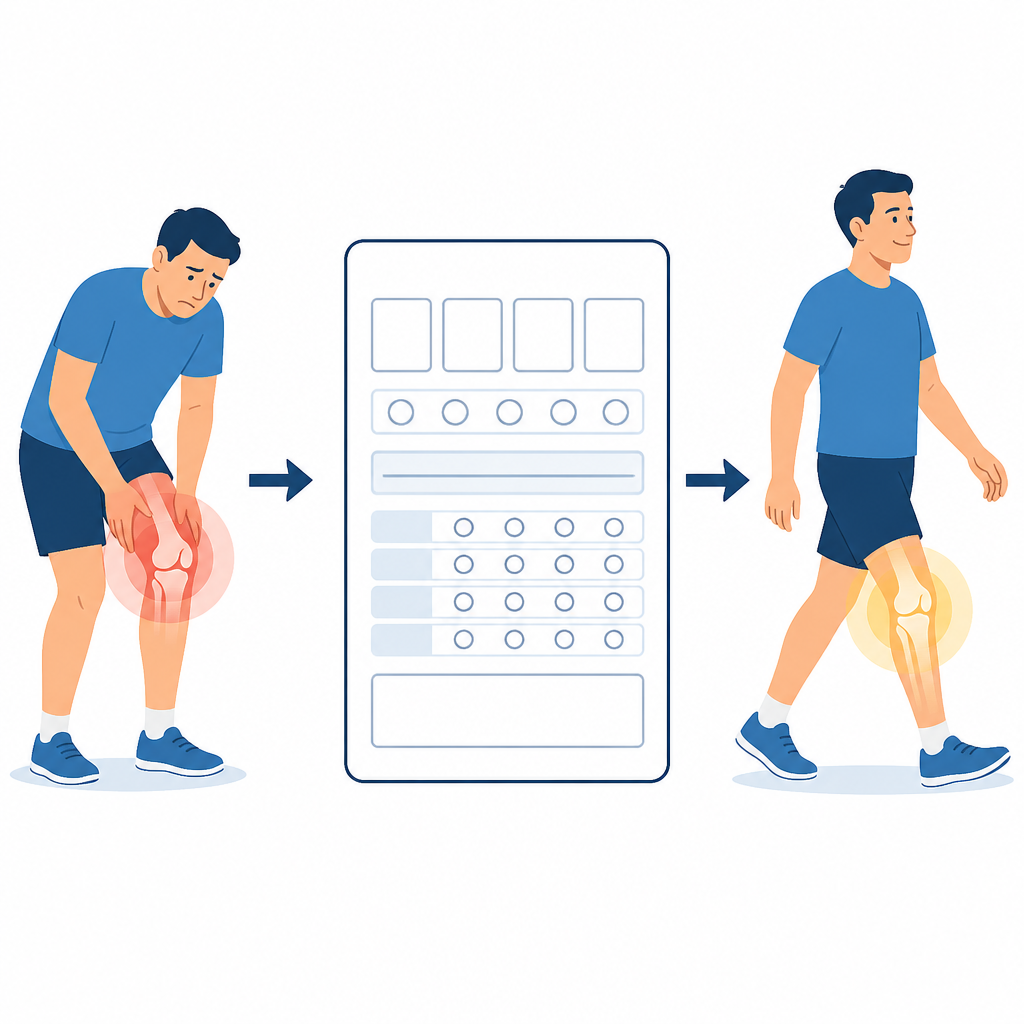
For many people with knee osteoarthritis, the pain is only part of the problem. Worry about making the pain worse can lead to avoiding walking, exercise, and daily chores, which in turn can weaken the body and limit independence. This study looks closely at a simple questionnaire, the Tampa Scale for Kinesiophobia, that is used around the world to measure fear of movement. By testing how well each question works in Thai adults with knee osteoarthritis, the researchers ask whether this tool truly captures what patients feel and whether it can guide better care.
A closer look at a popular fear-of-movement checklist
The Tampa Scale for Kinesiophobia is a 17-item checklist that asks people how strongly they agree or disagree with statements about pain, danger, and activity. It has been translated into many languages and is widely used in clinics and research. In people with knee osteoarthritis, earlier work showed that the Thai version of the scale is reliable over time and relates well to pain, anxiety, and disability. However, its deeper structure, and how each individual question behaves in this specific group, had not been fully examined. The current study set out to fill this gap by inspecting responses question by question rather than only relying on the total score.
Who took part and what was measured
The researchers surveyed 134 adults from communities in Thailand who had knee osteoarthritis, most of whom were women around 60 years old and classified as overweight. Participants reported fairly high knee pain and had lived with symptoms for almost three years on average. Each person filled in the Thai version of the 17-item Tampa scale, which yields scores from 17 to 68, along with a rating of pain intensity during symptom flare-ups. The average total fear-of-movement score was 43, above the commonly cited cut-off suggesting that many participants were quite fearful of moving because of their knee pain.
What the individual questions revealed
The team examined so-called floor and ceiling effects, which occur when many people choose the lowest or highest possible answer on a question. Two items that express the idea that exercise or physical activity could help pain showed floor effects, meaning many people strongly rejected these statements. One item that reflects strong concern about pain showed a ceiling effect, with many people choosing the highest level of agreement. These patterns suggest that such questions may not distinguish well between people with different levels of fear. When the researchers looked at how each item related to the total fear score, most questions showed at least a weak to moderate link, but three reverse-worded items stood out because they did not relate well to the overall score, hinting that their wording may confuse respondents.
Hidden patterns in fear of movement
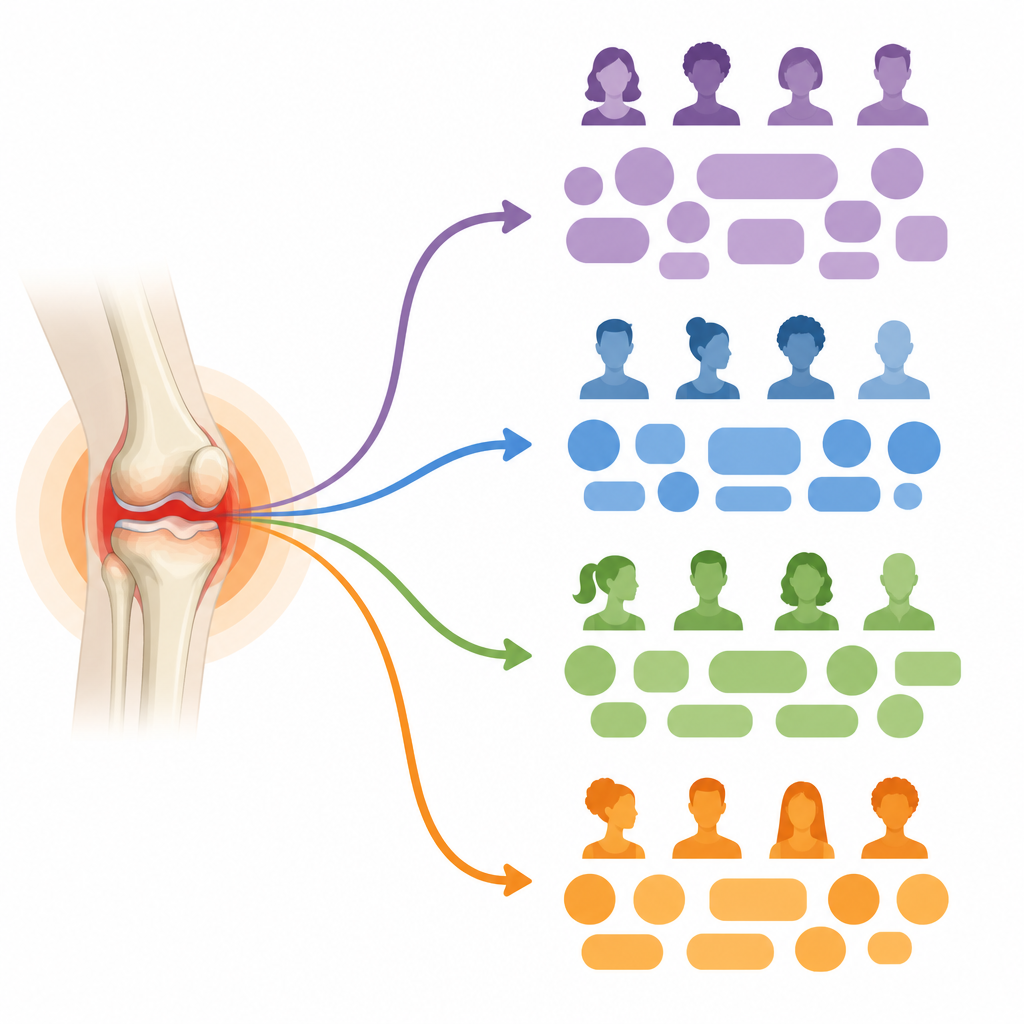
Beyond single questions, the authors used an exploratory factor analysis, a statistical method that looks for clusters of items that tend to move together. Instead of the usual two broad groups often described for this scale, the analysis in this knee osteoarthritis sample suggested four components. These were interpreted as a focus on bodily symptoms, general worry about symptoms, concern about specific activities, and a bargaining style of coping where people weigh pain against perceived risk. Together these four components explained just over half of the differences in how people answered the questions. One particular item, expressing the belief that something is seriously wrong with the body, also showed a meaningful link with pain intensity itself, highlighting its possible clinical importance.
What this means for people living with knee osteoarthritis
For everyday patients and clinicians, the study’s message is that fear of movement in knee osteoarthritis is not a single, simple feeling. Different people may share the same level of knee pain yet worry about different things, such as damaging the joint, making symptoms worse, or losing control over daily tasks. Some questions on the current scale may not capture these worries sharply enough in this group and may need refining in future versions. The authors suggest that future studies should test the new four-part structure more rigorously and consider trimming or revising weaker items. In practical terms, looking beyond just the total score and paying attention to which types of fears are strongest could help tailor education and exercise programs so that people feel safer to move and better able to manage life with knee osteoarthritis.
Citation: Sakulsriprasert, P., Bunprajun, T., Hengsomboon, N. et al. Tampa scale for kinesiophobia in individuals with knee osteoarthritis: a cross-sectional psychometric evaluation using item-level and exploratory factor analyses. Sci Rep 16, 15522 (2026). https://doi.org/10.1038/s41598-026-46580-0
Keywords: knee osteoarthritis, fear of movement, knee pain, questionnaire, rehabilitation