Clear Sky Science · en
Accuracy of dental implant positioning by dynamic or static computer-assisted implant surgery: a randomized controlled clinical trial
Getting Dental Implants in the Right Place
When someone receives a dental implant, the metal screw must be placed with millimeter precision. If it ends up too close to a nerve, the sinus, or a neighboring tooth, problems can follow years later. Today, dentists increasingly rely on computer guidance to help them drill in exactly the right spot. This study asks a practical question that matters to both patients and clinicians: do newer, camera-guided systems place implants as accurately as traditional plastic drill guides?
Two Ways to Guide the Dentist’s Hand
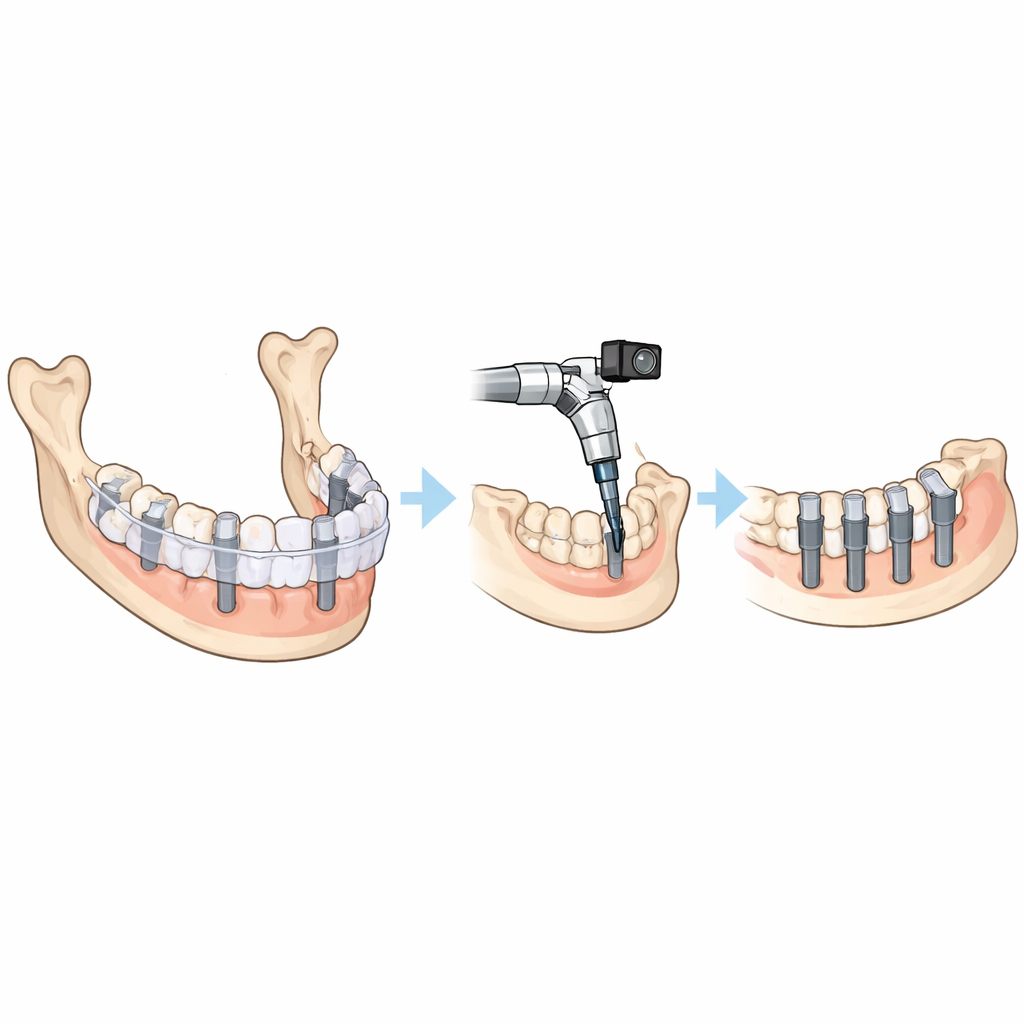
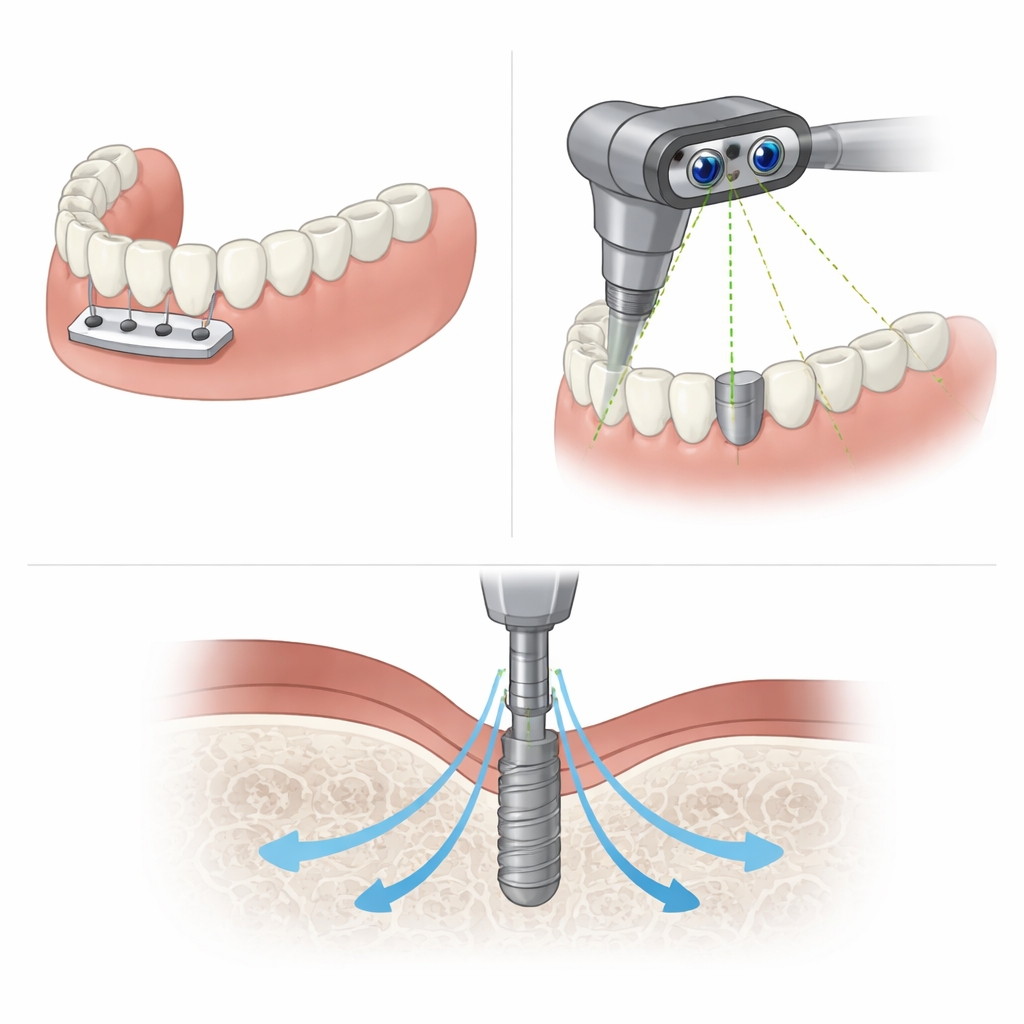
The research compares two main styles of computer-assisted implant surgery. In the static method, a rigid plastic guide is produced from a 3D scan and snapped onto the teeth or gums. It contains metal sleeves that steer the drill along a fixed path. In the dynamic method, the implant is still planned on a 3D scan, but there is no bulky guide in the mouth. Instead, a small reference plate is attached to the teeth and a miniature stereo camera is mounted on the drill handpiece. As the dentist works, the system tracks the drill in real time against the patient’s 3D scan and shows its position on a screen, allowing continuous adjustment.
How the Trial Was Carried Out
The authors ran a randomized clinical trial with 45 adults who needed at least one implant, for a total of 70 implants. Every patient had a cone beam CT scan, and implants were virtually positioned in planning software according to the ideal future tooth shape. Each person was randomly assigned either to the camera-guided dynamic system (DENACAM) or to static guides made by a well-established manufacturer. The same experienced surgeon placed all implants and followed an identical drilling sequence in both groups, differing only in how the drill was guided.
Measuring Tiny Differences After Healing
After about three months of healing, the team did not simply eyeball whether the implants looked straight. Instead, they recorded the exact final position of each implant by taking a precise impression, creating a stone model, and scanning it in 3D. They then digitally overlaid this result on the original plan and calculated how far each implant’s base, tip, and angle deviated from the target. They looked at full 3D differences as well as simpler front–back, cheek–tongue, and up–down shifts. Finally, the surgeon rated how comfortable each method felt to use during the operation.
What the Numbers Showed
The main finding was that both methods were similarly accurate. On average, implants placed with the dynamic camera system differed from the plan by about 5 degrees in angle and roughly 1.8–2.0 millimeters in position. Static guides produced almost identical results, with differences well within commonly accepted safety margins around important anatomical structures. Statistical tests found no meaningful gap between the two techniques for any of the measured distances or angles. The surgeon’s ergonomic ratings were also alike, suggesting that the miniaturized camera system was just as workable in practice as the established template-based approach.
What This Means for Patients and Dentists
For patients, the message is reassuring: both the camera-guided and the guide-plate methods can reliably transfer a carefully planned implant position into the mouth with small, clinically acceptable errors. The newer dynamic system appears to be a safe alternative that adds the flexibility to fine-tune the drill path during surgery, which may be especially helpful in tight or awkward spaces. Choosing between the two approaches will likely depend on the individual anatomy, how complex the case is, and the dentist’s preference and experience, rather than on large differences in accuracy.
Citation: Huth, K.C., Hrkal, J., Čičmanec, M. et al. Accuracy of dental implant positioning by dynamic or static computer-assisted implant surgery: a randomized controlled clinical trial. Sci Rep 16, 10997 (2026). https://doi.org/10.1038/s41598-026-45931-1
Keywords: dental implants, computer-guided surgery, dynamic navigation, surgical guides, implant accuracy